








We humans are a rational species. Therefore, we tend to apply logic and analysis to any situation. We can solve most of our problems with these two basic tools. But have you ever wondered how much simpler our lives would be if we stopped looking for meaning in everything and simply went with the flow? Of course, it's unlikely. But let's put logic and analysis aside for a moment and enjoy these 12 meaningless yet interesting facts.
1. Sloths defecate only once a week, and 50% sloth deaths occur during this time.

Sloths spend most of their lives eating and sleeping in their tree nest. Once a week, they take a break from eating and sleeping, descending from the tree to the ground to urinate and defecate. This simple walk from the tree to the ground and back again requires a great deal of energy. Furthermore, it's a risky ritual, as sloths are exposed to predators during this time. Scientists have yet to find an explanation for this strange toilet ritual. (1,2)
2. Dolphins deliberately get high by eating pufferfish.
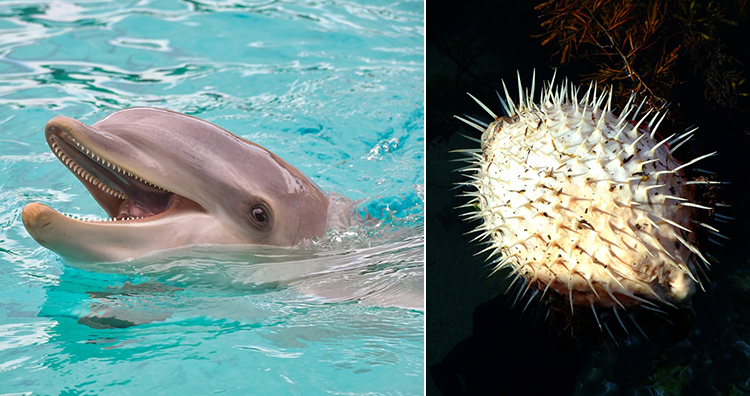
While filming the documentary "Dolphins: Spy in the Pod," filmmakers from Downer Productions captured dolphins lightly nibbling on pufferfish and passing them around. After consuming the pufferfish, the dolphins began to behave strangely. According to John Downer, the documentary's executive producer, "the dolphins kept their noses near the surface, as if mesmerized by their own reflection." This behavior is very similar to how humans use drugs to achieve a narcotic effect. This has led to the hypothesis that dolphins know how much pufferfish toxin to ingest to achieve a narcotic effect. (1,2)
3. Starfish filter seawater into their bodies instead of blood.
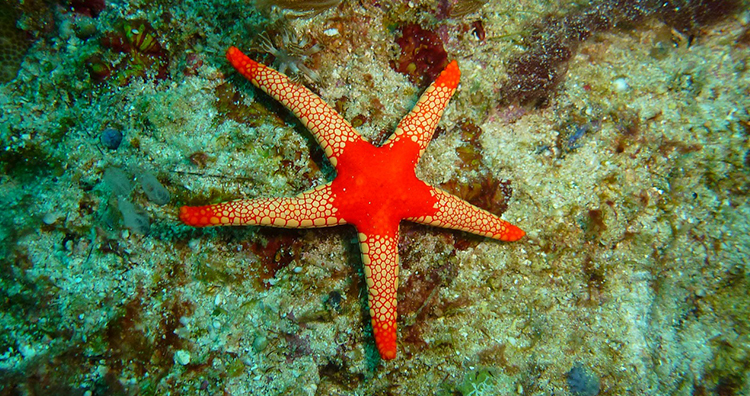
Despite the word "fish" in its name, starfish possess none of the characteristics typically associated with fish. Starfish lack fins or scales. They also lack gills. One of the starfish's fascinating mysteries is that it doesn't even have blood. Instead, starfish use a water-vascular system, meaning they use saltwater to pump nutrients throughout their bodies. (1,2)
4. There's a deep-sea cephalopod whose species name, Vampyroteuthis infernalis, literally means "vampire squid from hell." It can also turn itself inside out.

Vampyroteuthis infernalis is a deep-sea creature with some physical traits similar to both octopuses and squid. It lives at depths of 600 to 900 meters or more. Its body is gelatinous, and its eight octopus-like tentacles are connected by webs of skin.
The vampire squid is almost entirely covered in light-emitting organs, through which it produces flashes of light. One of its unique characteristics is that when disturbed, the creature extends its tentacles outward and wraps them around its body, turning itself inside out. When highly aroused, the creature ejects a cloud of bioluminescent mucus containing balls of blue light. (1,2)
5. When the creator of the modern frisbee died, he was cremated and turned into the very invention he himself created – the frisbee.
In 1964, Edward Hedrick was hired as CEO of the Frisbee company Whamo. He redesigned the Frisbee and changed its marketing strategy, resulting in a dramatic increase in the sport's popularity.
Hedrick soon became known as the father of Frisbee. After his death, his ashes were turned into commemorative discs, as he requested. The discs were given to family and friends, with proceeds going to the Ed Hedrick Memorial Museum. (source)