








North Korea's history is one of isolationism. We constantly hear about defectors and their brutal treatment in the news. However, there's much more to it than just what viewers see. Despite its extreme secrecy, North Korea faces intense criticism for its governance methods. Its dictatorial regime and violation of basic human rights are just some of the reasons. Here are 15 facts about North Korea that are sure to surprise you.
1. In North Korea, the year is 106, not 2017. The North Korean calendar is based on the year of Kim Il Sung's birth, 1912.

The North Korean calendar is named after the Juche ideology and is called the "Juche calendar." While it borrows elements from the Korean and Gregorian calendars, its uniqueness lies in the fact that it begins with the year of Kim Il-sung's birth. Therefore, the year of this North Korean leader's birth, 1912, is called "Juche Year 1" in North Korea. There are no Juche years prior to this year, and years before 1912 are referred to as years according to the Christian calendar. (source)
2. North Korea once kidnapped a famous South Korean film director to make sci-fi films for the North Korean government. Kim Jong Il had a lifelong fascination with Godzilla, and together they created a North Korean version of the film called «Pulgasari» .
In 1978, Shin Sang-ok and his wife, Choi Eun-hee, were kidnapped. After three years of imprisonment, the couple were tasked with creating science fiction films for the North Korean government to gain international recognition. Kim Jong-il was a great fan of cinema. In fact, before becoming dictator, he was a director. He made several films whose common theme was glorifying Kim Il-sung and national pride. By the early 1970s, he was frustrated with his films; he found them lifeless. So, he wanted new creators to help him realize his film ideas. Seeking a better vision, he kidnapped Shin and Choi. They made dozens of films for Kim Jong-il, one of which was "Pulgasari." This film told the story of a peasant uprising in Korea and the sacrifice of a little girl to help the peasants. The film was heavily inspired by Godzilla. Fortunately, Kim liked the film, seeing it as a frank critique of capitalism. However, eight years later, the couple fled Vienna for the West. (1,2)
3. In North Korea, making sarcastic remarks about Kim Jong-un and his regime is prohibited. Even indirect criticism of the authoritarian government is prohibited.

Kim Jong-un and his ideology are subject to criticism from all sides. He is called an isolationist, and many North Koreans have begun to express similar views. His dictatorship has become the subject of numerous North Korean proverbs, such as "A fool who doesn't see the outside world." Sarcasm, or even indirect criticism of Kim Jong-un or his regime, is prohibited by the government. (source)
4. Methidrine is so common in North Korea that business-suited elites in Pyongyang restaurants offer each other a "nose kiss" after dinner.

Following the 1990s famine in North Korea, several types of drugs found their way into North Korean laboratories. However, one of them quickly gained popularity, becoming even served in restaurants. This drug was methamphetamine, or crystal meth. Its use within the country skyrocketed. The elite saw it as an after-dinner treat. The middle class used it to relieve backaches and colds, and the poor used it to escape hunger. Moreover, trading drugs for more potent ones became a common practice. In fact, it's as common as trading cigarettes in the West. (source)
5. North Korea uses its own operating system called "Red Star OS" and its own intranet called "Kwangmyong" which restricts users' access to foreign content or information.
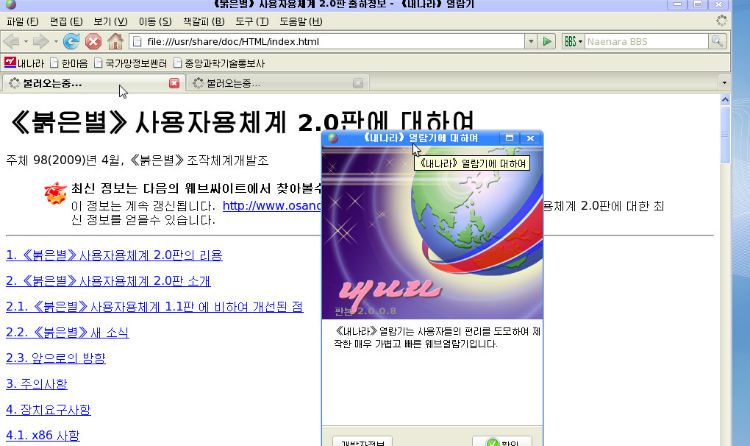
Red Star OS is a North Korean Linux-based operating system. It includes a modified version of Mozilla Firefox called "Naenara." It is used to browse the North Korean intranet, known as "Kwangmyon." Since the global internet is banned in North Korea, the local intranet allows North Koreans to browse a limited set of government-controlled websites. (source)
6. There are only four TV channels in North Korea, and all of them are controlled by the government.

North Korea has only four television channels: Korean Central Television, Mansudae Television, Ryonnamsan Television, and the Sports Channel. These channels broadcast only sporting events, educational materials, and special programs on weekends. All four channels are controlled by the government. (source)
7. North Koreans love foreign movies and TV shows so much that they risk their lives to watch them on USB drives smuggled from China.

Recently, the number of defectors fleeing to South Korea to escape the Kim Jong-un regime has increased sharply. Furthermore, others risk their lives to smuggle foreign films into North Korea, as foreign content is banned in the country. USB drives containing foreign content are distributed among North Koreans without internet access. Furthermore, officials tasked with catching these defectors watch these foreign films and TV shows themselves. (source)
8. Men and women were given an illustrated guide of 30 government-approved hairstyles considered acceptable in North Korea. However, Kim Jong-un is exempt from this rule.

Men have 15 hairstyle options, including short backs and sides, with varying hair lengths on top. Showing up with a short haircut is met with disapproving glances. Women also have 15 short, medium, and long hairstyles to choose from. However, North Koreans are strictly forbidden from dyeing their hair. Furthermore, Kim Jong-un has a distinctive haircut that is unlike any other North Korean hairstyle. (source)
9. In North Korea, the personality cult of Kim Il-sung and Kim Jong-il is exaggerated. In 2012, a 14-year-old North Korean schoolgirl drowned while trying to save portraits of the two from a flood.
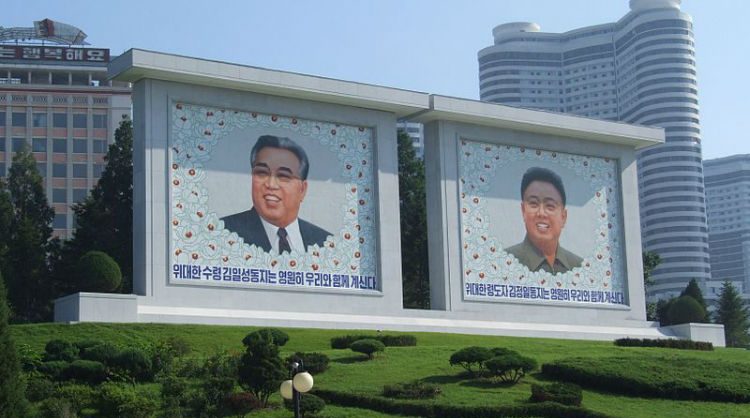
The regimes of North Korea's supreme leaders, Kim Il-sung and Kim Jong-il, are glorified. Many North Koreans believe that Kim Il-sung created the world. Most songs, literature, art, and sculptures glorify these two leaders, equating them with God. Furthermore, many landmarks are named after them. Many people still mourn and pay their respects to bronze statues of the two leaders. Some even perished, like the schoolgirl who saved portraits of both leaders. (source)
10. North Korea has a compulsory voting policy for legislative elections, but only one candidate is listed on each ballot.

Elections to the Supreme People's Assembly of North Korea are held every five years. Only one candidate appears on the ballot. This practice has drawn considerable criticism, as it constitutes an unofficial political census. Voter turnout is almost 100% for the Democratic Front for Fatherland Reunification. Although people can vote against a candidate by crossing out their name with a red pen in a secret ballot, this is extremely risky. Sometimes voters wishing to vote against a candidate must do so in the presence of election officials. (source)
11. Jeans have been banned in North Korea for many years because they are considered a symbol of American imperialism.
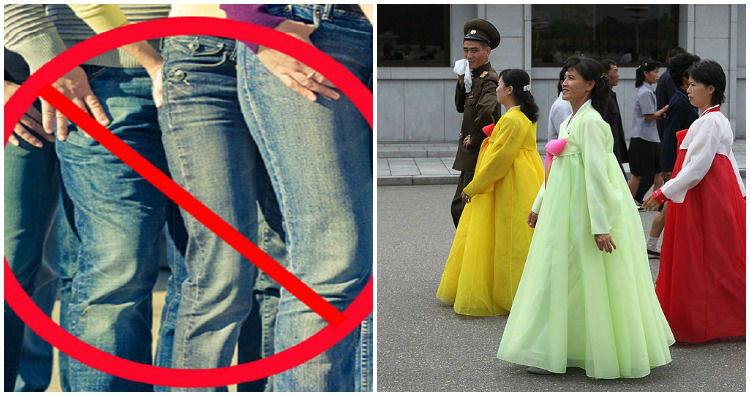
North Korea has numerous restrictions on clothing, including hairstyles, skirt length, and piercings, but jeans are the latest addition to these restrictions. Furthermore, North Koreans are encouraged to wear traditional North Korean clothing. Kim Jong-un believes that Western culture has permeated North Korea, and these repressions will continue until Western influence is eradicated from the country. (source)
12. North Korea produces so little electricity that it is almost completely dark at night.
North Korea is in total darkness, save for one bright spot: Pyongyang, the country's capital and main city. A study found that per capita electricity consumption fell from a peak in 1990 (1,247 kilowatt-hours) to a low of 712 kilowatt-hours in 2000. Since then, it has gradually increased, reaching 819 kilowatt-hours in 2008, still below the 1970 level. So yes, it's safe to say there's an electricity shortage. (source)
13. North Korea has about 30,000 kilometers of roads, and surprisingly, only 7.5% of them are paved.

As of 2006, of the 25,554 kilometers of roads in North Korea, only 724 kilometers were paved. The quality of the roads leaves much to be desired. In fact, drivers often swerve and change lanes abruptly to avoid potholes. Moreover, roadworks can be poorly marked, so even on a highway with a median, oncoming traffic should always be expected. (source)
14. One of North Korea's biggest exports is giant statues of foreign dictators.
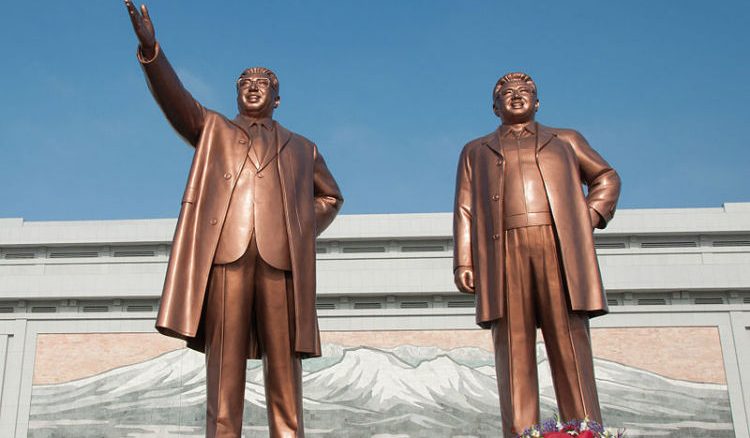
Although North Korea may not export many goods, it is known for its giant statues of foreign dictators. The Mansudae Art Studio in North Korea is renowned for creating enormous bronze statues of foreign dictators and liberators. Moreover, this export is very successful in Africa. In fact, the studio also produces enormous statues, murals, and banners that are greeted with reverence at military parades. (source)
15. Visiting the tomb of Kim Jong Il is the main tourist attraction in North Korea.
The embalmed body of communist leader Kim Jong-il lies in Pyongyang, North Korea. Western tourists are now allowed to bring phones into North Korea, so personal photos of the body are unavailable, but they say they have found the leader's body well-preserved, embalmed, and a beautiful tribute to the leader. (source)