






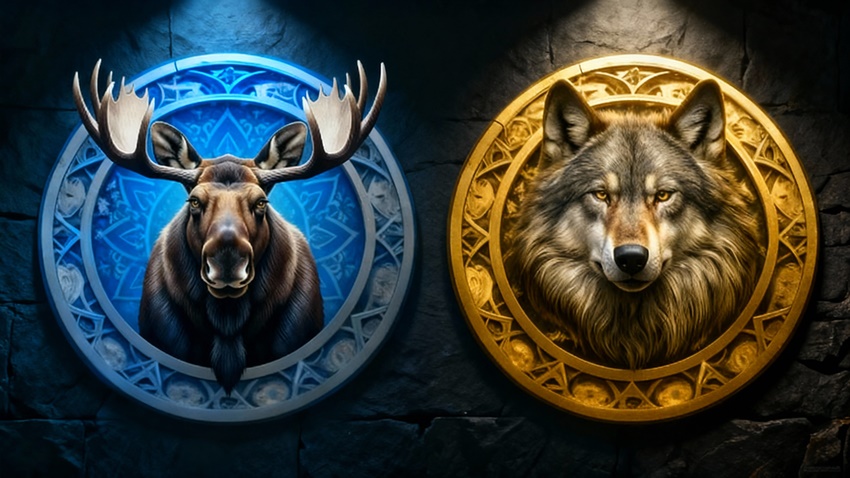
Every January, we're accustomed to hearing news about the arrival of a new animal in China—the Rat, the Tiger, or the Dragon. But recently, more and more people are wondering: what about the Slavs? After all, our ancestors also had their own calendar, in which the years were associated with animals and mythical creatures.
This is where the confusion arises: historians and enthusiasts offer different versions. Let's figure out which animal corresponds to the year 2026 according to Slavic calendar — and why the answers may differ.
The Slavic calendar and its features
Before the baptism of Rus, the Slavs were guided by Chislobog's circle — a time system based on natural cycles. The year began not in January, but on the autumnal equinox, when the agricultural cycle ended.
Key Features:
- The cycle lasted 16 years.. Each year corresponded to an animal or mythical creature.
- The year began in autumn, and not in winter.
- The symbols were closer to the Slavic world: here we meet Elk, Bear, Wolf, Eagle.
This system did not reflect astrological calculations, as in China, but the worldview of farmers and hunters.
Version 1: The Circle of Chislobog (ethnographic)
The most common sequence of the 16-year cycle among researchers looks like this:
- Tour
- Elk
- Leopard
- Bear
- Crow
- Snake
- Fox
- Wolf
- Stork
- Horse
- Eagle
- Cat
- Rooster
- Dog
- Boar
- Finist (fairytale bird)
If you follow this diagram:
- 2025 was the year of the Tour 🐂.
- 2026 becomes the year of the Moose 🦌.
2026 according to the Chislobog calendar
According to the ethnographic version of the Slavic calendar, based on the Chislobog calendar, 2026 is the Year of the Moose 🦌.
It will begin on the day of the autumnal equinox in 2025 and will last until the autumn of 2026.
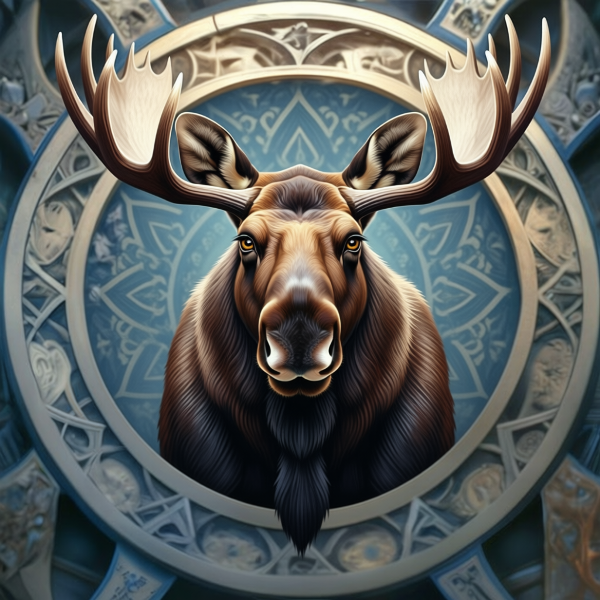
The elk symbolized among the Slavs:
- strength and endurance;
- wisdom and patience;
- renewal and cyclicality of life (like antlers that are shed and grow again);
- the connection between man and nature and harmony with the forest world.
Such a year is usually interpreted as a time of gradual growth, restoration of strength and strengthening of resilience.
What does Elk mean?
For the Slavs, the moose was a symbol of strength, patience, and a connection to the forest. Its antlers resembled the tree of life, so the animal was associated with cycles and renewal.
- Wisdom and endurance. The moose moves slowly but surely.
- Natural changes. The shedding and growth of horns symbolized rebirth.
- Protection of family and clan. The moose was considered the patron of forest hunters and the keeper of balance.
According to this version, 2026 promises to be a time of calm but confident growth.
Version 2: The Popular "Totem" Calendar (Esoteric)
Along with the Chislobog circle, another system has become widespread in recent years - totemic Slavic calendar, widely circulated online. It also has 16 symbols, but many of them are different and sound more "folksy":
- Fire Serpent
- Stinging Hornet
- Lurking Lute (Wolf)
- Fire Toad
- and other unusual images
This version is less connected to historical sources, but is popular in esotericism and popular culture.
If you look at it in this order:
- 2025 — Stinging Hornet 🐝.
- 2026 — Lurking Lute (Wolf) 🐺.
The year 2026 according to the popular "totem" version
In the online versions of the Slavic calendar - 2026 is considered the year of the Lurking Wolf 🐺.
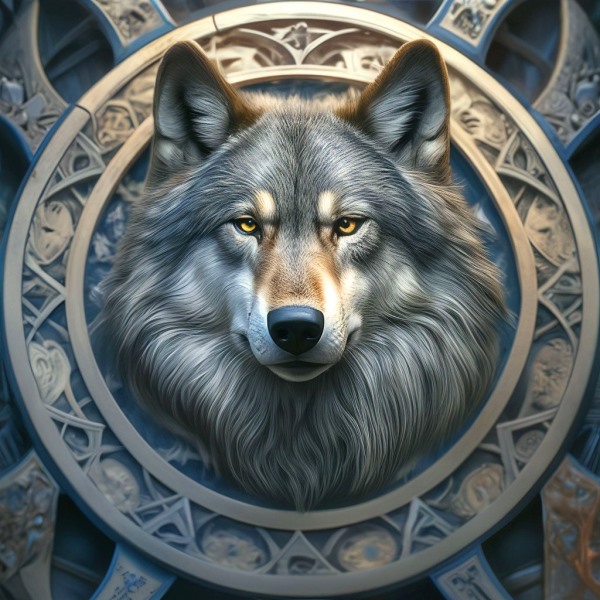
The wolf in this tradition means:
- hidden powers and the ability to wait for the right moment;
- caution and strategic thinking;
- loyalty to family and cohesion of the clan;
- determination to defend one's own, but also a danger to enemies.
The Year of the Wolf is associated with trials, struggles, and the strengthening of alliances. It requires attentiveness and the ability to maintain a balance between strength and prudence.
What does Lurking Lute mean?
The image of the wolf among the Slavs has always been dual. On the one hand, it is a dangerous predator, a symbol of cunning and strength. On the other, it is a loyal protector of the clan, the embodiment of the warrior spirit.
- Caution and vigilance. «"Lurking" indicates hidden powers and the ability to wait.
- Family. Wolves live in packs, making them a symbol of loyalty.
- Danger to enemies. Lute is a threat to his enemies, but a support to his own.
Such a year is associated with change, struggle and strengthening of alliances.
Why are the versions different?
The reason is simple: There is no historically accurate data about the "animals by year" among the Slavs. All we have are reconstructions, guesses and modern interpretations.
- The Circle of Chislobog is based on ethnographic research and is considered more reliable.
- Totem calendar with Hornet and Lyut - rather a modern mystical system, popularized in books and the Internet.
Both versions are interesting, but one is closer to history, the other to modern esoteric myth-making.
Comparison table (2024–2026)
| Year | The Circle of Chislobog | Popular totem calendar |
|---|---|---|
| 2024 | Cat 🐈 | Fire Serpent 🔥🐍 |
| 2025 | Tour 🐂 | Stinging Hornet 🐝 |
| 2026 | Moose 🦌 | Lurking Lute (Wolf) 🐺 |
Result
There's no single answer to the question "2026—which animal's year is it according to the Slavic calendar?" It all depends on which version you adhere to:
- Ethnographic (Chislobog's cycle): 2026 - Year of the Elk.
- Popular esoteric (totemic): 2026 - Year of the Lurking Wolf.
Both systems are interesting in their own ways. The first helps us connect with ancient roots, while the second reflects a modern desire for symbolism and mysticism. But in either case, it's a reason to reflect on the cyclical nature of time and how each new year brings us its own character and energy.