








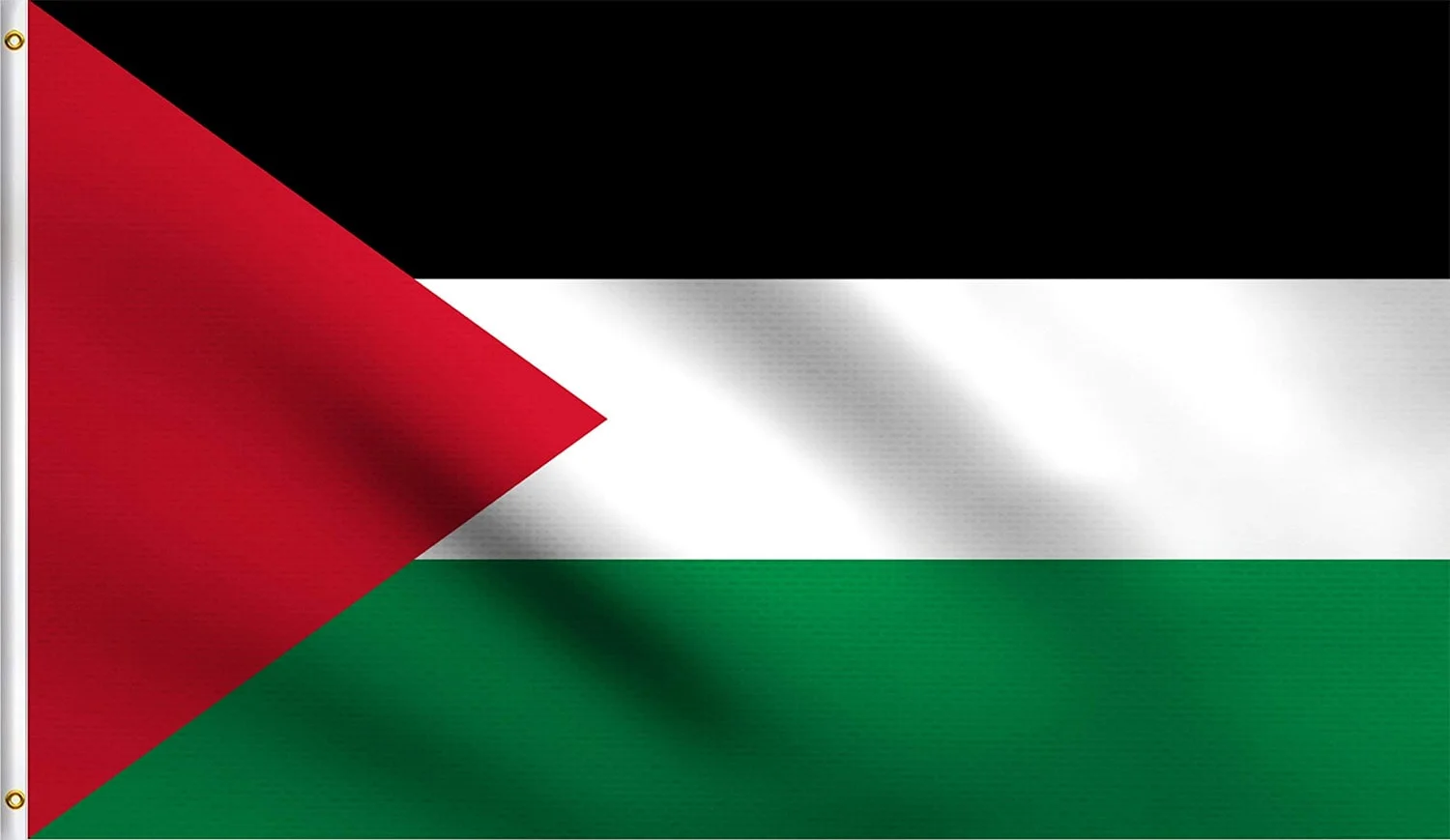
Palestine is a region rich in history and culture, and holds great significance for many people around the world. Situated at the crossroads of continents and civilizations, it has been a meeting point for cultures, religions, and empires throughout history. Despite its small geographic size, Palestine has played a significant role in the development of historical events and remains at the center of key political and social debates today. Its landscapes are as diverse as its history, from the fertile plains of the Jordan Valley to the desert regions of the Negev. Here are 22 interesting and informative facts about Palestine that highlight its historical, cultural, and geographic diversity.
- The name Palestine comes from the word "Philistia," which refers to the land of the Philistines, an ancient people who inhabited the coastal areas of this region.
- Historically, Palestine refers to the geographical region located between the Mediterranean Sea and the Jordan River, extending eastward into the desert.
- The city of Jerusalem, sacred to Judaism, Christianity and Islam, is located in Palestine.
- The Dead Sea, the lowest point on Earth's surface, borders Palestine to the east.
- This region is considered the birthplace of Christianity and Judaism.
- Palestine was part of the Ottoman Empire for over 400 years, from 1517 until the empire's collapse after World War I.
- The famous Church of the Nativity in Bethlehem is one of the oldest continuously operating churches in the world and is believed to be the birthplace of Jesus Christ.
- The Palestine Liberation Organization (PLO) was established in 1964 as a political and militant organization representing the Palestinian people.
- Arabic is the official language of Palestine.
- The Dome of the Rock in Jerusalem is one of the earliest and most recognizable examples of Islamic architecture.
- Palestine is home to several UNESCO World Heritage sites, including the Old City of Hebron/Al-Khalil and its surroundings.
- Olive trees, some of which are thousands of years old, are an important symbol of Palestinian identity and economy.
- The West Bank and the Gaza Strip are the two main territories associated with modern Palestine following the 1948 Arab-Israeli War and subsequent conflicts.
- Palestinian cuisine is known for dishes such as hummus, falafel and maklouba, the main ingredient of which is olive oil.
- The Palestinian keffiyeh, a black and white checkered scarf, has become a symbol of Palestinian nationalism.
- The annual olive harvest is an important cultural and economic event for many Palestinian families.
- The Gaza Strip, one of the most densely populated areas in the world, has been under blockade since 2007.
- Palestinian embroidery, known as tatriz, is a traditional art form characterized by intricate designs and often passed down from generation to generation.
- The population of Palestine is young, with a significant portion of the population under 30 years of age.
- The First Palestinian Intifada, a popular uprising against Israeli control, began in 1987 in the West Bank and Gaza Strip.
- The city of Jericho is one of the oldest continuously inhabited cities in the world.
- The Palestinian Authority, established under the Oslo Accords in the early 1990s, currently exercises limited governance in parts of the West Bank.
Palestine's rich heritage, encompassing history, culture, and struggle, is essential to understanding not only the past but also the present geopolitical landscape of the Middle East. Despite significant challenges, including political unrest and economic hardship, the Palestinian people continue to preserve their heritage and strive for a peaceful and prosperous future. The inexorable spirit of Palestine and its people serves as a reminder of the importance of dialogue, mutual understanding, and cooperation in the pursuit of lasting peace and stability in the region.