








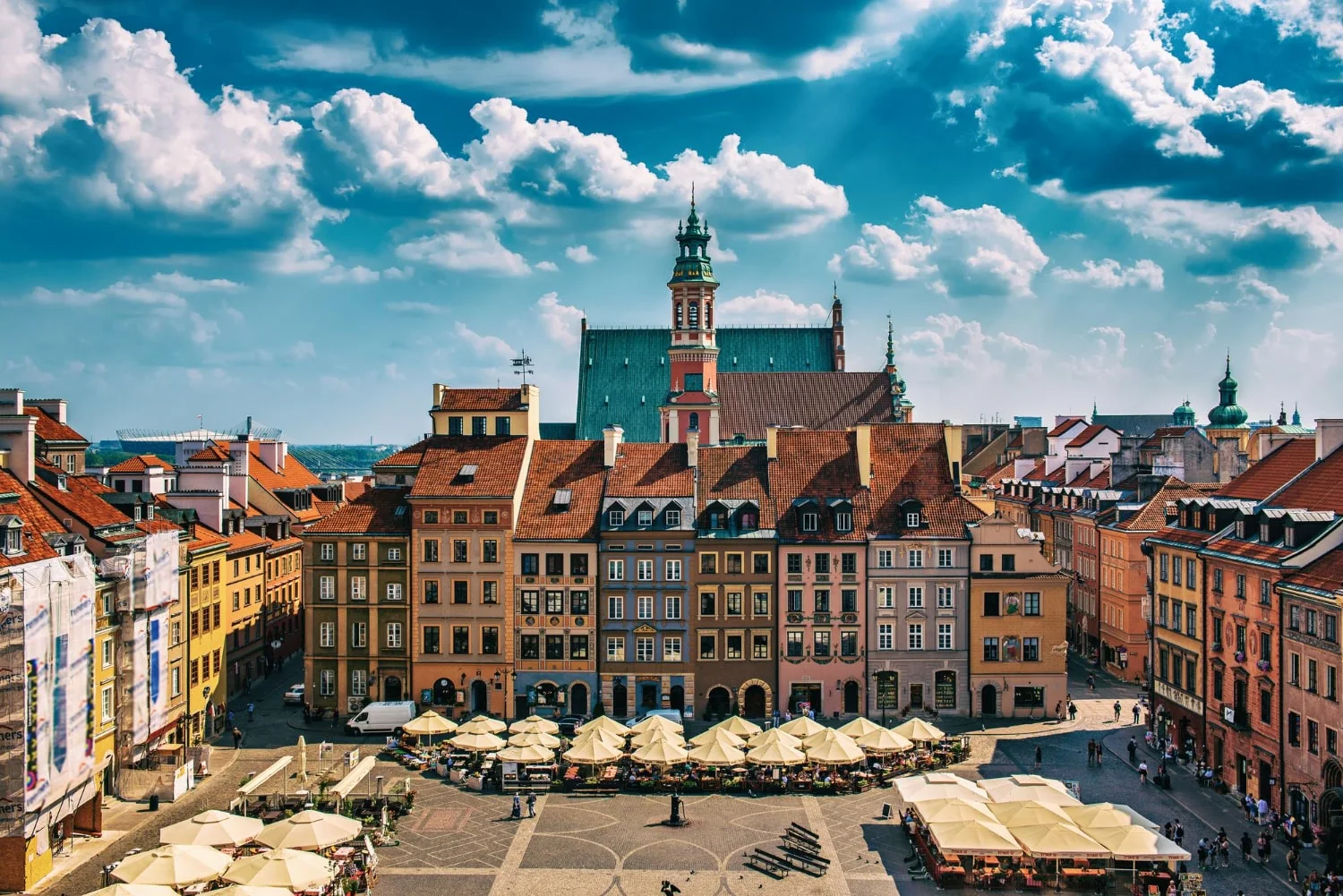
Located in Central Europe, Poland is a country rich in history and cultural heritage. From medieval cities to stunning landscapes, Poland offers a wealth of interesting facts and experiences. With a rich heritage of traditions and a resilient spirit, Poland has much to offer. Here are 63 fascinating facts about Poland:
- Poland is the ninth largest country in Europe by area.
- Warsaw, the capital and largest city of Poland, is known as the "Phoenix City" because it has been rebuilt many times throughout history.
- Poland borders seven countries: Germany, the Czech Republic, Slovakia, Ukraine, Belarus, Lithuania and Russia.
- The official language of Poland is Polish, which is a Slavic language.
- The population of Poland is over 38 million people.
- The Polish zloty is the official currency of Poland.
- The country has a diverse landscape, including mountains, lakes, forests and coastal areas.
- Poland is home to 23 national parks that preserve the country's natural beauty and biodiversity.
- Wawel Castle in Krakow is one of Poland's most iconic landmarks, serving as the residence of Polish kings.
- Poland is home to 15 UNESCO World Heritage sites, including the historic centres of Krakow and Warsaw.
- Pierogi, traditional Polish dumplings, are a popular dish enjoyed by locals and tourists alike.
- Poland is known for its vibrant folk traditions, including colorful costumes, vibrant music and dance.
- Copernicus, the famous astronomer who proposed the heliocentric theory, was Polish.
- Poland has a rich tradition of jazz music, and many Polish jazz musicians have received international recognition.
- The country is famous for its medieval castles, such as Malbork Castle, the largest brick castle in the world.
- Poland has a turbulent history, including periods of partition and occupation by neighboring powers.
- Polish cuisine is famous for hearty dishes such as bigos (hunter's stew) and kielbasa (sausage).
- Polish composer Fryderyk Chopin is considered one of the greatest composers in history.
- Poland has a rich literary heritage, with famous writers including Adam Mickiewicz and Stanisław Lem.
- Poland is a member of the European Union and NATO.
- The Polish flag consists of two horizontal stripes: white at the top and red at the bottom.
- The Warsaw Uprising of 1944 was a significant resistance movement against the Nazi occupation.
- Poland is known for its wonderful Easter traditions, including the creation of intricately hand-decorated Easter eggs called pysanky.
- The Bialowieza Forest in Poland is one of the last and largest primeval forests in Europe.
- In the 17th century, the Polish astronomer Johannes Hevelius compiled a detailed map of the Moon.
- Poland's Baltic coastline is renowned for its stunning sandy beaches and picturesque seaside towns.
- The Tatra Mountains, located in southern Poland, offer breathtaking views and opportunities for hiking and skiing.
- Poland is a leading producer of amber, a precious stone formed from fossilized tree resin.
- The Solidarity movement led by Lech Walesa played a significant role in Poland's transition to democracy.
- Poland is home to the Auschwitz-Birkenau concentration camp, a grim reminder of the Holocaust.
- The annual Wrocław International Festival of Eurythmy Arts is the largest eurythmy event in the world.
- The Polish alphabet consists of 32 letters, including several that are unique to the Polish language.
- A famous Polish drink is vodka, which comes in many brands and flavors.
- Poland is home to Europe's largest medieval square, the Main Market Square in Krakow.
- Polish-born Marie Curie was the first woman to win a Nobel Prize and remains the only person to have won Nobel Prizes in two different fields of science.
- Polish artist Jan Matejko is known for his historical paintings depicting significant events in Polish history.
- Poland has a rich tradition of folk art, including elaborate paper cutouts called wycinanki.
- The Wieliczka Salt Mine, located near Krakow, is a UNESCO World Heritage Site and a popular tourist attraction.
- The city of Gdansk is known for its picturesque old town and historical significance as a member of the Hanseatic League.
- Poland boasts a diverse range of regional cuisines, each with its own distinctive characteristics and flavours.
- Polish astronomer Nicolaus Copernicus proposed a heliocentric model of the solar system.
- Poland is famous for its vibrant Christmas traditions, including the traditional Christmas dinner called Wigilia.
- The Warsaw Stock Exchange is the largest and most important stock exchange in Central and Eastern Europe.
- Polish poet Wisława Szymborska received the Nobel Prize in Literature in 1996.
- The annual Krakow Pie Festival celebrates the beloved Polish dumplings.
- Poland has over 6,800 lakes, including the popular Masurian Lake District.
- The Bieszczady Mountains in southeastern Poland are known for their unspoiled nature and unique wildlife.
- Polish cinema has given the world such world-famous directors as Roman Polanski and Krzysztof Kislowski.
- Polish mathematician Stanislaw Ulam made a significant contribution to the development of the hydrogen bomb.
- Toruń, the birthplace of Nicolaus Copernicus, boasts a well-preserved medieval old town and is famous for its gingerbread.
- Poland has a rich tradition of folk dancing, with regional variations and colorful costumes.
- Polish is considered one of the most difficult languages to learn for non-native speakers.
- The Tyskie Brewery in Poland is one of the oldest operating breweries in the world, with a history dating back to the 17th century.
- Poland boasts a diverse natural landscape, including the picturesque Bialowieza Forest and the stunning Tatra Mountains.
- The Warsaw Uprising Museum in Warsaw tells the story of the Warsaw Uprising of 1944.
- Polish poet and Nobel laureate Czesław Miłosz is known for his powerful and thought-provoking works.
- Poland has a rich pottery tradition, with different regions producing unique styles and designs.
- The Polish city of Wroclaw is famous for its numerous bridges and beautiful architecture, earning it the nickname "Polish Venice".
- Polish composer Karol Szymanowski is known for his orchestral and chamber music.
- Poland has a well-developed railway network, making travel around the country easy.
- The Bialystok Synagogue is the only surviving pre-war synagogue in the city of Bialystok.
- Poland is famous for its magnificent palaces and manors, such as Wilanów Palace and Książ Castle.
- The Battle of Grunwald, which took place in 1410, was a significant victory for the Polish-Lithuanian forces over the Teutonic Knights.
Finally, Poland's rich history, diverse landscapes, and vibrant culture make it a captivating travel destination. From medieval cities and stunning natural beauty to distinguished figures in science, art, and literature, Poland has left an indelible mark on the world. With its resilient spirit and warm hospitality, Poland invites visitors to discover its captivating heritage and create unforgettable memories.