








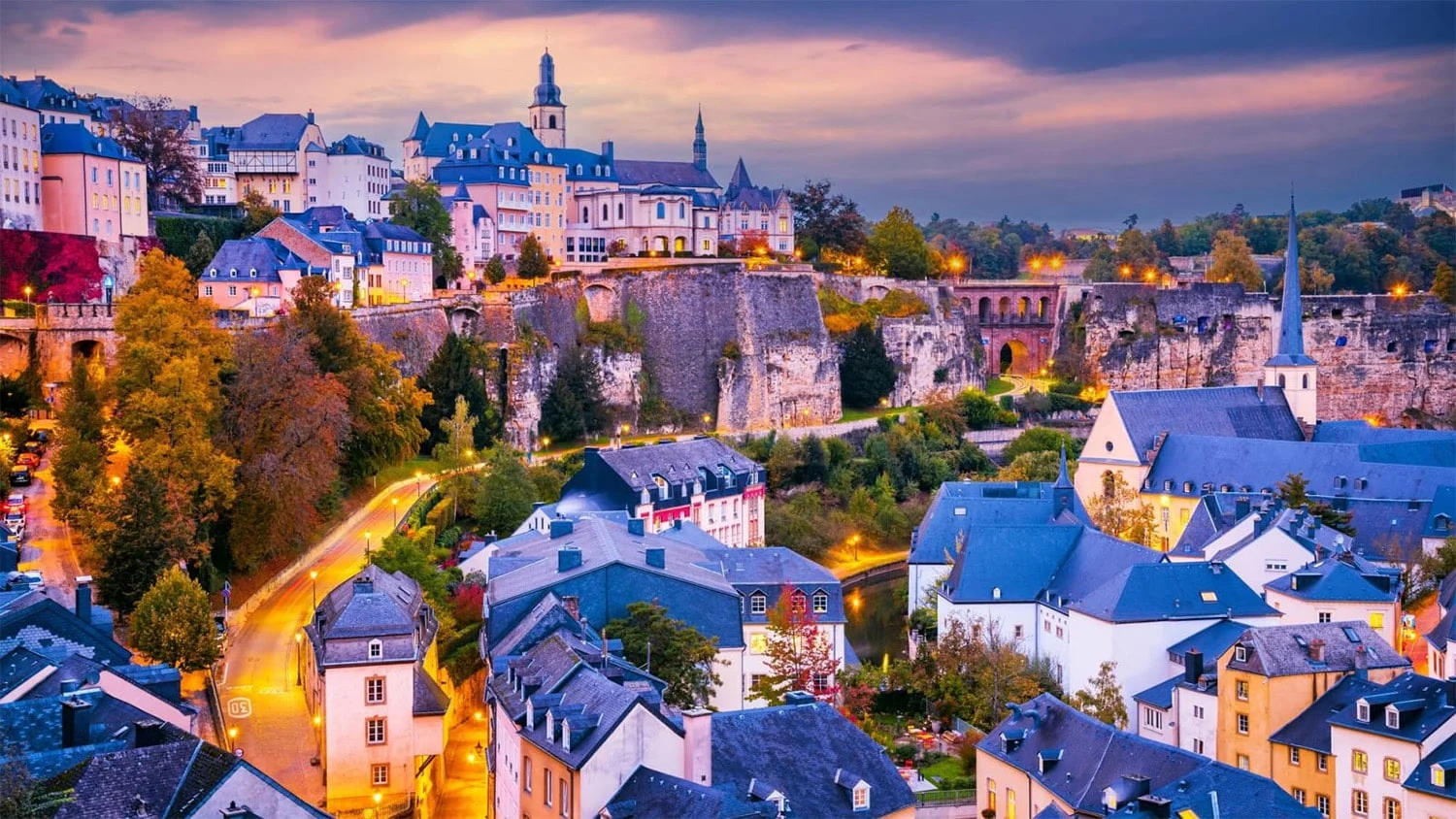
Luxembourg, officially known as the Grand Duchy of Luxembourg, is a small European country boasting a rich heritage of history, culture, and natural beauty. Despite its modest size, Luxembourg plays a significant role on the international stage as a founding member of the European Union. It is known for its high standard of living, multilingual population, and as a global financial center. Situated between Belgium, France, and Germany, Luxembourg offers a unique blend of cultural influences, picturesque landscapes, and historic sites. Here are 28 interesting and informative facts about Luxembourg that highlight its uniqueness and significance.
- Luxembourg is the only Grand Duchy in the world, indicating its status as a constitutional monarchy headed by a Grand Duke.
- The country has one of the highest GDP per capita in the world.
- Luxembourg is a founding member of the European Union, NATO and the United Nations.
- The country has three official languages: Luxembourgish, French and German.
- Luxembourg, the capital of this city, is one of the three official capitals of the European Union.
- The flag of Luxembourg consists of three horizontal stripes of red, white and light blue.
- Luxembourg has a population of just over 600,000, making it one of the most sparsely populated countries in Europe.
- The country's landscape is characterized by dense forests, rolling hills and the Ardennes Mountains in the north.
- Luxembourg has more Michelin-starred restaurants per capita than any other country in the world.
- Fortress Luxembourg, known as the "Gibraltar of the North", was once one of the most fortified places in Europe.
- The country was invaded by Germany during both World War I and World War II.
- Luxembourgish, the national language, is a Moselle Franconian dialect of German.
- The Bock Casemates, a network of underground tunnels in Luxembourg City, are a UNESCO World Heritage Site.
- Compulsory education was introduced in Luxembourg in 1843.
- The country's legal system is based on civil law.
- Luxembourg has one of the highest rates of car ownership in the world.
- Schengen, a small village in Luxembourg, gave its name to the Schengen Agreement, which abolished border controls between EU countries.
- The Luxembourg Philharmonic Orchestra is one of the finest concert halls in Europe, renowned for its modern architecture and acoustics.
- Despite its small size, Luxembourg has a highly developed economy, largely based on the financial sector.
- Luxembourg's national dish is Judd mat Gaardebounen, smoked pork neck with broad beans.
- The country provides free public transport to all residents and visitors, a policy introduced in 2020.
- Luxembourg's wine region, located along the Moselle River, is famous for its white and sparkling wines.
- The International Court has chosen the 1952 Luxembourg Agreement as the basis for its reparations policy.
- Luxembourg's Müllerthal region is often called "Little Switzerland" due to its hilly and wooded landscape.
- The official residence of the Grand Duke is the Grand Ducal Palace in Luxembourg City.
- Luxembourg became the first city to be awarded the title of European Capital of Culture twice: in 1995 and 2007.
- The country has a tradition of broadcasting radio and television programmes in Luxembourgish, French, German and English to serve its multilingual population.
- Luxembourg has won five Olympic gold medals, all in athletics.
Luxembourg is a country that, despite its small size, boasts economic power, cultural richness, and a deep history. Its commitment to multilingualism, international cooperation, and high quality of life underscores its unique identity in Europe and the world. From the historic fortifications of its capital to its leading financial institutions and vibrant cultural scene, Luxembourg continues to enchant and inspire. This small Grand Duchy exemplifies the harmonious coexistence of tradition and modernity, making it a must-see for those interested in European history and culture.