








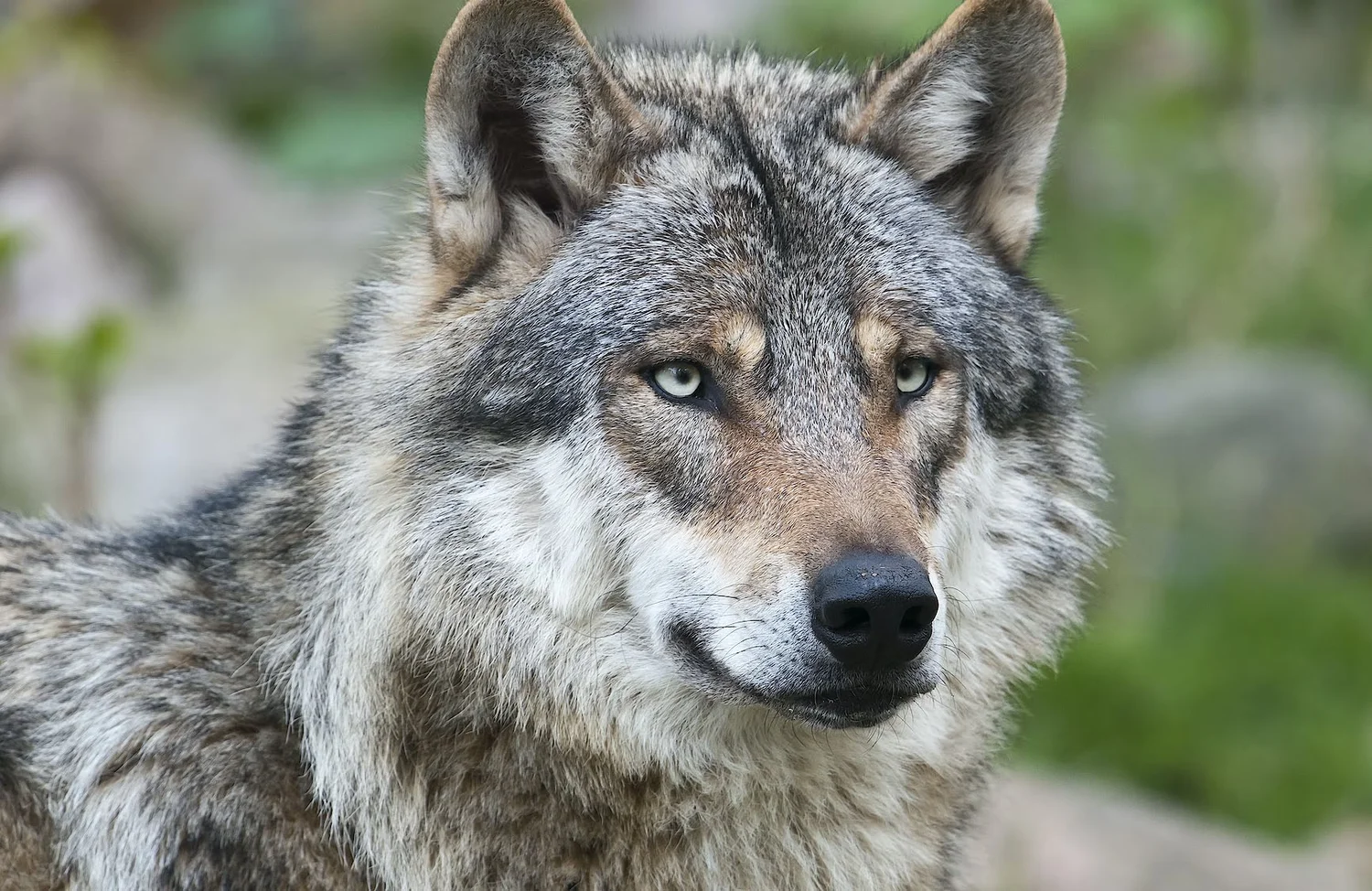
Wolves are majestic and powerful creatures, revered and feared for centuries. With their distinctive howl, pack instinct, and incredible endurance, wolves have captured the imagination of people around the world. In this article, we'll explore 31 fascinating facts about wolves.
Facts about wolves :
- Wolves belong to the canine family (Canidae), which also includes dogs, foxes and jackals.
- The scientific name of the gray wolf is Canis lupus.
- Wolves live in the Northern Hemisphere, in regions such as North America, Europe and Asia.
- One wolf pack can consist of 12 individuals.
- Wolves communicate using a variety of sounds, including howls, barks, growls, and whines.
- The alpha pair, usually consisting of a dominant male and female, leads the pack and makes decisions for the group.
- Wolves hunt in packs and can take down prey much larger than themselves, such as elk and bison.
- By the mid-20th century, the wolf population in the 48 continental US states was virtually exterminated.
- Today, gray wolves are protected under the Endangered Species Act in the United States.
- In many cultures, wolves are associated with strength, courage and loyalty.
- In ancient Roman mythology, the wolf was considered a symbol of Rome and was revered as the deity Lupa.
- In Scandinavian mythology, the wolf was associated with the god Odin and was considered a symbol of destruction.
- In Native American folklore, the wolf was often revered for its strength, hunting skills, and wisdom.
- The gray wolf is the largest wild member of the canine family, with males weighing between 60 and 110 pounds.
- The average lifespan of a wild wolf is 6 to 8 years.
- Wolves have acute hearing and can hear prey from more than one and a half kilometers away.
- Wolves have a keen sense of smell and can detect prey from over two miles away.
- Wolves have keen eyesight and can see well in the dark.
- Wolves have powerful jaws and can crush bones, with a bite force of up to 1,200 pounds per square inch.
- Wolves are known for their ability to cover vast distances during their travels, with some individuals traveling over 1,000 miles in a year.
- Wolves form strong social bonds within their packs and will mourn the loss of a pack member.
- Wolves have been observed exhibiting play-like behaviors such as chasing and tug-of-war.
- Wolves often take in and shelter the cubs of other wolves, even if they are not related to them.
- In areas where prey is abundant, wolves store excess food for later consumption.
- Wolves are apex predators and play a crucial role in maintaining balance in the ecosystems they inhabit.
- The world's largest wolf population is found in Russia, numbering approximately 60,000 individuals.
- The smallest wolf species is the Ethiopian wolf, which weighs only 40 to 55 pounds.
- Some wolf species, such as the red wolf, are endangered and could be hunted to extinction.
- Wolves can carry a variety of diseases, including rabies, distemper, and Lyme disease.
- Some wolf species, such as the Arctic wolf, have adapted to life in extreme conditions.
- In the wild, wolves hunt primarily at night, but can also hunt during the day.