








Situated in the heart of Central Asia, Kyrgyzstan is a country of breathtaking natural beauty and rich cultural heritage. Renowned for its rugged mountain landscape, this country offers a captivating blend of history and nature, boasting a unique cultural identity shaped by diverse influences over the centuries. In a globalized world, Kyrgyzstan remains a gem worth exploring not only for its picturesque landscapes but also for its deep historical roots and vibrant traditions.
- Kyrgyzstan gained independence from the Soviet Union on August 31, 1991.
- The country is predominantly mountainous, with more than 80% of its territory covered by the Tien Shan mountain range.
- Bishkek, the country's capital and largest city, was previously known as Frunze City, after one of the Bolshevik military leaders.
- Kyrgyzstan is one of the least densely populated countries in the world, with a population density of approximately 29 people per square kilometer.
- The country has a significant nomadic heritage, and many Kyrgyz people still practice nomadic traditions.
- Lake Issyk-Kul in Kyrgyzstan is the second largest salt lake in the world after the Caspian Sea and is believed to be approximately 25 million years old.
- The official languages are Kyrgyz, which uses the Cyrillic alphabet, and Russian, which is used in government and business.
- The Epic of Manas is one of the longest poems in the world, reflecting the country's rich oral history tradition.
- Kyrgyzstan is a member of the Eurasian Economic Union along with countries such as Russia, Belarus, Kazakhstan and Armenia.
- The country operates as a parliamentary republic, having abandoned the presidential system in 2010.
- Kyrgyzstan's economy relies heavily on gold exports, particularly from the Kumtor gold mine, one of the largest in Central Asia.
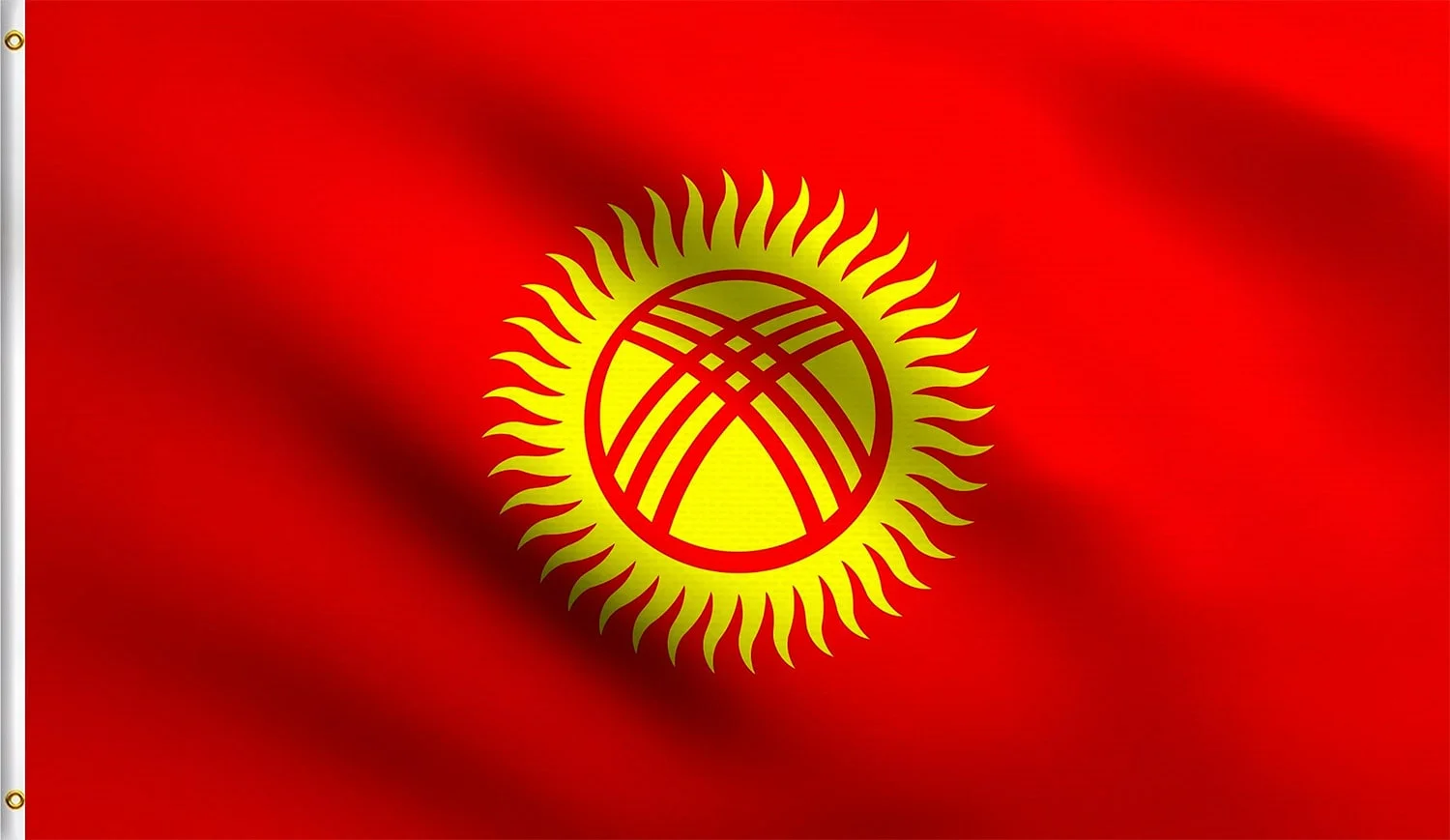
- The flag of Kyrgyzstan depicts a sun with forty rays, symbolizing the forty Kyrgyz tribes that united against the Mongols.
- Horse meat is a common staple in Kyrgyz cuisine, reflecting the nation's nomadic roots.
- The Ala-Tu mountain range, whose name translates as "multi-colored mountains," is a prominent feature of the country's landscape.
- The World Nomad Games, an international competition celebrating ethnic sports common in Central Asia, were first held in Kyrgyzstan in 2014.
- Traditional Kyrgyz music often features the komuz, a three-stringed instrument played like a guitar.
- Eagle hunting, a traditional form of falconry common throughout the Eurasian steppe, is still practiced in rural areas of Kyrgyzstan.
- The country is an important route for migratory birds along the Central Asian Flyway.
- Kyrgyzstan has one of the highest rates of bride kidnapping in the world, despite efforts to criminalize the practice.
- Yurts, traditional portable round tents covered with skins or felt, are widely used in Kyrgyzstan, especially in rural and mountainous areas.
- The Arslanbob forest in Kyrgyzstan is home to the world's largest natural walnut grove.
- The literacy rate in Kyrgyzstan is exceptionally high and amounts to approximately 99% of the population.
- The country has a rich tradition of storytelling and folklore, often accompanied by musical narrative.
- Kyrgyzstan was historically part of the Silk Road, the ancient trade route between China and the Mediterranean.
- The national dish is beshbarmak, boiled meat eaten with noodles and broth, and traditionally served on a large communal platter.
- The sacred mountain Suleiman-Too in Osh has been a place of pilgrimage for Muslims for centuries.
- The Kyrgyz hat, called a kalpak, is made of white felt and is considered a symbol of masculinity.
- The country's national animal is the snow leopard, which lives in the mountain ranges of Kyrgyzstan.
- Kyrgyzstan is a landlocked country bordering Kazakhstan, Uzbekistan, Tajikistan and China.
- The Ak-Sai Glacier is one of the largest glaciers in Kyrgyzstan, located in the Tien Shan Mountains.
- Kyrgyzstan is one of the few countries in the world whose citizens can enter more than 70 countries without a visa.
- The Tien Shan mountain range in Kyrgyzstan is believed to have served as the prototype for the mythical Shangri-La.
Kyrgyzstan, with its majestic landscapes and deep cultural roots, is a testament to the resilience and richness of the human spirit. Its journey from ancient nomadic civilizations to the modern republic demonstrates a unique blend of tradition and modernity. Numerous facts about this country not only reveal its distinctive character but also reveal its role in the broader picture of global culture. As it continues its journey into the 21st century, Kyrgyzstan remains a fascinating example of adaptation and resilience, offering lessons and ideas that resonate far beyond its borders.