








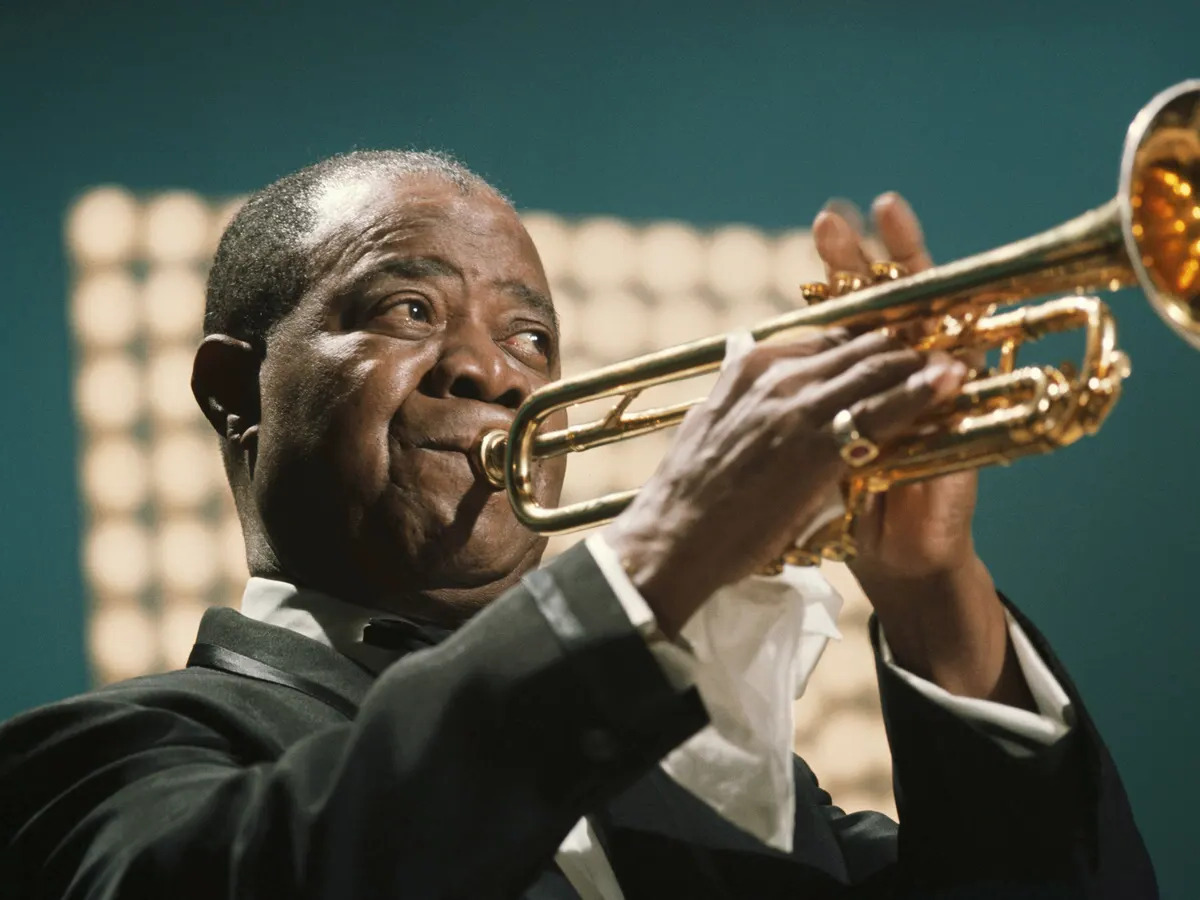
 Source: Theguardian.com
Who was Louis Armstrong? Known as "Satchmo" or "Pops,", Louis Armstrong Armstrong was a legendary jazz musician whose influence is still felt today. Born in New Orleans in 1901, Armstrong became world-famous for his trumpet playing and unique voice. He didn't just play music; he transformed it. His improvisational skills and charismatic stage presence set him apart from his peers. Armstrong's career spanned five decades, during which time he recorded hits such as "What a Wonderful World" and "Hello, Dolly!" Beyond music, he transcended racial barriers and became a global ambassador for jazz. Louis Armstrong He wasn't just a musician; he was a pioneer who changed the face of American music forever.
Key findings:
- Louis Armstrong overcame a difficult childhood to become a jazz legend, influencing music and culture. His innovative style and personal charm left an indelible mark on the world.
- Louis Armstrong's life, from humble beginnings to worldwide fame, was filled with vibrant stories and groundbreaking musical achievements. His legacy continues to inspire and resonate with people of all ages.
Contents 01 Early Life and Career Beginnings 02 Rise to Fame 03 Musical Innovations 04 Personal Life 05 Later Years and Legacy 06 Trivia 07 Awards and Honors 08 Cultural Impact 09 Louis Armstrong's Enduring Legacy
Early Years and Beginnings
Louis Armstrong, one of the most influential figures in jazz, lived a remarkable life, starting from the very bottom. Here are some interesting facts about his early years.
-
Armstrong was born on August 4, 1901, in New Orleans, Louisiana, and grew up in a poor neighborhood known as "Battleground.".
-
Soon after his birth, his father abandoned the family, leaving him and his sister to be raised by their mother.
-
When his mother found it difficult to provide for the family, Armstrong was sent to live with his grandmother.
-
At the age of 11, he was sent to a colored boys' home after firing a gun into the air during a New Year's celebration.
-
It was in a home for homeless children that Armstrong first learned to play the cornet, a trumpet-like instrument.
-
His first music teacher, Peter Davis, recognized his talent and encouraged him to pursue music.
Rise to fame
Armstrong's journey from troubled youth to jazz legend is truly remarkable. Let's look at some of the key moments that elevated him to the heights of fame.
-
In 1918, Armstrong joined Kid Ory's band, one of the most popular New Orleans groups of the time.
-
In 1922, he moved to Chicago to join King Oliver's Creole Jazz Band, which became his first major success.
-
Armstrong made his first recordings with King Oliver's orchestra in 1923, including the famous composition "Dipper Mouth Blues.".
-
In 1924 he joined Fletcher Henderson's orchestra in New York, where he influenced the development of big band jazz.
-
Armstrong's innovative playing style and charismatic stage presence quickly made him a star in the jazz world.
-
In 1925, he formed his own group, the Hot Five, which later became the Hot Seven and released some of his most famous recordings.
Musical innovations
Armstrong's contribution to jazz was groundbreaking. His innovative ideas changed the course of music history.
-
He was one of the first musicians to perform extended trumpet solos, demonstrating his virtuoso skill.
-
Armstrong popularized scat singing—vocal improvisation using nonsense syllables.
-
His 1926 recording of "Heebie Jeebies" is often credited with introducing scat singing to a wider audience.
-
Armstrong's unique performance style and sense of rhythm have influenced countless musicians across a wide range of genres.
-
He was a master of "swing," a style of jazz that emphasizes a strong, rhythmic groove.
-
Armstrong's ability to convey emotion through music made him a beloved figure worldwide.
Personal life
In addition to his musical career, Armstrong had a rich personal life, full of interesting stories and romantic relationships.
-
Armstrong was married four times, his longest being to Lucille Wilson, a dancer at the Cotton Club.
-
He had no biological children, but he adopted a son, Clarence, who suffered from mental retardation.
-
Armstrong was known for his love of food, especially red beans and rice, a traditional New Orleans dish.
-
He was a heavy smoker of marijuana, which he called "gage.".
-
Armstrong wrote two autobiographies: Swing That Music and Satchmo: My Life in New Orleans.
-
He was a prolific letter writer, often sending humorous and touching notes to friends and admirers.
Later years and legacy
Armstrong's influence extended far beyond his lifetime. His final years were marked by continued success and lasting influence.
-
In 1936, Armstrong became the first African American to host a national radio broadcast.
-
He has appeared in over 30 films, often playing himself or a musician.
-
Armstrong's 1967 recording of "What a Wonderful World" became one of his most iconic compositions.
-
In 1972, shortly before his death, he was awarded a Grammy Award for his contribution to the music industry.
-
Armstrong's home in Queens, New York, is now a museum dedicated to his life and work.
-
In 1990, he was posthumously inducted into the Rock and Roll Hall of Fame as one of his early influences.
Interesting facts
Armstrong's life was full of funny and unusual moments that only added to his charm and made him a legend.
-
He often signed his letters with the phrase, "Red beans and rice with you.".
-
Armstrong was a passionate card player and was known to always carry a deck of cards with him.
-
He was a fan of Star Trek and even appeared in a commercial for the series.
-
Armstrong's nickname, "Satchmo," was short for "Satchel Mouth," a reference to his wide smile.
-
He was known for his love of Swiss Kriss, a herbal laxative, and often promoted it to friends and fans.
-
Armstrong's hoarse voice was the result of surgery to remove nodules from his vocal cords.
Awards and honors
Throughout his career, Armstrong received numerous awards, cementing his status as a music legend.
-
In 1969, President Lyndon B. Johnson awarded him the Presidential Medal of Freedom.
-
In 1960, Armstrong received a star on the Hollywood Walk of Fame.
-
In 2007, he was inducted into the Louisiana Music Hall of Fame.
-
Armstrong's recordings are inducted into the National Recording Registry for their cultural significance.
-
He was awarded a Grammy Hall of Fame Award for his recordings of "West End Blues" and "Stardust.".
-
Armstrong was included in Time magazine's list of the 100 most influential people of the 20th century.
Cultural influence
Armstrong's influence extended beyond music, having a profound impact on culture and society.
-
He broke racial barriers in the entertainment industry by performing for mixed audiences.
-
Armstrong's music played a vital role in the civil rights movement, inspiring both activists and musicians.
-
His legacy continues to inspire new generations of musicians, ensuring that his contributions to jazz and culture will never be forgotten.
The Enduring Legacy of Louis Armstrong
Louis Armstrong's influence on music and culture remains undeniable. His innovative trumpet playing и unique voice revolutionized jazz, making it a global phenomenon. Armstrong's charisma and talent broke down racial barriers, paving the way for future generations of musicians. His recordings, such as "What a Wonderful World," continue to inspire and delight listeners worldwide. Beyond music, Armstrong's dedication to advocacy civil rights and his role as a goodwill ambassador demonstrated his commitment to making the world a better place. His legacy lives on through countless tributes, documentaries, and the continuing influence of his work. Armstrong's story is a testament to the power passions , resilience and the universal language of music. As we remember his contributions, let us celebrate the enduring spirit of a true jazz legend.
Frequently Asked Questions
Q: What made Louis Armstrong such a significant figure in jazz music? A: Louis Armstrong, often called Satchmo or Pops, was an innovator. His innovative approach to the trumpet and his distinctive raspy voice transformed jazz. Armstrong's ability to improvise and the emotional depth of his performances set new standards for jazz musicians who followed in his footsteps. Q: How did Armstrong's early life influence his musical career? A: Growing up in the poor neighborhoods of New Orleans, Armstrong was surrounded by a variety of musical styles. This harsh upbringing fueled his passion for music, which led him to an orphanage where he first learned to play the cornet. His early experiences shaped not only his music but also his determination to succeed. Q: Can you name some of Louis Armstrong's most famous songs? A: Of course! Some of Armstrong's most beloved compositions include "What a Wonderful World," "Stardust," "La Vie En Rose," and "When the Saints Go Marching In." Each song showcases his unique talent and has left an indelible mark on music history. Question: Did Louis Armstrong have any influence outside of music? Answer: Absolutely! Armstrong was more than just a musician; he was a cultural icon who transcended racial barriers. His popularity helped bring the African American experience into the mainstream of cultural dialogue. Armstrong's charm and talent made him an ambassador of goodwill around the world. Question: What is the Hot Five, and why is it important? Answer: The Hot Five was Louis Armstrong's first jazz band as a leader, formed in the mid-1920s. This group is crucial because it recorded some of the most influential jazz compositions of all time. These recordings showcased Armstrong's virtuoso trumpet playing and innovative vocal style, helping to shape the future of jazz. Question: How did Armstrong's approach to music change over his career? Answer: Over the decades, Armstrong's style evolved from the complex improvisations of his early years to a more accessible, popular sound in his later performances. Despite these changes, his commitment to emotional expression and musical innovation remained constant, allowing him to connect with wide audiences around the world. Question: What is a little-known fact about Louis Armstrong? Answer: Many may not know that Armstrong was also a keen writer. He kept detailed journals throughout his life, wrote letters to friends and fans, and even published two autobiographies. These recordings provide invaluable insight into his thoughts, experiences, and the era in which he lived. Question: How can we learn more about Louis Armstrong's legacy? Answer: For those looking to delve deeper into Armstrong's life and legacy, a visit to the Louis Armstrong Home and Museum in Queens, New York, is a great place to start. Additionally, numerous books, documentaries, and online archives offer a wealth of information about his music, his impact on society, and his contribution to the world of jazz.
Was this page helpful?
Our work is based on a commitment to providing reliable and engaging content. Every fact on our site is contributed by real users just like you, providing a rich and varied experience and information. To ensure the highest standards of accuracy and reliability, our experienced editors carefully review every submission. This process ensures that the facts we share are not only engaging but also trustworthy. Trust our commitment to quality and authenticity as you explore and learn with us.
Share this fact: