








When people have a favorite historical period, it's often based on how Hollywood portrays it. We see knights in shining armor and pirate thieves—but how accurate is this? It's easy to forget that these charming characters represent real historical groups. Their real-life lifestyles are often very different from how they're depicted on the big screen. Here are a few examples of how Hollywood gets history wrong.
6. Vikings
Unsplash
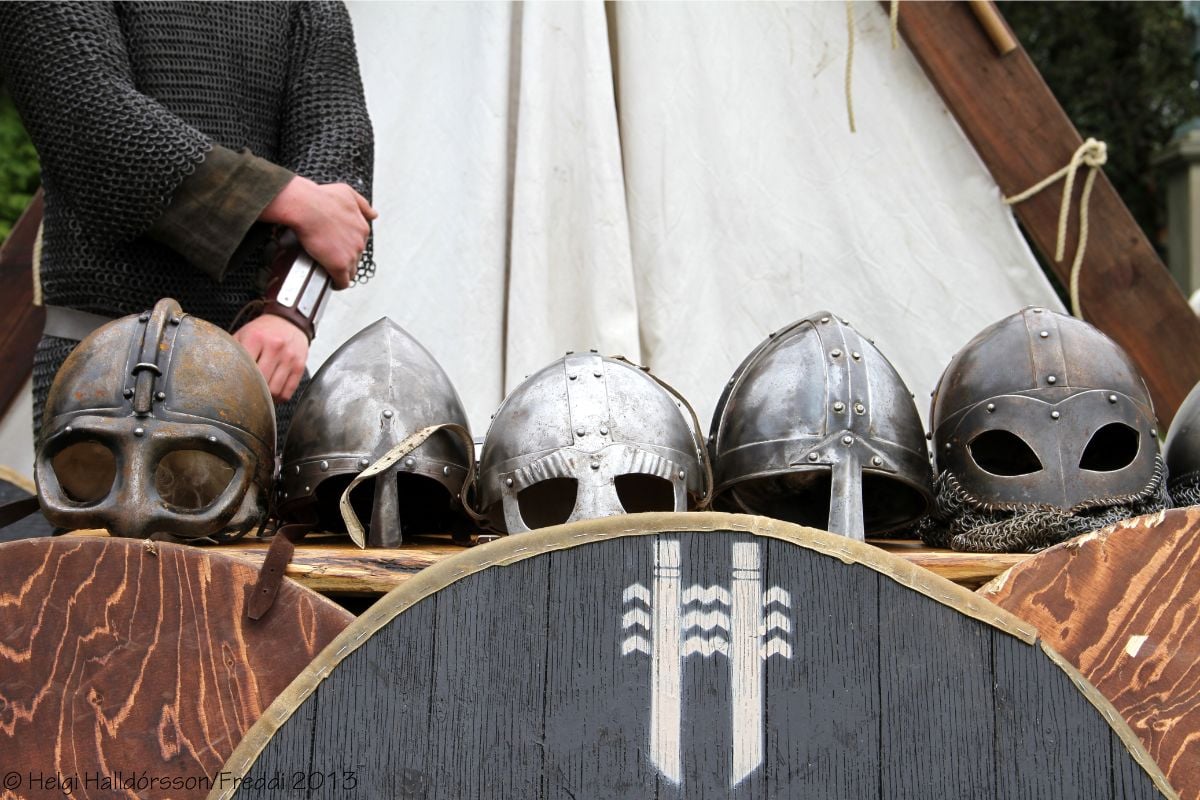
In Hollywood, Vikings are often portrayed as an aggressive society, constantly seeking conflict. They are depicted as filthy, barbaric creatures, constantly raiding other civilizations and declaring war. They are often seen wearing the iconic horned hat and fur clothing as everyday attire. However, there is much more to this society than Hollywood portrays.
Although some Vikings engaged in raiding, many owned farms or worked as artisans. They supported themselves through agriculture, livestock breeding, hunting, and fishing. Their communities included town squares and temples, which fostered cultural development and social cohesion.
Another surprising fact: Vikings were noted for their time for their excellent hygiene. They used soap, combs, razors, and tweezers to maintain cleanliness and grooming.
Although the Vikings raided and took captives, their culture is far more complex than it initially appears. They lived for a higher purpose—beginning as pagans and later converting to Christianity—and created a culture their people could enjoy. They weren't simply bloodthirsty madmen, but people striving to protect their community and help it grow into something greater.
5. Pirates
Google Commons
Pirates are best known for finding hidden treasure using ancient maps and skillfully getting out of trouble with swords. When faced with an enemy—or feeling betrayed by one of their own—these people are forced to walk the plank. However, pirates are much more reliable and united than you might think.
The pirates defined the rights and responsibilities they believed every person should have. They looked to their democratically elected leader to ensure compliance. Their form of democracy, complex social structure, and methods of conflict resolution often go unreported in the media. They trusted each other to uphold the social norms they had agreed upon.
As for walking the plank, it wasn't a typical punishment for pirates. There are very few documented cases, but they are not enough to consider it a regular or common practice. Those that are documented are often considered exaggerated over time.
Although pirates are famous for finding (and hiding) buried treasure, this was a rare occurrence. Most pirates spent their money very quickly, so burying it was rare for them. They often received the loot as ransom or plundered merchant ships, loading them with valuable goods. All profits were divided among the crew.
4. Knights
Google Commons
Knights are almost always depicted as noble warriors, romantically rescuing a beautiful damsel in distress. In some depictions, a person may be declared a knight for a heroic deed. However, this is very different from what knighthood actually looked like.
Becoming a knight was a very difficult process. It required a man to leave his family at the age of seven to master the necessary skills. Future knights were taught etiquette, horsemanship, and martial arts. It was a long and grueling process, which many never completed. Many died or were injured during training, while others were simply too poor to afford expensive armor.
While many dream of their "knight in shining armor," armor was far less glamorous than it seemed. It was extremely heavy, with some suits weighing up to 50 kg (about 110 pounds). Knights suffered from sweat, body odor, and their own excrement, which remained inside their armor.
Even if galloping into battle seemed as glamorous as it initially appeared, knights didn't spend all their time that way. They served as political advisors, managed lands, and professed Christianity. Some knights even joined religious military orders, dedicating themselves to lives of poverty, chastity, and obedience. These knights didn't court beautiful maidens or live in luxury, as some stereotypes suggest. Overall, a knight's life was far more opulent than Hollywood portrays.
3. Gladiators
Google Commons
The media often portrays the gladiator profession in a negative light. In Hollywood, however, gladiators, prisoners of war, and members of the lower classes are all characterized by spontaneity. They rush into battle at a moment's notice., Always fighting to the death.
Many gladiators entered gladiatorial combat freely and voluntarily. They studied at gladiatorial schools, trained, and prepared for battle. Being a gladiator—especially a good one—could bring fame and fortune.
When gladiators took to the battlefield, it was usually strategically planned and organized. Fights weren't random or "to the death," but strategically planned, based on the fighters' years of training.
2. Native Americans
Google Commons
Native Americans are often portrayed as a small group, comprised of several tribes, sharing a single culture and living a simple lifestyle in tipis. However, the lives of this group of people were far more complex than Hollywood would have us believe.
Before Christopher Columbus's discovery of America, an estimated 10 million Native Americans lived in the territory that would later become the United States. These tribes were not small groups barely scraping by, but societies with a complex yet unique culture. Hollywood has created a simplified, inaccurate version of Native American culture that ignores the true diversity and culture of these groups.
While some cultures lived in tipis, many did not. Many lived in more permanent dwellings called pueblos, which were built of stone and adobe. Some lived in temporary shelters called wickiups, while others lived in domed houses. Housing, culture, and clothing depended on the climate they inhabited. Some lived as hunter-gatherers, while others primarily grew their own food.
While Native Americans often practiced unity and spirituality, they were not simply "one people." They were diverse groups that adapted to their environment to survive and thrive.
1. American colonists
Google Commons
In Hollywood films about the American Revolution, colonists are often portrayed as united by patriotism. However, not all sought independence from Great Britain. The colonies were made up of Patriots, who sought independence; Loyalists, who remained loyal to the British government; and Neutrals, who took a wait-and-see approach. In fact, the Neutrals were considered the largest of the three groups. Eventually, the Patriots managed to convince a sufficient number of Neutrals to join their cause.
However, divisions within the colonies remained strong, even despite the growing number of patriots. Indeed, Benjamin Franklin's own son, William, supported Great Britain during the war.
After the Patriot victory, approximately 80,000 Loyalists fled to Canada or Great Britain. They were often considered traitors to the American people, although in reality they simply wanted to preserve their way of life.