








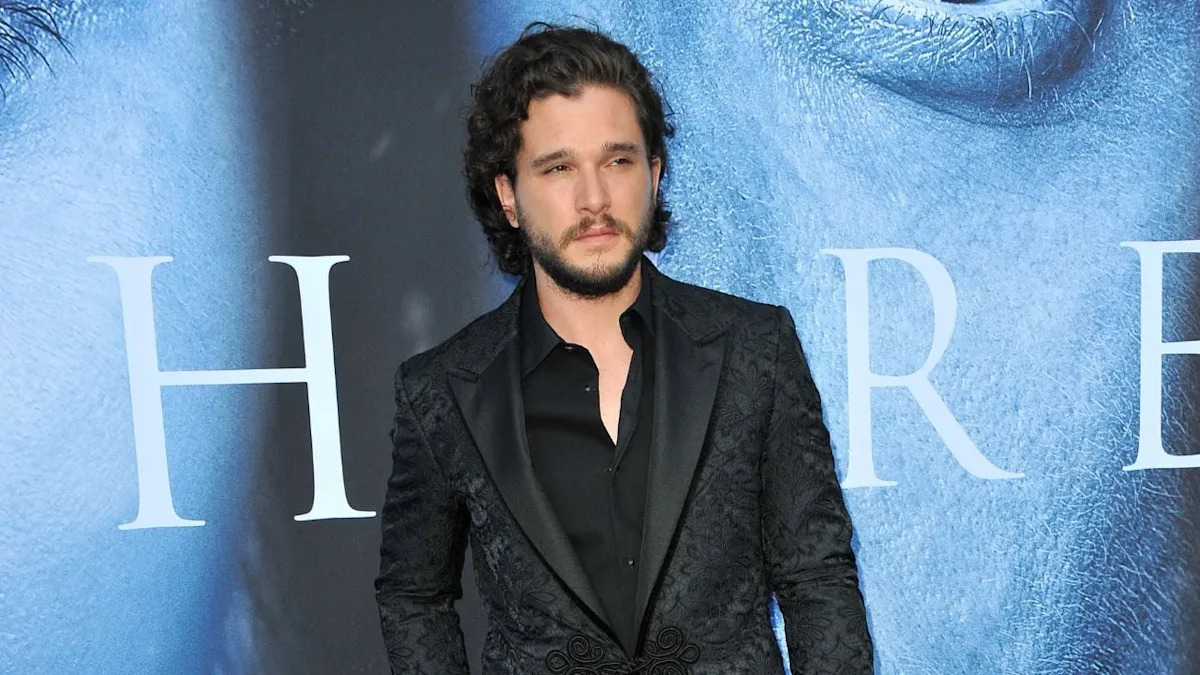
Kit Harington opens up in more detail about the difficult period following the end of «Game of Thrones» , including a six-week stint in rehab, which began just as the show's final season was about to air.
In a new interview for Variety Actors on Actors Harington revealed his decision to check into rehab with his former co-star Peter Dinklage during the premiere of Season 8. E! News reported that Harington described his stay in rehab as six weeks of isolation without a phone, saying he needed to quit drinking and "get his head straight.".
Harington said it was a coincidence of timing.
Harington stated that the timing of his rehab stay and the final season premiere was not planned, given the series' filming schedule. This decision also meant he would not actively participate in the press conference for one of the most high-profile series finales of the decade.
He said one of the reasons he didn't leave was the pressure of promoting the final season and being "in the spotlight." Instead, he decided he couldn't do it and declined to participate in the public presentation.
Dinklage joked that the actors would do anything to avoid the media spotlight, but Harington said skipping this cycle was a relief.
He missed the final season while it was airing.
Due to treatment, Harington missed the public screening of the series finale. This created a strange distance between one of television's most recognizable actors and the finale, which millions of viewers watched and discussed in real time.
The situation was especially unusual because Jon Snow played a central role in the finale. Harington played the role for all eight seasons, and the finale marked the end of a character that had defined his public image for nearly a decade.
The 2019 report was more cautious in its wording.
At the time, Harington's team described the stay in more general terms. In 2019, Entertainment Weekly reported that his representative said Harington used the break in his schedule to spend time at a wellness center and work on personal issues.
Harington's previous statement was more cautious than his new comments. In his conversation with Dinklage, he spoke frankly about sobriety, his need for help, and his decision to step away when the world was expecting him to promote the show.
«Game of Thrones has had a huge impact on me personally.
Image courtesy of Kathy Hutchins/Shutterstock.
Harington has previously spoken about the emotional tension surrounding the finale. «Game of Thrones» . The series brought him international fame, an Emmy Award, and introduced him to Rose Leslie, whom he married in 2018.
The series' conclusion also came with pressure, intense fan criticism, and the burden of ending the story of a character who had accompanied him for much of his adult life. In a new interview, Harington said the time since the series' conclusion has helped him understand who he is and whether he still enjoys acting.
He took a break before starting to rebuild his career.
After his recovery, Harington announced he planned to take a year-long break from acting to recuperate. The situation became even stranger when the COVID-19 pandemic struck just as he was preparing to more cautiously return to work.
This pause was part of a larger reboot. Since then, Harington has taken on projects such as «The Eternals» , «"Industry"» , «Blood for ashes» и «"Horrible"» , having built a career after «Game of Thrones» , which is not limited to just the image of Jon Snow.
During the interview, he also reconnected with Dinklage.
New discussion between the actors proved to be very important, since Harington and Dinklage had not seen each other in person since the finale. «Game of Thrones» .
Entertainment Weekly magazine noted that Harington also recalled filming his first scene with Dinklage. He admitted he was so inexperienced that he thought acting meant remaining completely still, and then wondered why Dinklage was moving so much.
This recollection broadens the scope of the discussion of rehabilitation. Harington came to «Game of Thrones» as a young actor just getting the hang of being in front of the camera, and then left because he needed time away from the pressure of the role.