








Pin1WhatsAppRedditShareEmailTweet1 Shares
It may not be obvious at first glance, but carbon is a fundamental element of life on Earth. DNA and RNA are made of carbon. And not just carbon, of course, but carbon can bond with other molecules to form long chains essential for life. And not just human life, but all life—from plants and fungi to mammals, insects, and beyond. All life on our planet is carbon-based.
Technically, life anywhere must be carbon-based. It's entirely possible that another element could replace carbon in the formation of the molecular chains that make up life's building blocks, but that's all theoretical. We've never seen non-carbon-based life forms before; we mostly just relegate them to science fiction and make them look rather bizarre.
If all life is truly carbon-based, then the question arises: why? What makes carbon the ideal element for life? And how plausible are theories about other elements? Which elements might contribute to the formation of life, and how do we even know? Let's find out!
What allows carbon to form life?

Although hydrogen is the most abundant element in the universe, and oxygen is essential for life, it is carbon that is the foundation of life and the most important element in this equation. This is due to carbon's unique properties, which many other elements lack. In particular, carbon is an excellent team player, easily forming strong bonds with other elements.
The strength of carbon bonds allows for the formation of highly complex molecules. DNA, for example, is an extremely complex molecule. But its function is based on the fact that carbon bonds hold it together. It readily forms long polymer chains, which allow DNA and proteins to exist, as they can reach very long lengths.
The molecular formula of DNA is C15H31N3O13P2. As you can see, carbon plays a key role in the molecule. Here, it bonds with hydrogen, nitrogen, oxygen, and phosphorus. These are the fundamental elements of life. Everything else is built around them, so carbon is a kind of framework or skeleton upon which life is based.
Our world is literally awash with carbon, especially compared to many other elements. Carbon is actually the fourth most abundant element in the entire universe. The first three are hydrogen, helium, and oxygen, all gases. Therefore, carbon is the most common solid substance found. So, given its abundance, it's not surprising that it could be integral to life.
Because atoms are so small, this greatly facilitates the formation of extremely complex molecular chains. As we've already mentioned, carbon can form proteins as well as sugars. Everything that life requires for energy is carbon-based, just like life itself. This means that living organisms can break down other carbon-based molecules to obtain the energy they need to sustain life. It's a sort of microscopic "you are what you eat" scenario.
Carbon cycle

On Earth, there's something called the carbon cycle. It's a macro-scale process that encompasses everything on the planet. It allows the entire planet to recycle carbon, distribute it, and, in a sense, support life.
The world's carbon reserves are limited. We don't destroy it, but we don't create it either. We certainly can't, especially on this scale. So we have as much carbon left as we've ever had. This means that everything that uses it will eventually have to share it. It's entirely possible that some of the carbon you now carry inside you was once inside Abraham Lincoln, a Tyrannosaurus rex, and perhaps the first few single-celled organisms swimming in those waters when life began on our planet.
Plants absorb carbon dioxide from the air. It is stored in the soil and root systems and can be released again when the plants die. The oceans absorb the carbon, and living organisms, such as animals, exhale it into the atmosphere to exchange with oxygen.
A significant part of the carbon cycle is tied to the atmosphere and how carbon dioxide affects air quality and global temperatures. But we can see how carbon moves in other ways as well: when it's taken up by plants, the plant is consumed by animals, the animal is consumed by us, and these carbon atoms are constantly exchanged in various forms. It's not just carbon dioxide; it's also proteins, sugars, and other molecules that are transferred between organisms in the cyclical dance of life.
Are other biochemical processes possible?

So, if carbon can form the basis of life because it readily combines with other elements, are other elements capable of performing the same task? As it turns out, while carbon is well-suited for this task, it's not alone. It's important to remember that all of this is purely theoretical, but what is science if it doesn't ask questions to test whether something is possible?
Silicon

Silicon is located just below carbon on the periodic table. It's typically the most frequently mentioned element when discussing other potential life forms. This is because silicon closely mimics carbon in its molecular structure. It's not as good at forming complex bonds with other elements, but it's still quite good.
Structurally, many of silicon's bonds and molecules resemble those of carbon. Silicon can also form strong bonds with oxygen, which would be necessary to create the building blocks of life, at least as we understand it. But this approach also has potential drawbacks.
Not all bonds between silicon atoms will be as strong as those between carbon atoms. Silicon is ideal for high temperatures, but at ordinary Earth surface temperatures, the bonds between carbon atoms are much stronger. Furthermore, silicon atoms are much larger than carbon atoms. This makes them somewhat bulky in some molecules and reduces the potential for creating some of the most complex polymers that can be made with carbon.
Researchers have successfully manipulated microbes in the laboratory to create organic compounds from silicon, something that doesn't typically occur in nature. This significantly strengthens the idea that we might one day discover silicon-based life in the universe.
Methane

The idea of potential methane-based life forms is a bit more theoretical than the silicon question. This is where things get much more complex and difficult to understand. At the very least, carbon and silicon are distinct elements. Methane is a molecule composed of carbon and oxygen, so perhaps this is technically carbon-based life again? However, methane is not an environment in which most life forms on Earth can thrive. You certainly wouldn't want to breathe it in on a regular basis.
NASA researchers studying one of Saturn's moons, Titan, have discovered vinyl cyanide in its atmosphere. They believe this organic compound may provide cell membranes for methane-fueled life forms. These would likely be microorganisms in the methane oceans covering the moon, but it's theoretically possible.
Membranes on Titan would be made of nitrogen, carbon, and hydrogen, as opposed to the phosphorus and oxygen found here on Earth.
Sulfur

The oldest fossils we've ever found on Earth date back to 3.4 billion years ago. This was the time of life's origins, and we didn't have a planet that looked like it does today. There was no oxygen in the atmosphere, and no photosynthesis to convert carbon dioxide into something breathable. The world was hot, gaseous, and extremely inhospitable to anything that exists today. So how did life begin, and what did it do?
Fossils discovered by scientists indicate the existence of microorganisms that use sulfur as an energy source. These microorganisms grew and multiplied, raising hopes that life, or at least evidence of it, might one day be discovered on Mars.
Furthermore, it's believed that some of the sulfur compounds that helped give rise to life on Earth originally came from space. If they landed here and gave rise to dinosaurs, pigeons, and football players, who knows what might have happened on another planet?
Ammonia
Like methane, ammonia is another substance in which, to put it mildly, most living organisms on Earth cannot survive. There are theories about ammonia-based life, but in this case, it's not so much about ammonia replacing carbon—which it can't do because it's a molecule, not an atom—but rather about replacing water.
Ammonia isn't entirely incompatible with life. We produce ammonia in our urine, so it's part of our biology, though it's not considered an organic substance. This is simply because it's a nitrogen-containing compound that doesn't contain carbon. Carbon-based life is organic. However, if we were to discover non-carbon-based life, your definition of organic matter would have to be adjusted.
Since very few planets in the Solar System, and perhaps even the entire Universe, have liquid water, it's logical to wonder what other liquids could have been used to generate life. Life as we know it requires water, but who said life has to be like us? That's where ammonia comes in.
Even in our solar system, there are limited liquids that can be found in large quantities. Mercury and Venus contain sulfuric acid. While we have water, and it has been detected on some moons, colder planets are likely to have ammonia, which has a lower freezing point. As temperatures drop, methane liquefies, and even nitrogen may be present in liquid form in the outer reaches of the solar system.
The presence of a liquid press doesn't mean it can operate in living organisms. It must meet a number of criteria, including the ability to act as a solvent, low viscosity, resistance to temperature fluctuations, and other factors. Given all this, if we rule out liquid water, which is known to be ideal, ammonia is our next best option.
Ammonia is the fourth most abundant molecule in the universe, and its chemical composition is very similar to water. It's not exactly like water, which is essential for living organisms to function, but we also base our knowledge on what we know and have seen, so it's difficult to say whether we're missing any details.
Life in a Cosmic Necklace
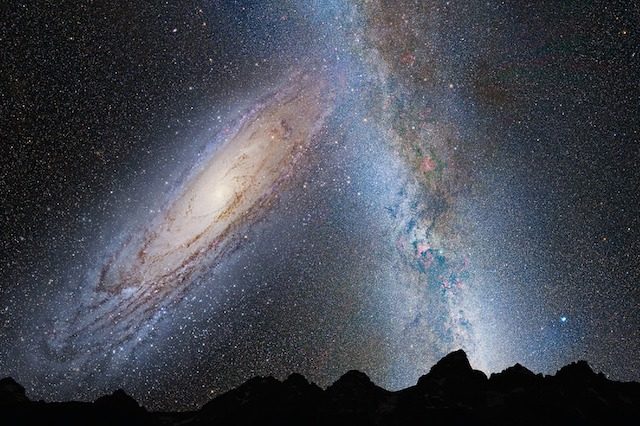
There's another theory about how life might have originated somewhere in the universe that leaves the idea of carbon-based life far behind. It goes beyond even the idea of silicon-based life, ammonia-based life, or anything similar. It's life as a cosmic necklace, and it's the most extreme of extremes.
If we consider what we know about extreme life on Earth, we might recall something like the tardigrade. These tiny organisms can survive in extreme cold, extreme heat, and even the vacuum of space. There are also life forms that thrive around incredibly hot, toxic hydrothermal vents erupting on the ocean floor. While these are exceptions, they show that there are instances where life can thrive in ways that defy our expectations. Where 99.9% of everything else would perish, these creatures thrive as peaceful creatures. Now imagine this on a cosmic scale.
If we set aside what we think we know about the essentials for life—namely, carbon, oxygen, water, the right gravity, and the right distance from the star—we can begin searching in truly exotic places. For example, inside the stars themselves.
This is purely theoretical speculation, but the idea is that a particle similar to the Higgs boson, called a magnetic monopole, may exist. We don't even know if this particle is real. Like the Higgs boson, it remained theoretical for a long time. Although the existence of the Higgs boson was eventually proven, this particle still eludes us.
If true, these particles could connect on cosmic threads, forming DNA-like structures within stars. If the ability to self-replicate is encoded in RNA and DNA, these particles could perform a similar function within stars, coding and reproducing, creating a kind of life unlike anything existing on our world. It would be particle-based life, or at least its building blocks.
As for whether these necklaces could ever turn into something conscious, that's a whole other story, and who knows?
Other articles that may interest you