






Just a couple of decades ago, replacing a toilet was a real headache. You had to either find a model whose outlet perfectly matches the cast-iron socket in the floor, or resort to the heavy artillery of removing the old sewer system. This was always messy, noisy, and required the services of a professional. Everything changed with the widespread adoption of plastic sewer systems and the advent of a simple yet ingenious accessory—a flexible corrugated pipe for connecting the toilet to the riser. This element has dramatically simplified the lives of both DIYers and professional plumbers. Now, plumbing installation is no longer the preserve of a select few, but an accessible task that can be completed in a couple of hours.
The corrugated pipe is a flexible drain trap made of durable plastic that can be stretched, compressed, and bent within reasonable limits. This property completely eliminates the problem of misalignment: the distance from the wall to the center of the toilet outlet and the height of the sewer inlet are no longer critical. It doesn't matter whether you still have an old cast-iron pipe or have a modern plastic one installed—the flexible adapter connects everything. The interior surface of a high-quality corrugated pipe is smooth, preventing debris from getting caught and reducing the risk of clogs.
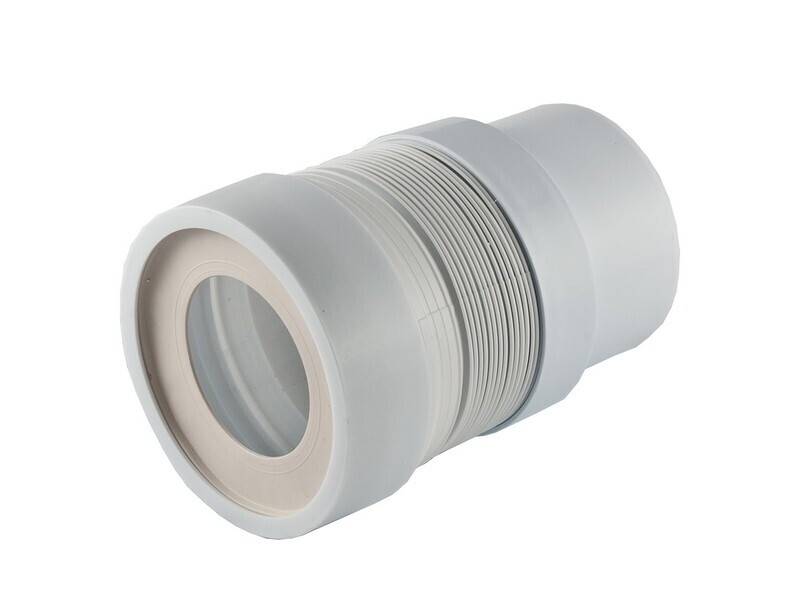
Criteria for choosing the right corrugation
Despite their apparent simplicity, corrugated pipes vary in a number of ways, and your choice directly impacts the service life and trouble-free operation of the connection. The first thing to consider is the material and rigidity. Both soft and rigid models are available on the market. Soft corrugated pipes are easier to install, especially in tight spaces, and bend better, adapting to complex geometries. Rigid pipes, on the other hand, typically offer increased strength and wear resistance, but require more precise alignment of the directions.
The second key factor is reinforcement. Some manufacturers reinforce the walls of the corrugated pipe with a welded metal or plastic spiral. This design holds its shape better, doesn't sag under its own weight or the pressure of the drain, and is much less susceptible to accidental deformation. Reinforced corrugated pipe lasts longer, although it is somewhat more expensive. It's also important to estimate the required length in advance. Standard sizes range from 20 to 50 cm, but it's best to choose a little extra to avoid stretching the pipe to its limits, which will thin the walls.
- Connection diameter: The toilet outlet typically has a diameter of 110 mm, and the sewer connection is either 50 mm or 110 mm. The corrugated pipe must have appropriate cuffs. Universal models often have a stepped design.
- Quality of rubber cuffs: The sealing quality depends on them. The cuffs should be soft, elastic, and free of cracks and dryness.
- Brand and price: Don't go for the cheapest, no-name options. It's better to choose mid-priced products from a reputable plumbing accessories manufacturer—this guarantees consistent geometry and high-quality materials.
Step-by-step installation process and common errors
Installing the corrugated pipe is actually quite simple, but it does require care. Start by removing the old toilet and thoroughly cleaning the outlet of any remaining old mortar, cement, or sealant. Any unevenness will compromise the seal of the new connection. Next, try on the new corrugated pipe: first insert it into the sewer socket, then pull it over the toilet outlet. It's important not to mix up the sides—the toilet side usually has a larger diameter. After dry fitting, you can begin final assembly.
Before final installation, I always recommend applying a layer of silicone plumbing sealant to the rubber seals. This isn't necessary, but it creates an additional barrier against leaks and odors. Carefully insert the corrugated pipe into the drain, then install the toilet in place, aligning the outlet with the corrugated adapter. Lower the toilet evenly, without tilting it, so the corrugated pipe fits perfectly. After this, you can secure the toilet to the floor, connect the water supply, and perform a test flush.

Nuances that are often forgotten
After installation, inspect the finished product. The corrugated pipe should not have any sharp bends and, most importantly, should not sag in a large U-shape in the middle. This sag will constantly collect water and solid waste, inevitably leading to a clog. If the pipe is stretched and sagging due to the large distance between the wall and the toilet, it needs to be supported. You can carefully tie it to a pre-installed stand with a plastic tie or create a support from a piece of foam to relieve the mechanical stress.
- Service life: Corrugated tubing is a consumable. Even high-quality ones rarely last more than 5-7 years. The plastic loses its elasticity, and the rubber seals harden. This isn't a drawback, but a feature, given the low cost and ease of replacement.
- Aesthetics: An open-walled corrugated pipe doesn't look very attractive. If the toilet is open (without a shelf), consider a decorative screen or a compact model with a concealed connection.
- Preventing blockages: A smooth inner surface isn't a panacea. To prolong the life of the connection, avoid flushing large debris, hair, and undissolved hygiene products down the toilet.
Comparison with alternative connection methods
Corrugated pipes aren't the only way to connect a toilet to the sewer system. There are also rigid plastic eccentrics (offset elbows) and straight pipes. So, when should you choose one? A rigid eccentric is an excellent solution if the axial deviation is small (2-5 cm) and the geometry allows for its installation. It's more reliable, doesn't sag, and has a neater appearance. A straight pipe is only suitable for a perfect alignment of the outlet and inlet.
The corrugated pipe excels in its versatility. It's indispensable for complex layouts, such as when the toilet is located far from the riser or at an odd angle. It's the ideal tool for quick repairs, temporary solutions, or situations where precise geometry calculations are unavailable or undesirable. It's forgiving of many installation errors, which is what makes it so popular among amateurs. The key is to be mindful of its weaknesses (sagging, limited service life) and compensate for them with proper installation.
Thus, flexible corrugated pipe is not just a piece of plastic, but a complete plumbing solution that has changed installation standards. Its introduction has democratized the process of replacing plumbing fixtures, enabling anyone to tackle the task themselves. A wise choice, careful installation that takes all the nuances into account, and an understanding that this element requires periodic inspection and replacement are the key to a long and trouble-free service life for your bathroom. And while its appearance may not always be perfect, its practical benefits and time savings more than compensate.