








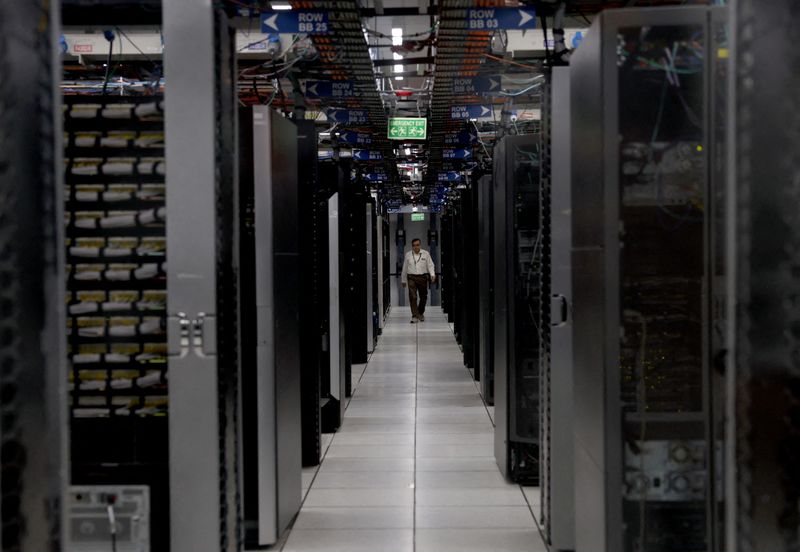
SINGAPORE, June 3 (Reuters) - Data centres will consume twice as much electricity and water by 2030 as they expand to meet soaring demand from artificial intelligence, U.N. researchers predict.
If governments fail to consider the growing environmental costs of AI, its rapid adoption could also deplete limited land resources and generate massive amounts of e-waste, warns a report from the United Nations University's Institute for Water, Environment and Health.
Here are some key findings:
• Last year, data centers consumed 448 terawatt-hours of electricity worldwide, more than all of Saudi Arabia. Artificial intelligence accounted for a fifth of that.
• They also consumed 4.5 trillion liters of water, enough to meet the needs of more than 600 million people in sub-Saharan Africa, while emitting 189 million tons of carbon dioxide.
• «In public debates, AI is often still thought of as software, but AI is also physical infrastructure: data centers, power generation, cooling systems, transmission networks, chips, minerals, land and water,» said Kaveh Madani, director of the institute and lead author of the report.
• By 2030, annual data center electricity consumption is projected to double to 945 TWh, roughly the same as Japan as a whole, with AI accounting for 401 TWh of the total.
• Water consumption is expected to reach 9.3 trillion liters and CO2 emissions will rise to 399 million tons.
• The land area used for data centers is projected to increase from 6,900 square kilometers (2,664 square miles) last year to more than 14,500 square kilometers by 2030, according to the report.
• While AI can improve efficiency by optimizing power grids and reducing waste, overall demand for electricity and water will likely still rise as countries and corporations seek to build new capacity.
• «At the moment, the competition for faster growth is overshadowing the most basic principles of sustainable development,» Madani added.
• "AI won't simply "dry out" globally due to water or power shortages. But in some places, poorly planned data center expansion could collide with existing resource shortages. That's why responsible planning is important now, before infrastructure and dependencies become insurmountable.".
(Reporting by David Stanway; Editing by Sherry Jacob-Phillips)