






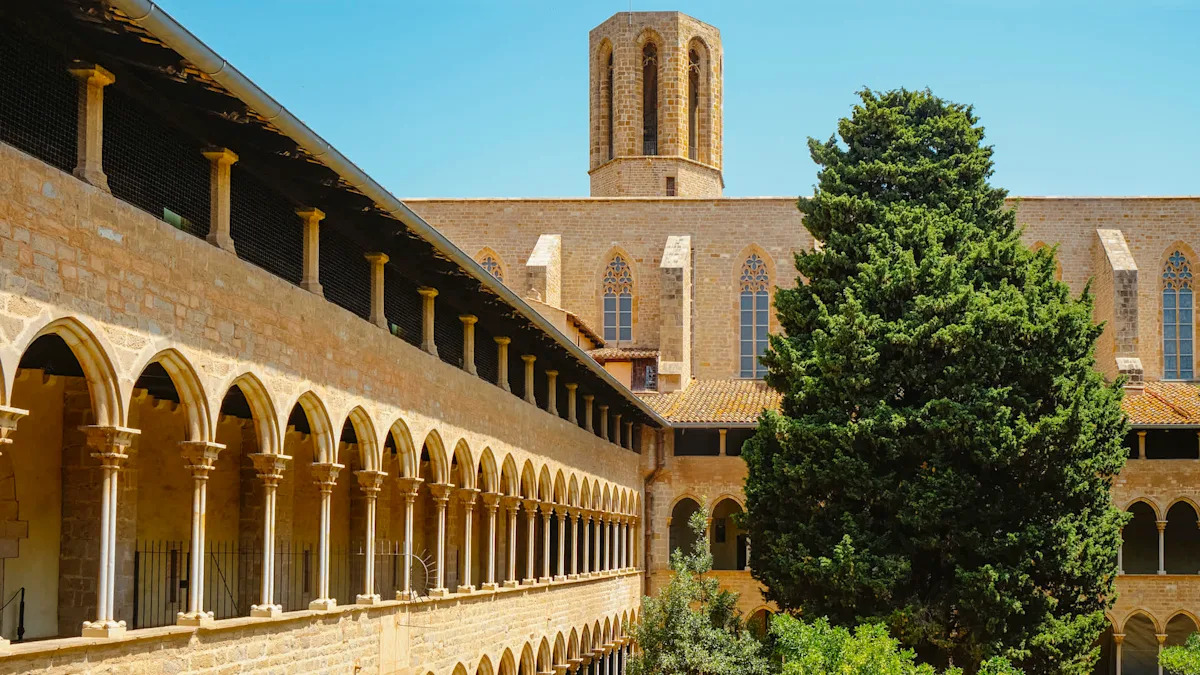
In Barcelona, a centuries-old monastery is rewriting part of its history after archaeologists uncovered tombs whose existence remained virtually unconfirmed for generations. One of the biggest surprises was the discovery of a tomb long thought to be that of Artau de Foses, but which contained no human remains.
Researchers studying eight 14th-century tombs at the Royal Monastery of Santa Maria de Pedralbes have uncovered evidence that challenges several traditional identifications associated with the earliest burials at the site. The investigation began in 2024, ahead of the monastery's 700th anniversary, and to date, specialists have examined the remains of 25 individuals buried during the institution's early years.
As reported by Heritage Daily, in a tomb commonly associated with Artau de Foches, archaeologists discovered the remains of two women and three children, not a man. Another tomb, associated with Francesca Saportella, contained the remains of at least nine people, indicating it had been rediscovered and reused over an extended period.
The team also examined the tomb of Queen Elisenda de Moncada. Her remains were discovered in a medieval wooden chest; her skeleton suggests she died around the age of 70, and fragments of silk fabric woven with metallic thread survived from her burial.
The excavations also revealed a wide range of funerary practices. Some deceased were wrapped in cloth before burial, while others were placed directly into tombs. Finds, including candles, ropes, and traces of plants, flowers, and aromatic substances, indicate rituals that were both symbolic and deeply personal.
Many of the skeletons showed signs of arthritis, trauma, and other health problems, suggesting the aging, illness, and neglect that took place in medieval Barcelona.
The work continues, and researchers are now turning to laboratory tests to fill in the gaps left by written history. DNA and dental samples are being taken to identify some of the people buried there and determine possible family relationships between them. These findings may help explain why women and children were placed in tombs once thought to belong to specific individuals.
Barcelona City Council said scientists also plan to conduct further analysis, including radiocarbon dating, in 2027. This should help clarify when the burials took place and whether some tombs were reused by different generations, as Francesca Saportella's burial appears to suggest.
As the monastery approaches its 700th anniversary, research reveals that its tombs still have much to tell. The story of who was buried there and why continues.
Subscribe to TCD's free newsletters to receive helpful tips, actionable advice, and a chance to win $5,000 toward your home improvement. To see more stories like this, change your Google preferences here.