






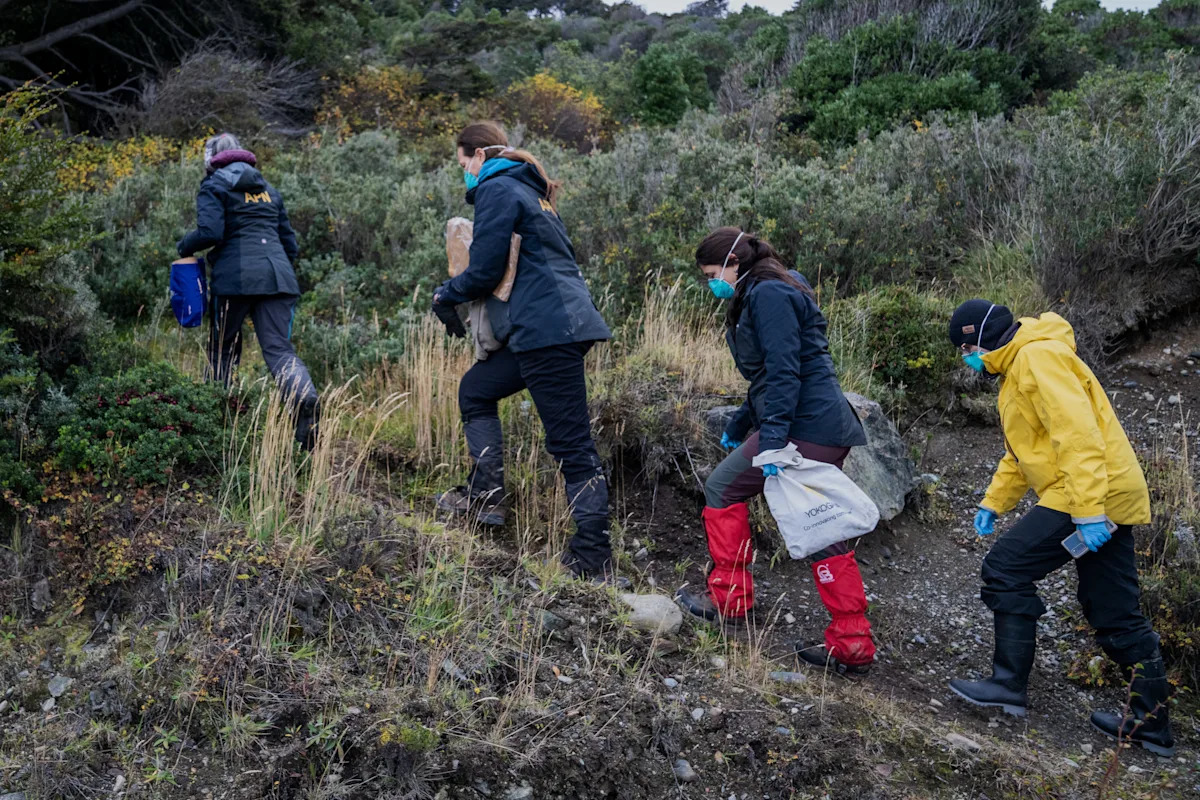
BUENOS AIRES, Argentina (AP) — Argentina announced Friday it is expanding its investigation into the origins of the hantavirus outbreak that struck a cruise ship in the Atlantic last month. Scientists have been dispatched to capture and test rats in the western province of Mendoza, while laboratory results from the southernmost city of Ushuaia are pending.
Argentine authorities said biologists from the US Centers for Disease Control and Prevention will join the mission next week in Mendoza.
The rare outbreak on the MV Hondius was caused by Andean hantavirus, a rodent-borne disease endemic to Argentina and Chile and the only hantavirus believed to be capable of human-to-human transmission in some cases.
Retracing the virus's chain of transmission is a complex task, and Argentine authorities say it may never be possible to pinpoint exactly where the first known victims—a Dutch couple who died in April—were infected before boarding a cruise ship in Ushuaia. However, experts say that understanding the origins of the outbreak will provide valuable insights into how this rare virus spread and provide important lessons for disease control.
As repatriated cruise ship passengers from more than 20 countries disembark and are placed in specialized quarantine centers, epidemiologists are studying the 11 confirmed cases of hantavirus, including the three fatalities, to better understand the chain of transmission.
Argentine scientists are attempting to reconstruct the travel itinerary of the Dutch tourists, believing that the initial source of the virus on board was the man's contact with rodent feces or urine during their months-long voyage through Argentina and Chile before the ship's departure. The typical incubation period before symptoms appear is about three weeks, but can be as long as eight.
Shortly after news of the outbreak broke, Argentina's Ministry of Health identified Ushuaia as a possible source of infection and last month sent researchers from the state-run Malbran Research Institute to collect rodent samples from various wooded areas around the city.
Local authorities in Ushuaia, whose economy relies heavily on tourism and is known for its location "at the end of the world," have categorically denied the claim that the virus originated there. Although Andean hantavirus infects several dozen people annually in Argentina's northern Patagonia region, it has never been detected in Ushuaia or the entire Tierra del Fuego archipelago.
The Ministry of Health said on Friday it was still awaiting laboratory test results to determine whether the couple contracted the virus at that location.
On Friday, the ministry announced that specialists from Malbran, together with their American colleagues from the CDC, are preparing to test rodents for hantavirus in the city of Malargüe, Mendoza province, from June 8 to 12.
A representative of the Malbran Institute confirmed that the Dutch couple visited Malargüe during a trip through the Mendoza wine region in the northeastern province of Misiones on the final leg of their Argentina trip.
Malbran CEO Claudia Perandones met with CDC investigators in Argentina on Friday to discuss the operation, which she said will involve teams in protective gear collecting blood samples from dead rodents and transporting the material to the main lab in Buenos Aires for analysis. Authorities said the results could be ready within a month.
The World Health Organization has made it clear that given the low risk of transmission, hantavirus is not expected to become a pandemic threat.
However, Andean hantavirus is a concern worldwide due to its high mortality rate, reaching 30%, and the current lack of treatment and vaccines.