








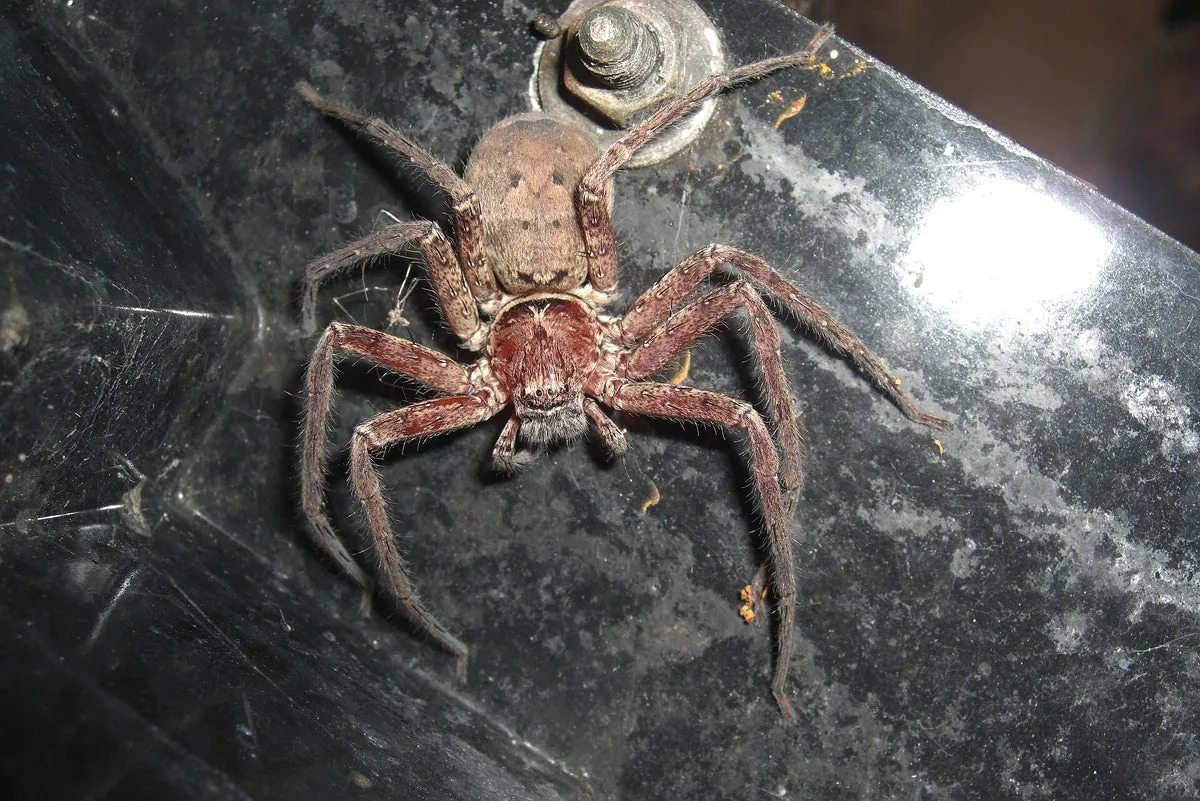
The Australian jungle huntsman spider is the fastest arachnid in the world, reaching a top speed of nearly 3.6 meters per second, according to a new lab study.
The Moroccan flik-flik spider was long considered the fastest in the world, reaching speeds of almost 1.7 m/s, but some experts disagreed that this was a form of sprinting.
To settle this debate, researchers from Germany's University of Greifswald and Imperial College London conducted a laboratory experiment with more than 160 live spider species from the UK, Australia, North America, and southern Europe, as well as dozens of specimens purchased from pet stores.
«"We measured maximum sustainable running speed in 236 individuals representing 162 species," the researchers wrote in a yet-to-be-peer-reviewed study published in bioaRxiv.
«"To ensure maximum coverage, we supplemented these measurements with published data for an additional 96 species.".
The spiders were individually weighed and tested for maximum speed on A4 and A3 grid paper, while cameras were used to monitor the biomechanics of their movements.
The illustrations were mounted on a rigid plastic tray or metal sheet, and liquid paraffin was applied to the walls to prevent them from sliding off for climbing animals.
Researchers found that the huntsman spider collected in Queensland was the fastest of all, reaching a top speed of 3.59 m/s.
The study found that a spider's running speed roughly correlated with its body mass.
«Running speed increased significantly with increasing body mass: from a minimum value of 0.018 m/s measured in the money spider Maso sundevalli (body mass 1 mg), up to a maximum of 3.59 meters per second, recorded in the huntsman spider Heteropoda cervina», — they noted.
However, significant differences in speed were observed among spiders with very similar body mass.
As an example of this discrepancy, they cited data showing that the orange purse spider (Calommata signata ) and the tube spider ( Segestria florentina ) weigh 200 mg each, but their maximum speed differs by 28 times.
According to scientists, larger spiders tend to run faster unless they are so large that their heavy abdomens create excessive strain on them.
There are some notable exceptions, such as the tiny orange goblin spider. Oonops pulcher , which weighs only 0.1 mg, but moves at a speed of more than 0.2 m/s.
The spider was so fast for its size that researcher Shreyas Kuchibhotla from ICL said New Scientist magazine, that the spider "practically teleported.".
Scientists say that running faster is also associated with longer legs.
«"High running performance, controlling for both body size and ancestry, was associated with relatively longer legs… but not with lean legs," they wrote.
Scientists say a spider's running speed depends on whether it hunts on the ground or in foliage, and whether it moves primarily vertically or upside down.
«"These differences may well alter both the selective value of running speed and the way it is realized," they wrote.