








Bathing is more than just a hygienic procedure; it's a crucial element of a child's development. It's in the water that children learn coordination, explore textures, develop fine motor skills, and experience a wealth of positive emotions. But safety is an absolute priority. A slippery bathtub bottom and tiled floor pose a risk even for adults, let alone toddlers. Children's bath mats solve this problem, but choosing one requires careful consideration of the material, design, and age-appropriate characteristics.
Materials: What is safe and practical?
The main requirements for the material are non-toxicity, odorlessness, mold resistance, and ease of maintenance. The best options are considered to be:
Thermoplastic rubber (TPE) — a modern material that is phthalate- and lead-free and odorless even when heated. It has excellent wet adhesion, is easy to clean, and dries quickly.
Silicone — hypoallergenic, resistant to high temperatures, and non-absorbent, preventing bacterial growth. However, silicone mats are often more expensive, and there are many counterfeits on the market made from low-quality PVC.
Natural rubber - environmentally friendly and durable, but may cause allergies in sensitive children.
What to avoid: PVC with a chemical smell, cheap synthetic fabrics (they accumulate moisture and mold), and rugs with small parts that can be torn off and swallowed.
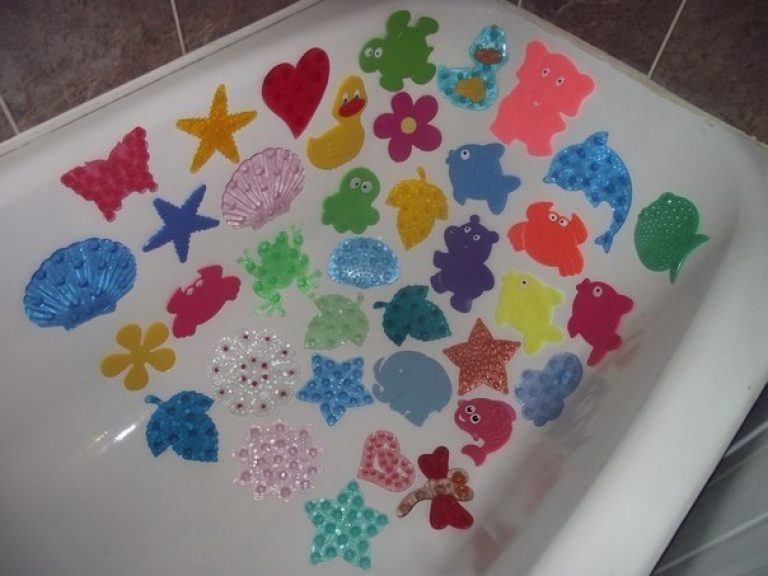
Age characteristics: from newborns to preschoolers
For babies under one year old, mats with suction cups are essential. They adhere securely to the bottom of the tub and don't shift as the baby moves. Models with a soft, but not pile, surface are ideal, as pile can retain moisture.
For children aged 1-3, play mats with play elements, such as animals, numbers, and puzzles, are ideal. They stimulate cognitive activity and turn bath time into a fun ritual. Puzzle mats are especially helpful: assembling them helps children develop logical thinking and fine motor skills.
For preschoolers (3-7 years old), the emphasis shifts to safety: children are already active, but not always coordinated. Mats with a strong anti-slip structure and a firm grip are essential. Models that change color when exposed to water at a certain temperature are also helpful—this helps prevent burns.
Construction: suction cups, shape and fastening
Suction cups are a key safety feature. They should be large, flexible, and cover a significant portion of the bottom surface. Before first use, thoroughly wet the mat and press it against the surface to remove any air. Mats with double-sided suction cups allow you to attach toys, turning the bathtub into an interactive playground.
Shape also matters: oval and round models are best for baby bathtubs, while rectangular ones are best for adult bathtubs or floor-standing use. Floor mats should be absorbent (cotton or microfiber) but also dry quickly to avoid becoming a breeding ground for mold.

- Size: For newborns, 30x40 cm is enough, for preschoolers - at least 50x70 cm.
- Thickness: Optimally 3–5 mm - thin ones do not protect from the cold, thick ones are not fixed with suction cups.
- Care: The mat should withstand regular washing without fading or losing its shape.
Creative Uses: From Safety to Education
Modern mats are more than just anti-slip surfaces; they're also developmental tools. For example, mats with letters and numbers help children learn the alphabet through play. Models with animals or geometric shapes develop tactile perception. And "thermometer" mats teach children to monitor water temperature.

It's important to remember: even the best bath mat doesn't replace the need for an adult's presence. However, it significantly reduces risks and makes bathing a safe, engaging, and educational experience. By investing in a quality bath mat, you're ensuring not only your child's physical safety but also their emotional comfort in the bath.