








When entering a bathroom, we first notice the fixtures and finishes, but it's the accessories that create that feeling of completeness and comfort. Among these useful little touches, rubber mats occupy a special place. Often perceived as purely practical, modern models can become a striking design accent, a source of health and, of course, a guarantee of safety for everyone in the family. Let's figure out how to choose the perfect mat that won't just sit on the floor but will actually provide real benefits.

Safety First: Why You Need a Non-Slip Mat
The primary and most important function of any bath mat is to prevent falls. A wet and soapy bathtub, shower tray, or tiled floor can be extremely dangerous, especially for children and the elderly. A rubber mat, thanks to its high friction, provides reliable traction. Those who only use a mat in the bathtub make a mistake: after bathing, they step barefoot onto the wet floor, leaving a high risk of slipping. Ideally, two mats should be used: one inside the bathtub or shower and one on the floor nearby.
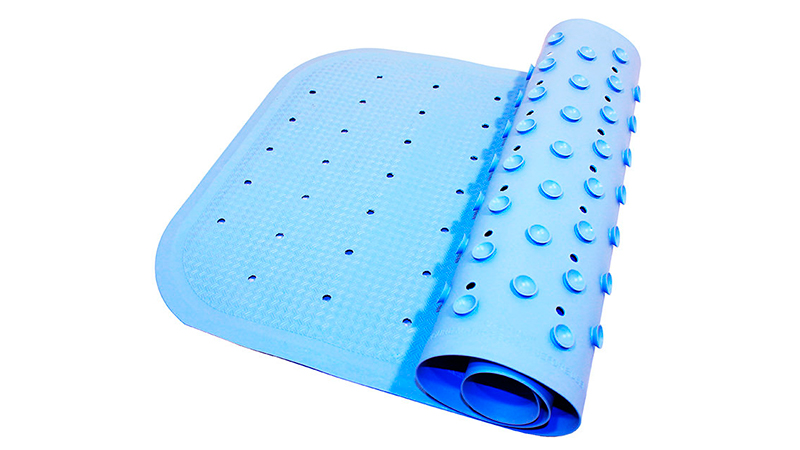
Modern bathtub models are equipped with suction cups. The secret to their secure hold is simple: attach the mat to a completely dry and clean surface. If placed on water droplets or soap scum, the suction cups won't work, and the mat will slip underfoot. Besides preventing slipping, the rubber mat also acts as an electrical insulator, which is important in rooms with numerous electrical appliances (hair dryers, washing machines). And the soft, resilient surface makes stepping out of the bathtub more comfortable than stepping onto cold tiles.
- Anti-slip for bath/shower: They have suction cups on one side and a textured surface on the other. They come in different shapes and sizes to suit specific plumbing fixtures.
- Anti-slip for floors: They are often made of non-slip rubber or have a textile pile on a rubber backing. They absorb moisture from your feet and prevent puddles from spreading across the floor.
Children's rugs: safety and play in one package
Bathing a baby is a ritual, and the right mat can make it not only safe but also fun. Children's models differ from adult models with their bright, often cartoonish designs (sea creatures, animals, cars), which attract children's attention and turn bathing into a game. But most importantly, they meet strict safety and material requirements.
The ideal baby mat is made of high-quality, hypoallergenic silicone or rubber and has no strong odor. All edges and corners should be perfectly finished, free of burrs. The suction cups should hold securely, and the textured side often features educational elements (letters, numbers, and figures) that massage the feet and stimulate tactile sensations. Some "smart" models change color at a certain water temperature, alerting parents when the water is too hot for their baby's delicate skin.

Massage Mats: Health Benefits After a Workday
This is no longer just an accessory, but a true home foot trainer. The surface of this mat is covered with numerous raised elements of varying shapes and heights, simulating pebbles, pine cones, or special massage spikes. When you stand on it barefoot (in the shower, bath, or on the floor afterwards), it actively stimulates the biologically active points of your feet.
Regular use of this type of massage improves circulation, relieves fatigue and swelling in the legs, and stimulates internal organs through reflexogenic zones. Massage mats are especially recommended for those with early stages of flat feet to strengthen the arches of the feet. The most effective models are round, made of elastic silicone, which provides deep but gentle massage. They can be used in the bathroom or anywhere else for daily preventative treatments.
Specialized and designer solutions
In addition to the basic types, there are highly specialized mats that solve specific problems.
- Anti-vibration. Their main purpose is to protect floor tiles from scratches and dampen vibrations from the washing machine. They're simply a thick, dense sheet of rubber that fits under the machine's feet.
- Temperature sensitive. Innovative models that change color when exposed to hot water. Indispensable for families with small children, as they clearly indicate the danger zone.
- Trace. A fun floor accessory. When wet, the matte surface creates a bright, colorful mark that disappears after a few seconds. A hit with both kids and adults.
- Made from natural materials. For example, a rug made of bamboo slats on a rubber backing. Bamboo is warm, pleasant to the touch, has natural antibacterial properties, and looks very stylish in eco-friendly interiors.
- Do it yourself. You can create an original rug yourself by gluing smooth sea pebbles, wine corks, or ceramic tile fragments onto a rubber base (old linoleum will do), laying them out in any pattern you like.

Why rubber? The advantages of the material
Bath mats are made from microfiber, cotton, polyester, and bamboo. However, rubber mats offer a number of undeniable advantages, especially for humid environments.
- Form stability. Rubber does not deform over time, does not stretch, and does not shrink after numerous washes and contact with water.
- Resistance to pollution. Rubber does not retain stains from cosmetics, shampoos or iodine, which can penetrate fabric coverings.
- Hygiene. High-quality rubber contains antifungal and antibacterial components that prevent the growth of mold and microbes in the porous structure.
- Quick drying. Rubber doesn't absorb water, but rather traps it on the surface. After use, simply shake the mat off and hang it over the edge of the bathtub—it's completely dry within an hour.
- Durability. With proper care, a rubber mat will last for many years without losing its properties or appearance.
How to care for a rubber mat so it lasts for years
Proper care is the key to a long lifespan for even the highest-quality accessory. After each use, it's best to rinse the mat with clean water to remove any soap residue and hang it to dry. Avoid leaving it crumpled in a corner, as this can cause deformation and an unpleasant odor. Dry it in a well-ventilated area, but avoid direct sunlight, which can crack the rubber.
A deep cleaning is recommended every two to three weeks. Rubber mats can be washed with hot water and regular laundry soap or dishwashing liquid. Rubber-backed textile mats can be machine washed on a delicate cycle without spinning or bleach. Regular cleaning not only maintains hygiene but also preserves the elasticity of the material and the vibrancy of the colors. When choosing a mat, choose reputable manufacturers, paying attention to the quality of the edge finish and the clarity of the pattern. This simple accessory can make your bathroom significantly safer, more comfortable, and more interesting.