






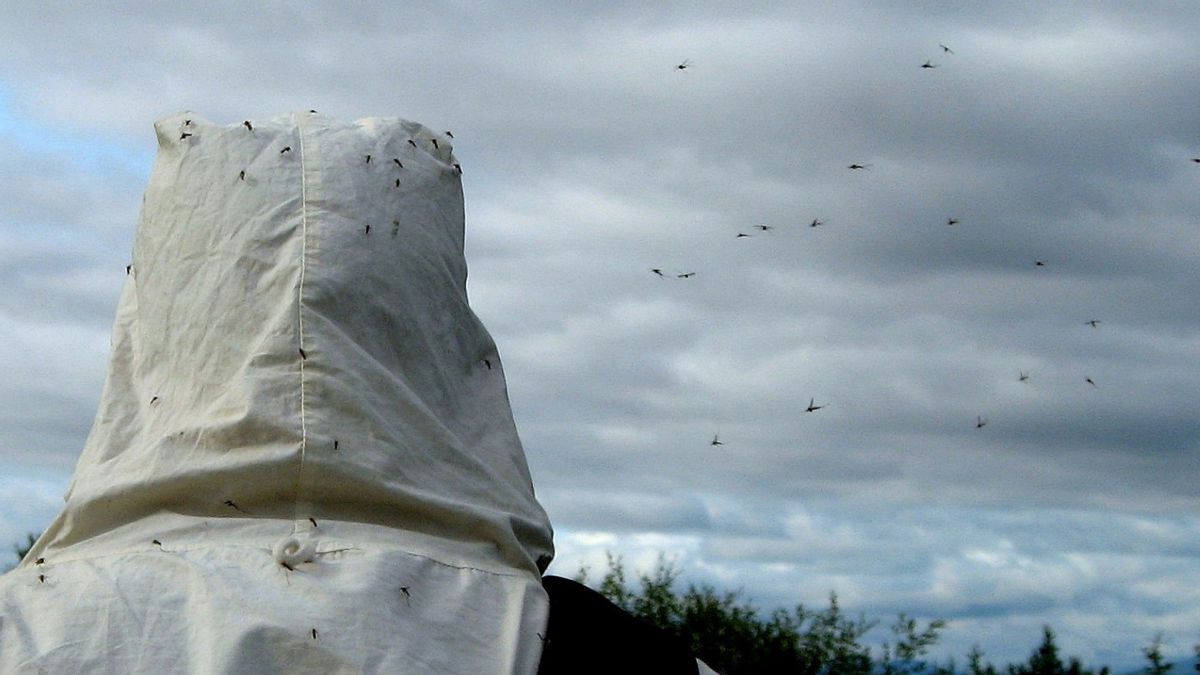
- The claim that tech company Google will release up to 64 million bacteria-infected mosquitoes in Florida and California is still being tested.
- These allegations relate to Google's Debug project, which releases sterile male mosquitoes into the wild to control populations and reduce the risk of virus transmission to humans. In 2025, Google submitted two applications to the Environmental Protection Agency to release a total of 96 million of its Wolbachia-carrying mosquitoes in New Jersey, California, and Florida between 2026 and 2028.
- When a male mosquito carrying Wolbachia bacteria mates with a wild female, her eggs fail to hatch, leading to population decline. Wolbachia bacteria cannot cause disease in humans or animals, and the environmental risk from their large-scale spread is negligible.
- At the time of this writing, the Environmental Protection Agency (EPA) has not granted Google approval for any of the proposed release options. Therefore, we leave this statement unscored.
- Snopes will update this report if additional information becomes available. We have contacted Google and the EPA regarding the application review timeline and are awaiting responses.
In May and June 2026, a claim (archived) circulated online that tech company Google would release up to 64 million bacteria-infected mosquitoes in Florida and California.
One Facebook user who shared this statement wrote:
Google is planning one of the LARGEST open-air biological experiments in US history. 64 MILLION bacteria-infected mosquitoes are planned to be released in Florida and California, potentially causing irreversible damage to the ecosystem.
Similar claims were also circulated on X (archive), Instagram (archive), Threads (archive), and Reddit (archive). Some claims cited a lower estimate of 32 million mosquitoes. Snopes readers also contacted us about this claim.
The allegations relate to the Google Debug project, which aims to reduce the impact of mosquito-borne diseases by releasing sterile male mosquitoes carrying the Wolbachia bacteria into the wild. Since male mosquitoes do not bite humans, their release into the wild generally does not result in an increase in bites.
Wolbachia is a common type of bacteria found in insects. When a male mosquito carrying these bacteria mates with a female mosquito that does not carry the bacteria, the female's eggs will not hatch. According to the Centers for Disease Control and Prevention, Wolbachia bacteria cannot cause disease in humans or animals.
According to the Federal Register, Google submitted two applications to the US Environmental Protection Agency in 2025 to release sterile male mosquitoes carrying strains of Wolbachia bacteria in New Jersey, Florida, and California. One application proposed releasing 32 million insects, and the other 64 million.
At the time of writing, the Environmental Protection Agency (EPA) has not granted Google permission for any of the proposed releases. We have contacted Google and the EPA to inquire about the status of the applications and are awaiting responses to our inquiries. In the meantime, we leave this statement unsolicited.
Google has already received permission to release sterile male mosquitoes carrying a specific strain of Wolbachia bacteria in Hawaii. The Environmental Protection Agency (EPA) issued this permission at the end of April 2026. Another American company producing Wolbachia-infected mosquitoes for population control has two active EPA registrations, both of which expire in 2028.
What does a debugger require?
According to two experimental use permit applications filed by Google and Debug with the U.S. Environmental Protection Agency (EPA), the project sought permission to release a total of 96 million sterilized male mosquitoes in New Jersey, California, and Florida between 2026 and 2028.
Companies wishing to use unregistered pesticides in the United States must apply for an experimental use permit. The Environmental Protection Agency (EPA) regulates the use of mosquitoes carrying Wolbachia bacteria as pesticides.
In June 2025, the Environmental Protection Agency (EPA) received a request from Google to release 64 million sterilized male mosquitoes carrying the Wolbachia bacteria in California and Florida over two years. Google stated it would release 16 million mosquitoes per year in each state.
Specifically, the company applied to release the bacteria "Wolbachia pipientis wAlbB" into male Culex quinquefasciatus mosquitoes. The company received permission to release this bacterial strain into this species of mosquito in Hawaii in April 2026. At the time of writing, it was unclear whether it had released any insects under this permission.
According to the CDC, Culex mosquitoes can spread West Nile, St. Louis encephalitis, and Eastern equine encephalitis viruses.
In October 2025, the Environmental Protection Agency (EPA) received another application from Google to release 32 million sterilized male mosquitoes carrying Wolbachia bacteria over three years in New Jersey, Florida, and California.
The application sought the use of the wPip strain of Wolbachia bacteria in Aedes albopictus mosquitoes, which can spread dengue fever, Zika virus, chikungunya, and yellow fever.
At the time of this writing, the Environmental Protection Agency (EPA) has registered two pesticide products that use Wolbachia bacteria to target male mosquitoes.
One of MosquitoMate's products uses the wPip strain of the Wolbachia bacteria in Aedes albopictus mosquitoes, just as Google proposed in its October 2025 application. MosquitoMate is registered with the U.S. Environmental Protection Agency (EPA) for use in all U.S. states and territories, as well as the District of Columbia, until December 31, 2028.
MosquitoMate also registered another pesticide using the wAlbB strain of Wolbachia bacteria, which is used against Aedes aegypti mosquitoes (the same strain of bacteria, but for a different type of mosquito, as Google's June 2025 EPA application). This product was also registered for use throughout the United States and expired on December 31, 2028.
Apparently, Google had to obtain permits on its own because the company did not use registered MosquitoMate products, even though they contained the same bacterial strains and were used to kill the same insect species. Snopes contacted the EPA to determine when a decision on Google's permit applications is expected and is awaiting a response.
How does this work
Google's Debug project began around 2014 and was initially part of Verily, a research organization owned by Google's parent company, Alphabet. According to the Guardian, Google acquired Debug in December 2024.
The Debug project website reported on the development of new technologies for the automated rearing of mosquitoes infected with Wolbachia bacteria, separating males from females, and releasing large numbers of sterile males into the wild in areas that need help controlling local populations.
The project has already been tested in Singapore, where Debug supported the National Environment Agency of Singapore's Wolbachia Project, which released male Aedes aegypti mosquitoes into areas with a high risk of dengue virus infection through mosquito bites.
Project Wolbachia reduced the risk of contracting dengue fever from mosquito bites by more than 70% in some areas, according to a study published in the peer-reviewed New England Journal of Medicine.
Experts generally consider the use of mosquitoes infected with the Wolbachia bacteria safe and effective. Singapore's National Environment Agency described the Wolbachia project as "safe and natural." In the United States, the Environmental Protection Agency (EPA) has determined that the pesticide will not have any adverse effects on human health or the environment. According to the EPA, the accidental release of female mosquitoes carrying Wolbachia bacteria, which can bite humans, also poses a negligible risk to humans.
Overall, at the time of writing, it was unclear whether Google and its Debug project would receive EPA approval to release millions of mosquitoes infected with the Wolbachia bacterium in three US states. The project already had approval to use the insects as a pesticide in Hawaii, and similar products had valid EPA registrations.
This method was generally considered safe and effective. Wolbachia bacteria do not infect humans or animals, and the male mosquitoes released by projects like Debug do not bite humans or feed on blood.
For more information, Snopes previously conducted an investigation into whether Bill Gates supported the spread of ticks that cause alpha-gal syndrome.
Sources:
CDC. "About Culex Mosquitoes." Mosquitoes, September 5, 2025, .
———. "The CDC's Most (Un)Wanted Mosquitoes." Dengue, May 29, 2025, .
———. "Mosquitoes with Wolbachia bacteria." Mosquitoes, November 19, 2025, .
«"Project Debug Expands in Singapore: Building Next-Generation Mosquito Control Technologies." Project Debug, . Accessed June 3, 2026.
How It Works | Debug Project. Accessed June 3, 2026.
«"How It Works." Global Mosquito Control Programme, . Accessed June 3, 2026.
«"Introducing Project Debug." Project Debug, . Accessed June 3, 2026.
Lim, Ju Tao, et al. "Suppression of Dengue by Wolbachia-Infected Male Mosquitoes." New England Journal of Medicine, Vol. 394, No. 12, March 2026, pp. 1175–83. doi.org (Crossref). .
Mansur, Sanya. "Debug: Google seeks permission to release 32 million mosquitoes in California and Florida." The Guardian, June 1, 2026. Technology. The Guardian, .
«"Our Services." MosquitoMate—Natural Mosquito Reduction. Accessed June 3, 2026.
Permits; Applications, Issuances, etc.: Experimental Use of Pesticides. Environmental Protection Agency, April 20, 2026, .
Permits; Applications, Issuances, etc.: Experimental Use of Pesticides. Environmental Protection Agency, May 6, 2026, .
U.S. Environmental Protection Agency. "Male Quinx Debugging." April 28, 2026. .
U.S. Environmental Protection Agency, Office of Pest Control and Disease Prevention. New Mosquito Control Technologies: Reviews and Information Materials. July 11, 2022. .
«"WB1 Males." U.S. Environmental Protection Agency, April 16, 2026, .
A mosquito suppression strategy using Wolbachia-Aedes bacteria. Accessed June 3, 2026.
«"ZAP Males." U.S. Environmental Protection Agency, December 5, 2023, .