








When we think of trucks, the first things that come to mind are powerful engines, impressive dimensions, and tons of cargo carried. But few people realize that truck tires play a key role in this complex system. They are more than just rubber; they are high-tech products that can withstand enormous loads, harsh weather conditions, and thousands of kilometers of road. Let's delve into the world of truck tires and discover what makes them so unique.
Why Truck Tires Are More Than Just 'Big Tires'«
At first glance, it might seem that truck tires are simply larger versions of passenger tires. But this is far from the case. Their design, materials, and production technologies are the result of years of research and testing.
Truck tires must support weights of up to several tons while maintaining stability and control. They operate in extreme conditions, from hot asphalt to icy roads. At the same time, they must be fuel-efficient, as fuel efficiency is a key factor in trucking.
Interesting fact: truck tires can have up to 20 layers of cord, while passenger car tires typically have no more than 4-6. This makes them not only durable but also flexible, which is especially important when driving on uneven roads.
How a truck tire works: from the tread to the carcass
To understand why truck tires are so reliable, it's important to understand their design. They consist of several key components:
- Tread — the outer layer that directly contacts the road. Its pattern determines traction and wear resistance.
- Frame — the tire's core, consisting of layers of cord. It provides strength and flexibility.
- Breaker — an intermediate layer between the tread and the carcass. It protects the tire from impacts and distributes loads.
- Board — the part of the tire that attaches to the rim. It must be as strong as possible to withstand pressure and vibration.
Each of these elements plays a role, and the slightest defect in any one of them can lead to serious consequences. For example, bead damage can lead to a loss of seal, while tread wear can reduce handling.
Types of Truck Tires: How to Choose the Right One
Truck tires aren't a one-size-fits-all product. Their selection depends on many factors: vehicle type, operating conditions, load, and even climate. Here are the main categories:
- Highway tires. Designed for driving on smooth roads, they feature a minimal tread pattern, which reduces noise and improves fuel efficiency.
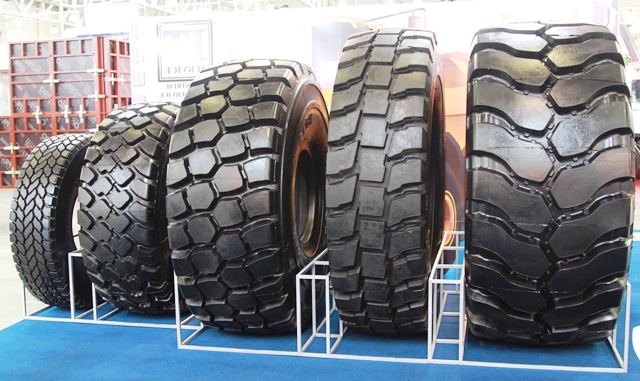
- Off-road tires. Used on construction sites and in quarries, they feature an aggressive tread pattern and reinforced carcass.
- Universal tires. Suitable for both asphalt and light off-road use, they offer a compromise between on-road and off-road models.
- Winter tires. They are equipped with a special rubber compound that remains elastic at low temperatures and studs for improved traction on ice.
Selecting the right truck tires is a task that requires not only understanding the tire's specifications but also considering specific operating conditions. It's important to consider not only the vehicle type and load, but also the season, regional climate, and even driving style. For example, highway tires with low rolling resistance are ideal for long-haul highway travel, while off-road tires with a reinforced carcass are ideal for construction site work.
Innovations in the world of truck tires
Modern technology never stands still, and truck tires are no exception. Manufacturers are constantly working to improve their performance. Here are some interesting trends:
- Eco-friendly materials. More and more companies are using recycled rubber and biodegradable components.
- Smart tires. Some models are equipped with sensors that monitor pressure, temperature, and wear. This helps prevent accidents and reduce fuel consumption.
- Seamless technologies. New production methods allow for seamless tires, increasing their strength and durability.
By the way, did you know that some tires can "self-heal"? They contain special polymers that "seal" small punctures. This is especially useful for trucks, which often encounter sharp objects on the road.
Table: Comparison of truck tire characteristics
| Characteristic | Highway tires | Off-road tires | Universal tires | Winter tires |
|---|---|---|---|---|
| Tread | Smooth | Aggressive | Moderate | Deep, thorns |
| Wear resistance | High | Average | High | Average |
| Fuel efficiency | High | Low | Average | Average |
| Application | Highway | Off-road | Asphalt/soil | Winter roads |
How to extend the life of truck tires
Truck tires are an expensive asset, and replacing them can be costly. Therefore, it's important to properly care for them. Here are some tips:
- Check your blood pressure regularly. Insufficient pressure increases wear and reduces fuel efficiency.
- Keep an eye on the balance. Incorrect balancing can cause vibrations and damage.
- Avoid overloading. Exceeding the permissible load reduces the service life of tires.
- Store your tires properly. If you use seasonal tires, make sure they are stored in a cool, dry place.
Interestingly, some companies offer tire retreading services. This not only saves money but also reduces the environmental impact.
Conclusion: Tires as a symbol of reliability
Truck tires are more than just a vehicle component. They are a symbol of reliability, durability, and technological progress. They silently perform their work, covering thousands of kilometers and supporting tons of cargo. And although they remain in the shadow of powerful engines and impressive bodies, they are the ones that make forward movement possible.
The next time you see a truck on the road, take a look at its tires. You might see more than just rubber, but the result of years of research, testing, and innovation. After all, sometimes the most important things are the ones we rarely notice.