








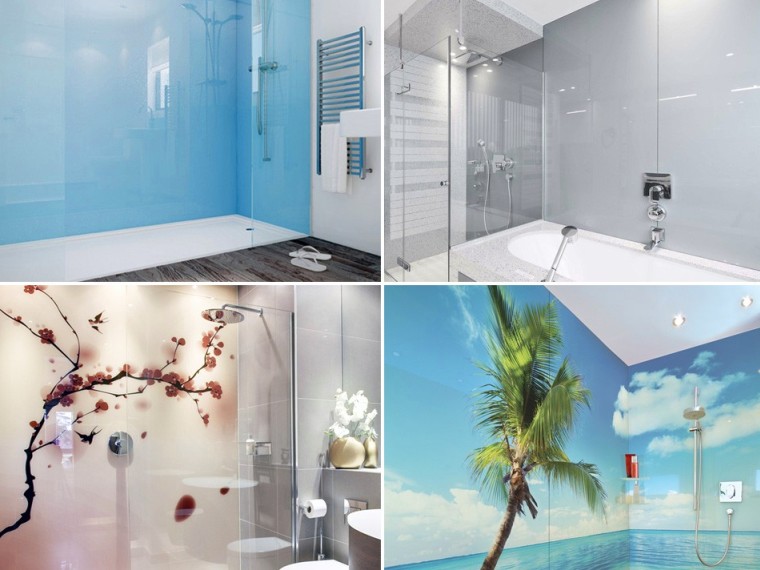
Finishing bathroom walls is a perennial challenge: materials must withstand constant humidity, temperature fluctuations, and harsh cleaning agents while maintaining aesthetic appeal. Traditional ceramic tiles are reliable, but their installation is labor-intensive, and replacing them requires a major renovation. Glass wall panels are taking the spotlight—a technologically advanced solution that combines practicality, style, and ease of installation. But are they truly suitable for bathrooms? Let's take a closer look.

Construction and materials: what lies behind the transparency
A glass panel is not just a single sheet of glass, but a multilayer structure. The core is tempered glass, 4 to 8 mm thick. Tempering increases its strength by 5 to 6 times compared to regular glass and ensures safety: if broken, it shatters into small, blunt pieces.
The decor is applied to the reverse side, protecting it from moisture and mechanical damage. Application technologies vary:
— UV printing — the paint cures under UV light, creating a durable, permanent image. Ideal for bathrooms: resistant to water, steam, and cleaning agents.
— Triplex — the design is sealed between two layers of glass. This is the most durable and safest method, but also the most expensive.
— Film — a budget option, but the film may peel when exposed to moisture, especially at joints. Not recommended for areas exposed to direct splashes.
Advantages over tiles and other materials
The main advantage is the speed of installation. The panels can be installed on a flat wall (without pre-leveling) in 2–4 hours, without dust or debris. Unlike tiles, no grouting is required, eliminating the risk of mold growth between tiles.
Aesthetics are another plus. Glass visually expands the room, especially if you choose light colors or transparent panels above a decorative wall. The photo printing possibilities are endless: from seascapes to abstract patterns or even family photos. The designs won't fade or lose their brightness.

- Hygiene: The smooth surface does not absorb moisture and does not accumulate bacteria.
- Eco-friendliness: Glass is an inert material that does not emit harmful substances even when heated.
- Durability: With proper care, it will last 10–15 years without losing its appearance.
Disadvantages and how to avoid them
The main drawback is the visibility of water droplets and streaks. This is especially noticeable on dark or glossy surfaces. Solution: regularly wipe after use or choose a matte glass, which conceals splashes.
Scratches are another problem. Abrasive cleaners leave micro-scratches that, over time, dull the glass. Care should be gentle: use a soft sponge and neutral cleaners (such as those for glass).
Price is a subjective drawback. Basic panels with a catalog pattern are comparable in price to tiles, but a custom design or laminated glass will cost two to three times more. However, the savings on removing the old finish and the speed of renovation often make up for the difference.
Installation: two methods and their features
— With glue (silicone or liquid nails) — provides a monolithic appearance without visible fasteners. Requires a perfectly flat wall. Suitable for panels up to 2 m².
— On fasteners (screws or clamps) — more reliable for large-format panels. The fasteners are concealed by decorative caps, but still remain visible.

How to choose a pattern and color
Natural motifs are preferred for the bathroom: water, stone, bamboo, and seascapes. The color palette features calm, cool shades: blue, turquoise, gray, and white. They visually cool the space and evoke a sense of cleanliness.
If your bathroom is small, avoid dark colors and complex patterns—they take up too much space. It's better to choose a light background with subtle texture. For spacious bathrooms, you can experiment with 3D printing, imitation marble, and even mirrored inserts.

Glass panels aren't just a trend; they're a practical solution for the modern bathroom. When chosen wisely, they'll become a stylish, durable, and easy-to-maintain interior element, eliminating the headaches associated with renovations and maintenance of traditional materials.