









Engineering Engineering is the practice of applying scientific and mathematical principles to real-life situations. While scientists typically receive all the credit for humanity's scientific achievements, it is actually engineers who create the things that make it all possible—from complex laboratory equipment to large-scale urban projects. Some of the best engineers ever were also outstanding scientists, even if their names are now largely lost to history.
10. Martha Coston
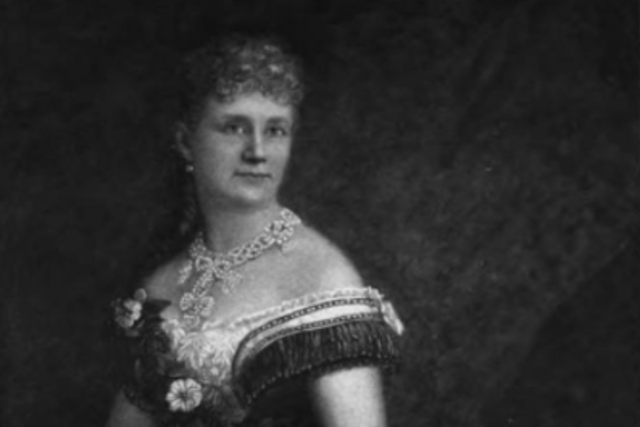
Night flares were an important means of communication in the early days of modern warfare, especially before the advent of radio and other electronic means of communication. Designed and patented by Martha Coston in In 1859 , They were used with great success during the American Civil War. The system of flares and codes was eventually adopted by militaries worldwide, paving the way for the complex flare systems still in use today.
Surprisingly, Coston never intended to become an engineer or inventor, as it was her late husband, Benjamin Franklin Coston, who originally conceived the project. However, his version didn't work, and Martha largely came up with a working model herself. Some historians believe her signal flares were crucial during civil war , as the Union Army was the first major customer to purchase them in bulk.
9. Filippo Brunelleschi

Filippo Brunelleschi was one of the pioneers of architecture in the earliest stages of the Italian Renaissance, and is even sometimes called the first modern engineer. Brunelleschi played a significant role in the modern scientific approach to infrastructure design, breaking away from the more decorative architecture previously prevalent in Europe.
Filippo Brunelleschi's most famous masterpiece was the dome of the Cathedral of Santa Maria del Fiore in Florence, built using machines he invented specifically for this purpose. goals . Its geometric approach to architecture , based on proportions, laid the foundation for many Italian engineers and inventors after him. In addition to engineering, Brunelleschi was also accepted into Arte della Seta - or the Silk Guild of Florence - as a master, since he was also an accomplished goldsmith and sculptor.
8. Hedy Lamarr
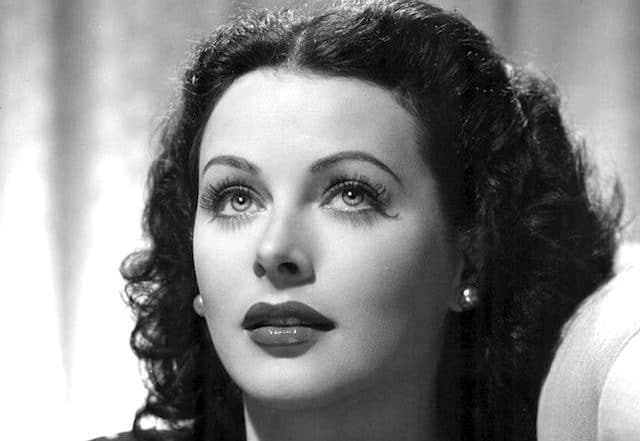
Hedy Lamarr was an Austrian-born American actress who is still remembered for her roles in classic films such as« Algeria"» , «"Samson and Delilah », «"Come live with me »" and many others. She is often called one of the most beautiful actresses of all time, she inspired such iconic cartoon characters as Snow White и Catwoman . However, her contributions to modern science are much less well known, as Lamarr was also a gifted engineer and inventor of technology used in many communications systems today.
During World War II Lamarr devised a system called frequency hopping, which could be used to block enemy jammers from interfering with radio-controlled torpedoes. While not used during the war, it was widely used by the US Navy in the 1950s, though he was never credited for it at the time. Since then, the technology has been used to develop innovations such as Bluetooth and GPS, as well as early WiFi systems. For her contributions, Hedy Lamarr was posthumously inducted into the National Inventors Hall of Fame. In 2014 .
7. Jacques de Vaucanson
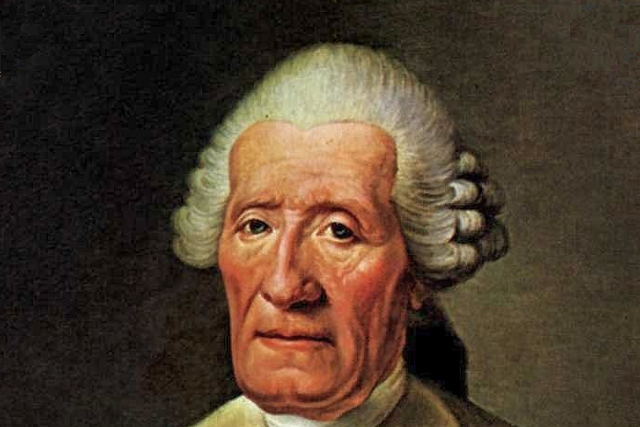
The list of things invented and designed by Jacques de Vaucanson is quite long. Born in 1709, he was a pioneer in the field of automata, and many of the machines that made the Industrial Age possible would never have been possible without his contributions. In 1737, Vaucanson built a life-sized flutist that could play a total of twelve songs on a transverse flute, which was unheard of at the time. In 1738, he developed something called the "« "Digesting Duck"» — a rather impressive replica of a duck with hundreds of parts, which could flap its wings, eat, drink and even defecate, which is still considered a masterpiece of the time.
His most important invention, however, was the all-metal lathe machine with a slide in 1750. Although lathes—a type of machine tool based on an axis used for various industrial tasks—had existed since ancient times, he significantly improved the design for his age, providing a basic machine for building other machines. Almost every automatic machine used in the industrial era was based on Vaucanson's improvements, including Jacquard loom .
6. Imhotep
Yeah, the guy from «Mummies» took his name from a real guy. Let's get that out of the way first.
The real Imhotep lived and died so long ago that it is difficult to establish the exact details of his life, although some details are known. Archaeological evidence from later Egyptian sources places his achievements around 2600 BC during his reign. Djoser of the Third Dynasty or First Dynasty of the Old Kingdom. He was an extremely important figure in Egypt and may even have been the first person to be deified and worshiped as a god… ever .
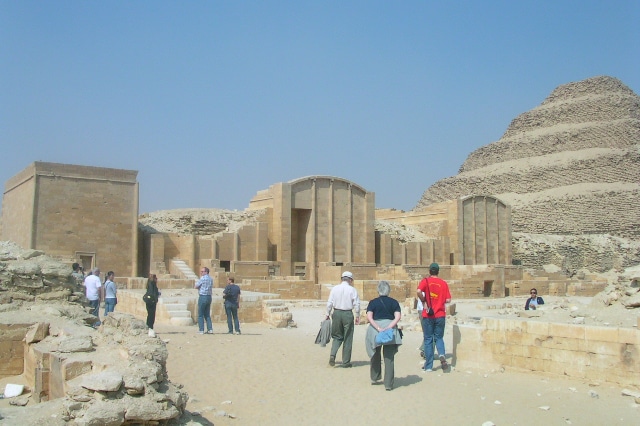
Beyond mythology, Imhotep was also the first architect—or at least the first architect mentioned in historical records. We can see his imprint in some of the most impressive ancient Egyptian structures found in and around Cairo, particularly the step pyramid complex dedicated to Djoser in Saqqara , which is called "« Refreshment of the Gods »"It was an unprecedented creation, created entirely under his supervision, using a building style and stone-clad columns for the first time in history. Moreover, it was during this time that ancient Egyptian structures began to become more complex and elaborate, suggesting that Imhotep may have played a greater role in ancient Egyptian architecture than we ever knew.
Imhotep was also a gifted physician and god, so it's difficult to say exactly how influential his works were, as archaeological evidence tends to exaggerate his accomplishments. However, Imhotep's tomb has never been found, and it may hold some clues to the precise scope of his engineering and scientific achievements.
5. Archimedes

Born in 287 BC in Syracuse, Sicily, Archimedes was one of the greatest minds of classical antiquity. While he is primarily remembered for his contributions to mathematics, particularly early geometry, he was also one of the greatest engineers of his time, though he was always more interested in theorems and proofs than in actual construction.
Many of Archimedes' greatest inventions were made during his reign king Syracuse Hieron II . He built a system of levers and pulleys that could easily launch large, newly constructed ships into the water using a simple mechanism. Archimedes is also credited with creating the first working odometer in history—an idea that was eventually adopted and improved upon by other inventors of the time. His creations also contributed to the war effort, as he built the giant Iron Claw to thwart invading ships during the Punic Wars. wars between Ancient Carthage and the Roman Republic, among other effective fighting machines.
4. Nikolaus August Otto
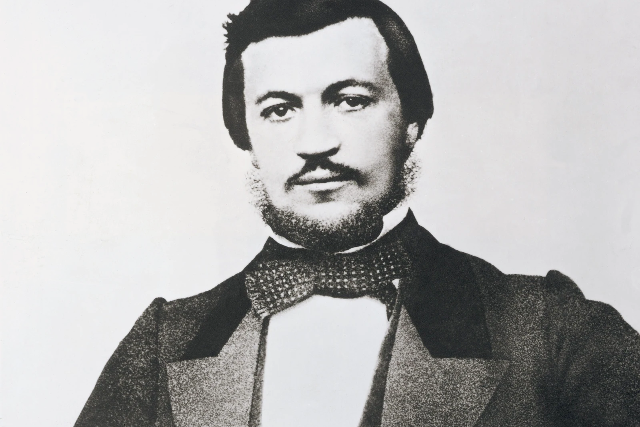
Nikolaus August Otto was born in 1832 in Holzhausen, Germany, and remains one of the most important inventors of the Industrial Age, even though most people today have probably never heard of him. While many While engineers and businessmen all contributed to the invention of the modern automobile in their own ways, Otto can be credited with developing the technology that made it all possible: the four-stroke internal combustion engine.
Built in In 1876 , Otto's engine improved on Etienne Lenoir's two-stroke system in many ways, providing the first working replacement for the steam engine widely used at the time. In his honor, the four-stroke internal combustion cycle, which includes four The stages of intake, compression, combustion, and exhaust are still called the Otto cycle. His invention was used by Gottlieb Daimler in the design of the first motorcycle in August 1885 , as well as almost every type of automobile engine built since that time.
3. Fazlur Rahman Khan
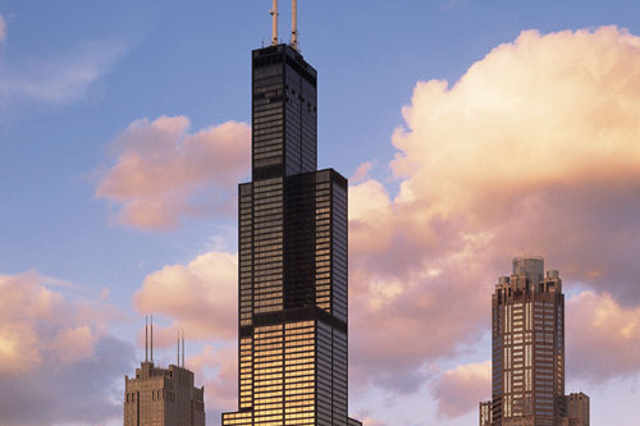
Fazlur Rahman Khan is also sometimes called the "father of tubular structures" for high-rise buildings, as well as a pioneer of computer-aided design (CAD) in modern architecture. One of the greatest engineers of the 20th century, Khan's innovations are visible in modern skyscrapers around the world, even those he wasn't directly involved in, such as the first World Trade Center. center in New York.
Born in Dhaka, Bangladesh, in 1929, Khan joined the renowned Chicago architectural firm Skidmore, Owings & Merrill in 1955. year . a structural system of tubes that minimized the amount of material needed for construction. The most famous work Fazlur Rahman Khan's landmarks include the Sears Tower (now the Willis Tower) and the John Hancock Center in Chicago, and the Hajj Terminal at King Abdul Aziz International Airport in Jeddah, Saudi Arabia, among many others.
2. Ismail al-Jazari
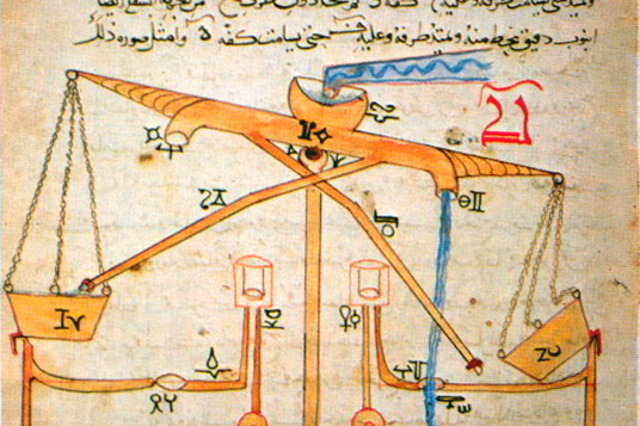
Ismayit al-Jazari was a prolific scholar Golden Age of Islam — a nearly five-century period of scientific, cultural, and social revival in the Islamic world that began with the founding of the Abbasid Caliphate in the 8th century. Born in 1136, al-Jazari built on the work of other famous scientists and inventors from the region, and his inventions have since been recognized as having a major influence on European inventors during the European Renaissance, such as Leonardo da Vinci. Vinci .
Although we know little about his early years—as many records from that time have been lost—we do know that during his lifetime, al-Jazari invented over 50 types of unique devices, including a water clock for elephants and a mechanism for raising water for irrigation and other purposes, as well as many other types of automata. His inventions are illustrated in his outstanding work « The Book of Knowledge about Ingenious Mechanical Devices» , which remains an important treatise in early engineering to this day.
1. Charles Babbage
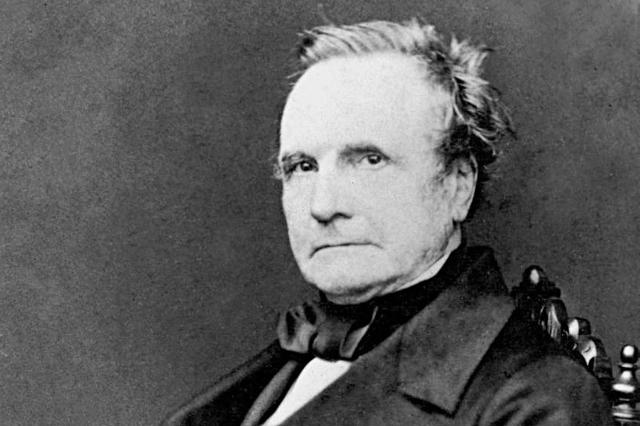
It's unclear exactly when and where Charles Babbage was born, although some sources suggest it was probably in London sometime around 1791. Unlike many other inventors on this list, Babbage never attended school and was largely self-taught in his early years. However, he was exceptionally good at algebra and calculus, which earned him a place at the prestigious Trinity College, Cambridge, by 1811.
Throughout his life, Charles Babbage proved himself a key figure in the field of early computing. Of his countless contributions to mathematics and engineering, perhaps the most important was Difference engine , and later the Analytical Engine, which are now recognized as the earliest types of mechanical computers. His designs were so far ahead of their time that they were impossible to build in his lifetime, as they far exceeded the technology available to him. However, later attempts to recreate the Difference Engine would prove successful, even though many of his other machine prototypes remain unfinished. Although he is now called the "father of computers" for his contributions to early computing, much of Babbage's work at that time never was supported his colleagues or the British government.