






When you make a purchase through links in our articles, Future and its distribution partners may earn a commission.
Mother's Lipstick #36 | Photo by Miyako Ishiuchi. Courtesy of The Third Gallery Aya.
Ishiuchi Miyako photographs abandoned buildings. She photographs scars on human skin. She photographs old kimono fabrics. She photographs lipstick. She photographs her own photographs, damaged by water.
But there is something that unites all her photographs. Something that makes them unmistakably recognizable. It's not in that she takes pictures, and in that , How She takes photographs. She has a knack for seeing how time leaves its mark on things. How worn objects tell stories through their texture and decay.
The key to understanding her work is this: she photographs not objects, but how objects show their age. How surfaces bear traces of what has happened to them.
The lipstick isn't interesting because Frida Kahlo owned it; it's interesting because it shows scratches and wear marks. These marks indicate it's been used. This is precisely what Ishiuchi is looking for.
Shows signs of life
For example, in his series of works, dedicated to Frida , Ishiuchi catalogs the celebrated Mexican artist's pieces. But she doesn't simply document them. She photographs each object to reveal its material history. Scratches. Fading. Color shifts.
These aren't precious objects to be displayed with reverence. They're testimonials. They show that someone lived with them, used them, and wore them out.
Frida, 2012 | Photo: Miyako Ishiuchi. Courtesy of The Third Gallery Aya. Hiroshima (Hiroshima), 2007 | Photo: Miyako Ishiuchi. Courtesy of The Third Gallery Aya. Clubs and courts, 1980s | Photo: Miyako Ishiuchi. Courtesy of The Third Gallery Aya.
Series "« Scars"» works on the same principle. Ishiuchi photographs scars on human skin. But these aren't photographs of people. They're close-ups of the skin itself, where you can see the texture of the scar tissue. The body becomes a landscape. You're looking not at a person, but at how time and trauma have left their mark on their surface.
It's the complete opposite of standard portrait photography, because the person disappears. All that remains is physical evidence.
At the same time, in the project Endless Night Photos of abandoned buildings in Yokosuka's old red-light district are featured. Peeling paint, weathered wood, and layers of graffiti are visible.
Buildings might be interesting as testaments to a specific place and its history, but Miyako isn't interested in that narrative. She's interested in surfaces; in what decay reveals about the passage of time. Buildings are compelling to her because their materials have absorbed decades of use and neglect.
A different take on documentary filmmaking.
In most documentaries, a compelling plot is paramount. The story is paramount, and the moments are meaningful. But Miyako does something different here.
She subtly adheres to one visual principle—to show how surfaces record time—and then applies it to what lies before her. The principle itself is important, not the subject matter.
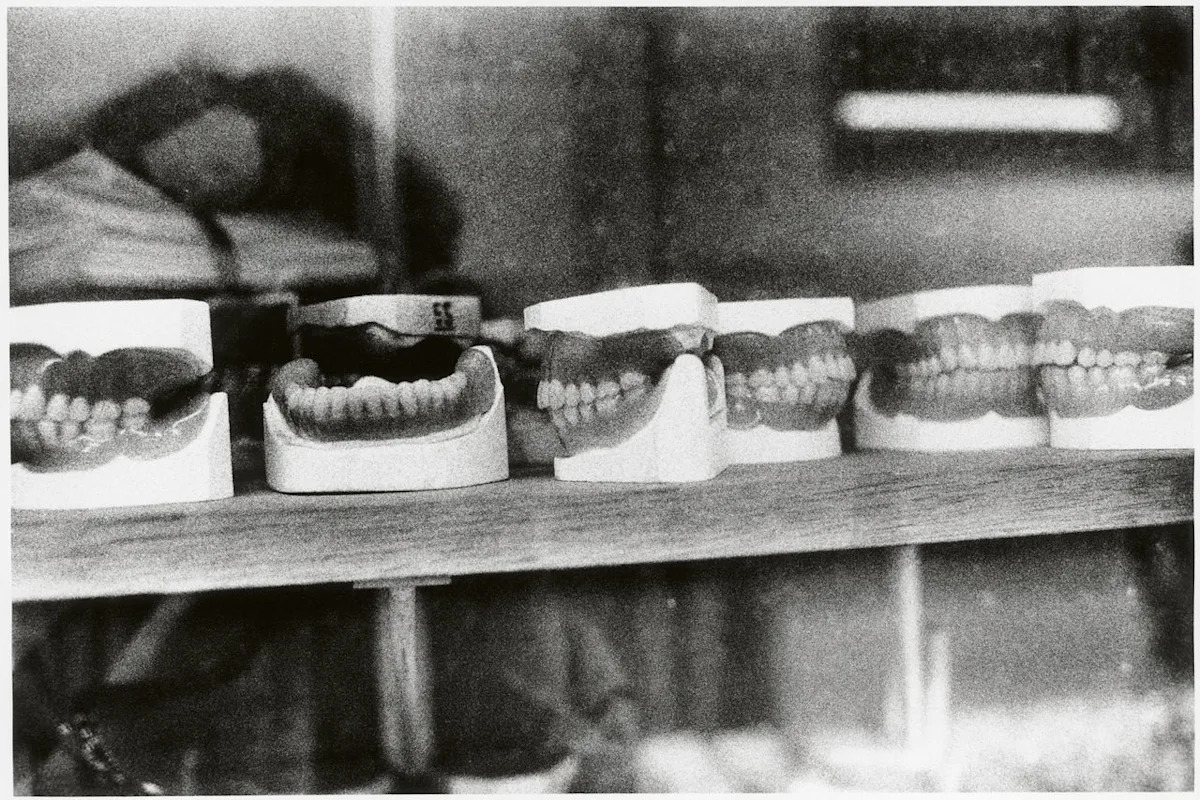
History of Yokosuka, 1976-77 | Photo: Ishiuchi Miyako. Courtesy of The Third Gallery Aya. Apartment, 1977-78 | Photo: Ishiuchi Miyako. Courtesy of The Third Gallery Aya. Drowned, 2020-2022 | Photo: Ishiuchi Miyako. Courtesy of The Third Gallery Aya. History of Yokosuka, 1976-77 | Photo: Ishiuchi Miyako. Courtesy of The Third Gallery Aya.
She has been working in this field since the 1970s, in a largely male-dominated Japanese photographic scene. Her attention to texture, decay, and the way materials age has influenced photographers of all disciplines. However, outside of Japan, she is not as well known as she deserves.
New book "« Ishiuchi Miyako: Traces"» brings together 50 years of her work. It includes her most famous series, as well as lesser-known projects and unpublished photographs. She also wrote a new text for the book, so you can learn directly about her views and what she seeks.
For photographers seeking to develop their own distinctive style, here's my key takeaway: You don't need to photograph the same thing over and over again; you need to consistently see the world the same way. In other words, choose a visual principle and stick to it, even when photographing completely different subjects. This is how you'll create a portfolio that's unmistakably recognizable.
Ishiuchi Miyako's book, Traces, will be published by Thames & Hudson on June 16 in the US and June 25 in the UK, priced $65 / £50 / AU$110.