








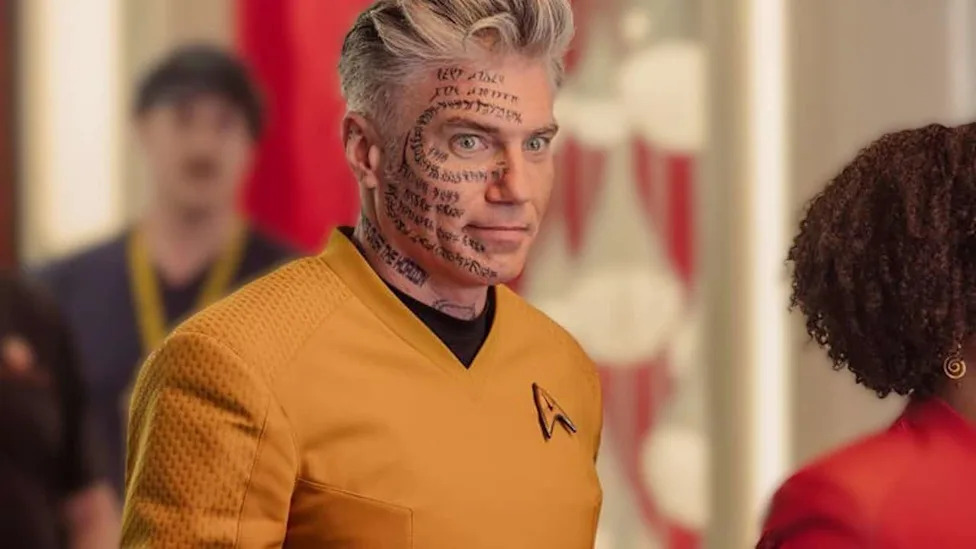
What do Star Trek fans really want? That's the question Alex Kurtzman and everyone else working on the new Star Trek have been trying to answer for a decade. The situation is compounded by the fact that different fans perceive the character and plot developments very differently. For example, when Michael Burnham cries in every episode, some see it as a brave and healthy expression of emotion. Others consider it highly unprofessional, especially in a life-or-death situation. Similarly, some find the frantic action refreshing, while others see it as an irritating departure from the more cerebral, dialogue-heavy Star Trek of yesteryear.
After watching season 4 «"Strange New Worlds »" I began developing a theory about why even the best New Star Trek shows repel some fans and enchant others. After the season premiere, I argued that New Star Trek had become more like the Kelvinverse, with episodes that focused more on action and adventure than exploration and problem-solving. After the recent episode,« Strange New Worlds »"Best Human Friend," my theory has changed: Star Trek has now abandoned traditional storytelling in favor of pure atmosphere. So much so that entire plot lines are mentioned and then discarded in a single, fleeting sentence!
The atmosphere becomes strange.
Cynics might say that «Strange New Worlds» From the very beginning, they were primarily focused on creating atmosphere. However, I would argue that the first two seasons represented a fairly solid, modern interpretation of the franchise formula established «Star Trek: The Original Series» . The third season, however, became more like «Doctor Who» The episodes were more about entertainment than anything else. The series also moved away from science, giving us a season finale centered on a vaguely defined cosmic evil. Season four continued this trend, abandoning traditional Star Trek storytelling in favor of stories about dinosaurs, ghosts, and parties.
These episodes are funny, but they're tonally as different from the old Star Trek stories as they come. However, after watching three episodes of Season 4, I discovered an interesting pattern: at the end «Strange New Worlds» Characters are constantly given throwaway lines about things that would once have formed the basis of entire classic episodes. For example, near the end of the season premiere ("Mariner Valley"), Pike ponders the predestination paradox of "we ourselves are responding to a distress call from a subspace buoy we deployed 65 million years ago. A buoy sent here by a storm we created after it sent us back in time.".
The new Star Trek motto is: "Don't think about it too much.".
Admiral April replies, "It all happened the way it was supposed to... So don't think too much about it." That last line has essentially become the new motto of Star Trek (more on that later), and the trend continues in subsequent episodes. In "Incident on the Griffin," La'an is horrified that a ghostly presence aboard the USS Griffin compelled her to stab James T. Kirk, and she's shocked that Pike leaves it out of his official report. "Whatever you went through, the only thing that matters is that you survived. And that's all Starfleet needs to know." It's a good moment for Pike, but it confirms the episode's creators' desire not to explain, What the hell is a ghost? !
In the final episode, "Man's Best Friend," our heroes go on vacation to a planet whose very air makes them drunk. This is supposed to help them relax before important negotiations. Unfortunately, the intoxication works too well: when the negotiations suddenly accelerate, Scotty and Ortegas are forced to conduct their investigation while hungover., like in the song "Where's my shuttle?"« , and end up discovering a bomb aboard their shuttle. Wait, who planted the bomb? Pike lets us know with a quick, throwaway line: "Some Rhodoxian militant who's clearly willing to do anything to disrupt the negotiations." Who is he? Why is he so motivated? How was he captured?
The winning formula for Star Trek's success was written decades ago.
We never get answers to these questions. Obviously, the show's creators wanted to return to their old absurdity, but I couldn't shake the feeling that in the earlier Star Trek episodes, there was a whole series would be devoted to clarifying such questions. In fact, finding out which unknown assassin is trying to disrupt the diplomatic conference , is the entire plot of the episode "Journey to Babylon"« original series . Moreover, finding out whether the ghost was real became the cornerstone of the episode "Sub Rose" of the series "« Next generation »"And the understanding and subsequent resolution of the predestination paradox was at the heart of the two-part episode "Time's Arrow" of the TV series "The Next Generation.".
When people complain that New Star Trek isn't like classic Star Trek, this is what they mean. Every episode of Season 4« Strange New Worlds »" has so far only hinted at what could be a classic Star Trek story, and then dismissed it with a throwaway line. Why are they doing this? So the series can indulge in temporary, Star Trek-style antics. «Doctor Who» . It's all about atmosphere, funny character moments, and memorable one-liners. It's mindless entertainment in the same style as the Kelvin universe films. Unfortunately, Paramount hasn't realized they're losing classic Star Trek fans because they can't make classic Star Trek anymore.
Will they ever understand this? Perhaps. But I suspect some executive will dismiss it with a caustic remark before returning to the discussion. really important things: Starfleet officers fighting dinosaurs.