








Generally, you are lucky to live in 2026. It is a good time to be alive.
On average, you are healthier than any other person who has ever lived on Earth, with a longer life expectancy, fewer infectious diseases, and even lower mortality rates from most chronic diseases after adjusting for age.
Cancer is a prime example. Cancer rates have remained stable or declining for decades. Moreover, mortality from cancer—that is, the likelihood of dying from cancer if you get it—has dropped sharply.
Many cancers that were considered death sentences in the 1990s are now, thanks to new treatments, seen as a form of chronic disease, similar to diabetes or emphysema.
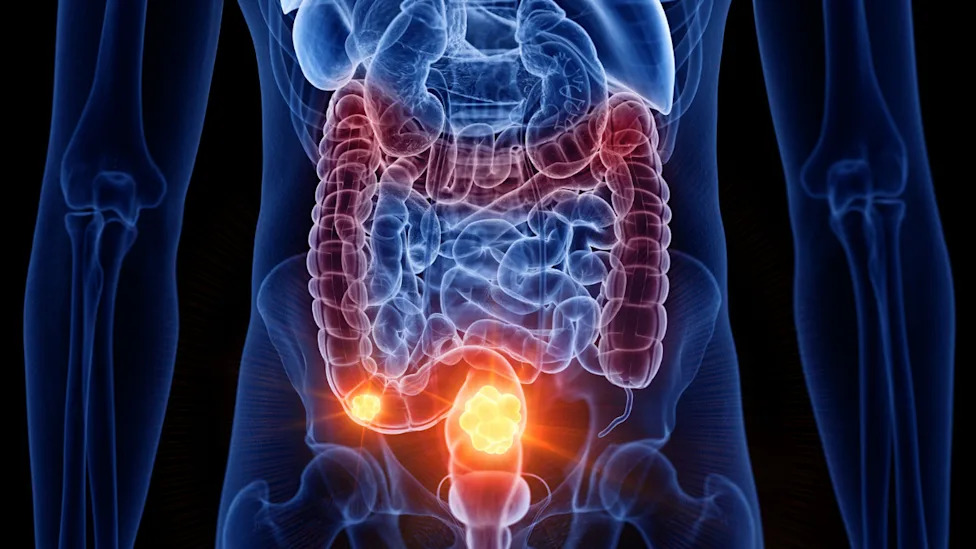
There is one disease where this trend appears to be bucked: colorectal cancer in young people.
Although the overall incidence of colorectal cancer (including colon and rectal cancer) has decreased, there has been a recent increase in cases among people under 50 years of age, which is considered young for cancer.
This has little impact on the overall number of colorectal cancer diagnoses, as the absolute number of people developing colorectal cancer at a young age is still very low.
However, this is a very controversial result.
Colorectal cancer rates are generally lower in older people but rising in younger people, and we don't have a clear understanding of why.
Of course, there are some proposed explanations.
Some point to pesticides or herbicides, such as picloram, which have been linked to the risk of colorectal cancer. However, this idea has two problems.
«"While rates of colorectal cancer, which includes both colon and rectal cancer, have declined overall, there has been a recent increase in cases among people under 50, which is considered young for cancer," says Gideon Meyerowitz-Katz, an epidemiologist.
First, picloram and many other chemicals are used somewhat less frequently today than in the 1980s and 1990s. It's unclear how these chemicals could cause more cancer cases in a given age group in the 2020s, even though they are used much less than before.
Furthermore, older adults tend to be more exposed to these chemicals. This makes sense—regulation was much less strict in past decades, and it's likely your parents consumed more pesticides than you did.
If such environmental factors are the cause, it is completely unclear why the incidence of colorectal cancer is increasing among young people but decreasing among older people.
The same general problem applies to many environmental factors. People associate per- and polyfluoroalkyl substances (PFAS, often referred to as "forever chemicals") with colon cancer.
However, again, PFAS exposure does not have a clear age limit, and in some cases, older adults may have been exposed to these chemicals much more than younger people, who are more likely to have cancer.
It is difficult to find a risk factor that could explain this increase.
(koto_feja/Getty Images)
Most of the known factors that can cause colon cancer are more common in older people than in younger people. Very few environmental issues are more common today than they were when older people were growing up.
Another possible explanation is obesity. Obesity is known to lead to increased cases of colon cancer, and there are certainly more obese people among young people now than in the past.
Again, this isn't a compelling explanation, as older adults are also more likely to be obese, so it can't be the sole factor influencing cancer risk. Modeling suggests that weight gain explains no more than 15 percent of colorectal cancer cases, perhaps even less.
The colorectal cancer mystery is compounded by the fact that no consistent trend is observed across countries. It's not even observed within groups of countries.
A 2019 study found that rates of colorectal cancer among young people remained stable or decreased in nearly half of the countries analyzed.
A later study conducted in 2025 showed similar results. This further confuses the situation – it is unclear what could be causing the increase in colorectal cancer incidence among young people in the UK and the US, but the decline in Italy and Lithuania.
Perhaps the most likely explanation for all this complexity is that it all comes down to testing.
While we know that screening recommendations are unlikely to be the primary reason for the rise in incidence – at least, screening recommendations have only recently changed to include younger age groups – the trend has been ongoing since the 1990s – and these are not the only changes in the healthcare system in recent decades.
It's possible that younger people are simply being screened for colon cancer more often for a variety of reasons, and this has impacted the number of people being diagnosed.
See also: The drug stops the migration of pancreatic cancer cells in 90% cases, according to laboratory tests.
It's also possible that this trend is related to how countries report data. When we talk about disease statistics, we always talk about measured The incidence of a particular disease. Cancer registries have been improving for a long time, which may be one of the reasons why cancer is more frequently diagnosed among young people.
However, even these explanations are not very convincing. It is difficult to understand how they could affect young and old people differently.
In some countries, there is a clear increase in the number of reported cases of colon cancer among young people, but the cause remains a mystery. We know that many explanations seem unlikely, but the true cause is very difficult to pinpoint.
Gideon Meyerowitz-Katz is an epidemiologist working in the field of chronic diseases in Sydney, Australia. He conducts regular blog about health , covering science communication, public health, and what that new study you read about really means. Previously He helped ScienceAlert to analyze the scientific basis of the most popular scientific articles.
ScienceAlert articles are written, fact-checked, and edited by humans; they are never generated by artificial intelligence. Don't miss a single article; subscribe here.
Related news
-
First-of-its-kind food allergy trial yields 'impressive' results.
-
Scientists have found a surprisingly simple way to reduce the risk of developing type 2 diabetes.
-
There is one genetic variant that causes the body to burn fat rather than store it.