






Every patient with advanced pancreatic cancer who came to Dr. Zev Weinberg told him they would rather take an experimental drug than undergo another round of chemotherapy.
Weinberg, co-director of the gastrointestinal oncology program at UCLA Health, led a clinical trial of a new drug called daraxonrasib. All study participants had previously undergone chemotherapy, which had begun to fail.
«"Statistically, I knew that only half of them were getting the pills, and we had no choice," Weinberg said. "I've sent many patients to chemotherapy, and none of them are alive anymore.".
«"This is one of the most emotional studies I've ever been involved in," he said.
Enthusiasm surrounding daraxonrasib is reaching a fever pitch. A phase III clinical trial involving 500 patients demonstrated that the drug doubled the survival time of patients with advanced pancreatic cancer, a notoriously fatal disease, to an average of 13.2 months, compared to 6.7 months for those receiving chemotherapy. On Sunday, Weinberg and his colleagues presented these results at the annual meeting of the American Society of Clinical Oncology in Chicago. The full study was simultaneously published in the New England Journal of Medicine.
When Revolution Medicines, the drug's maker, released preliminary trial results in April, Dr. Rachna Shroff, chief of hematology and oncology at the University of Arizona Cancer Center in Tucson, said she "teared tears of joy.".
«"For those of us who treat pancreatic cancer, this is a game-changer," she said. "This is unprecedented.".
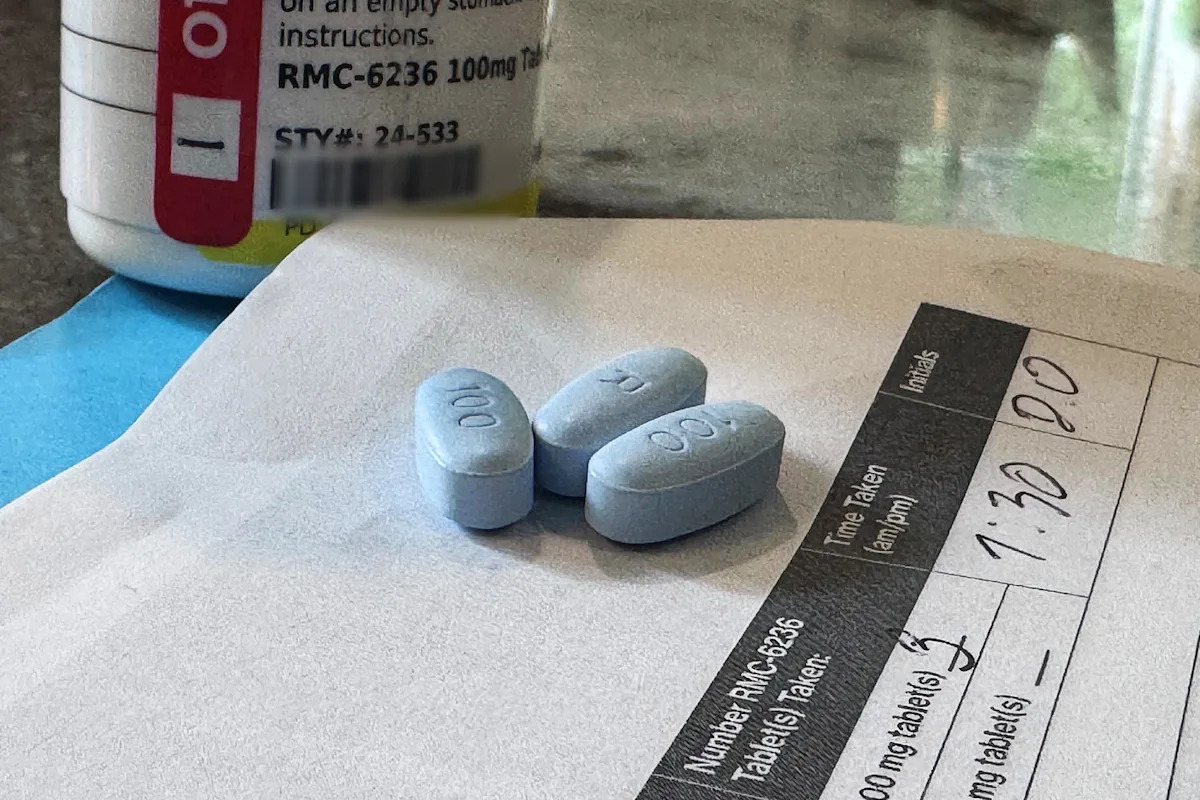
Now the excitement is spreading to other types of cancer. Daxaronrasib, taken as three tablets once daily, works by targeting a mutation in the KRAS gene found in many types of cancer, including lung cancer, colorectal cancer, ovarian cancer, endometrial cancer, and a type of bile duct cancer called cholangiocarcinoma.
Dr. Brian Wolpin, director of the Hale Center for Pancreatic Cancer Research at Dana-Farber Cancer Institute, led the daraxonrasib study. (Patrick Martin/NBC News)
«"Pancreatic cancer may be the first use of this drug, but there will be others," said Dr. Brian Volpin, who also led the daraxonrasib trials and directs the Hale Family Pancreatic Cancer Research Center at Dana-Farber Cancer Institute. "The floodgates are now open.".
The Food and Drug Administration (FDA) has already fast-tracked approval of the pancreatic cancer drug and earlier this month said it would allow Revolution Medicines to prescribe it to patients outside of clinical trials under an expanded access program.
Dr. Mark Goldsmith, CEO of Revolution Medicines, declined to specify a timeline for the company's FDA approval application. "Our specialists are working literally around the clock to prepare this material as quickly as possible," he said.
Tumor reduction
In most cases, pancreatic cancer is diagnosed at late stages of the disease, when surgical intervention is not possible.
«"Even with the most effective chemotherapy treatments, the average response lasts about six months, sometimes just a few weeks or months," says Dr. Samik Roychoudhury, a gastroenterologist-oncologist at The Ohio State University Comprehensive Cancer Center. "That's barely enough time for families to grasp the situation.".
According to the American Cancer Society, only 3% patients with metastatic pancreatic cancer are alive after five years.
Seventy-one-year-old Debbie Orcutt was diagnosed with stage 4 pancreatic cancer in April 2024. The cancer had already spread to her liver. Before her diagnosis, her only symptom was a nagging pain in her lower left abdomen, which worsened at night.
When chemotherapy stopped working, Orcutt enrolled in a clinical trial of daraxonrasib and was one of the participants to receive the drug.
Since she started taking the pills in January 2025, the spot on her liver has disappeared. And the tumor on her pancreas has shrunk by 80%, according to her oncologist at Dana-Farber Cancer Center.
«"I feel great every day," said Orcutt, of Spencer, Massachusetts. "I don't dwell on the fact that I have pancreatic cancer.".
Neither Roychowdhury nor Shroff were involved in the clinical trials of daraxonrasib, but both have already begun listing patients who will receive the drug once it becomes available.
«"I have no doubt that once it becomes available, I will start using it," Shroff said.
What is daraxonrasib and how does it work?
Daraxonrasib targets a mutation in the KRAS gene, which acts as a switch that controls cell growth in the body. This mutation, found in more than 90% cases of pancreatic cancer, causes the switch to become stuck in the "on" position, allowing cancer cells to proliferate uncontrollably.
Scientists have known for years that if they can target the KRAS mutation, they can flip the switch.
«"Finding a drug for this mutation has proven incredibly difficult," Volpin said. "This mutated protein is like a round ball, and you simply can't get the drug to stick to it and block its effect." Only "thanks to some truly amazing chemistry work," he said, have scientists been able to develop a drug effective against this mutation.
Daraxonrasib is the first drug. It works by binding to the cyclophilin A protein inside cells, acting as a "molecular glue," Volpin explained, attaching to the mutated protein.
Studies of similar drugs in development are already underway. Daraxonrasib is not a cure for cancer; tumors eventually find a way to regrow. Ideally, oncologists would like to have a range of similar drugs in their arsenal to prescribe to patients when resistance develops.
Revolution Medicine spokesman Goldsmith said the company has three other similar drugs, called RAAS inhibitors, in clinical trials, with a fourth expected to begin later this year.
Daraxonrasib's efficacy appears to extend beyond its effect on the mutation. Overall survival was 13.2 months for all patients receiving the drug, regardless of whether they had a KRAS mutation.
«"Based on the data we have, I think this drug is relevant for all patients with pancreatic cancer, provided they have metastatic disease," Volpin said. "This is the first step toward showing that we can stop using so much chemotherapy.".
Chemotherapy is currently still recommended as first-line treatment for patients with advanced pancreatic cancer. According to Volpin, other studies are underway to determine whether these patients should be given the drug first.
Daraxonrasib is generally considered to be much less toxic than chemotherapy. Some patients reported vomiting and diarrhea, as well as mouth and throat ulcers. Some developed a blistering rash similar to a severe sunburn. Former Nebraska Senator Ben Sasse, who received the drug in a clinical trial, described the rash as "nuclear" in a New York Times podcast in April.
Debbie Orcutt said the side effects from daraxonrasib were minimal: a small rash on her hands and what felt like a large ulcer in her mouth. "It's a matter of life and death," she said. "How can I complain about a small rash?"«
Debbie Orcutt and her husband, Ron Orcutt. (Debbie Orcutt)(Debbie Orcutt)
Orcutt and her husband of 47 years, Ron Orcutt, met as teenagers while working part-time at a mall. She was selling shoes at Thom McAn, and he was working at Zayre. She was 17, he was 18. They still giggle like schoolchildren.
Ron Orcutt meticulously records his wife's daily dose of daraxonrasib. He ensures she takes the pills at the right time—setting an alarm if necessary—because they must be taken on an empty stomach, exactly two hours after the couple eats breakfast together.
Reminders are essential. By then, Debbie Orcutt is already out of the house, helping her grandchildren get to school on time or heading to her latest part-time job, wiping tables in the cafeteria at a nearby high school. She doesn't need the job, but it keeps her physically fit.
«"You just have to keep moving forward and believing. Everyone should live each day as if it were their last," she said. "I feel like I've been given a second chance, and I have to make the most of it.".
This article was originally published on NBCNews.com.