








The article "Invasive praying mantis quietly conquers Europe, country after country" first appeared on the AZ Animals website.
Climate change is usually portrayed as devastating for all species. However, in a strange twist, Asian mantises are using climate change as a weapon to conquer Europe, which is proving detrimental to native mantises.
Climate change has led to praying mantises becoming an invasive species.
Over the past decade, two groups of praying mantises have been quietly spreading across Europe. Few paid attention to this invasion, as mantises are considered a natural insect control. However, these mantises have the potential to displace native species, leading to a loss of biodiversity on the continent.
According to a new study published in Journal of Orthoptera Research , the researchers officially attributed Hierodula tenuidentata и Hierodula patellifera Invasive alien species. These species, native to South Asia, have spread across Europe thanks to climate change. According to Roberto Battiston of the Museum of Archaeology and Natural Sciences, the study's lead author, the most affected regions are the "Mediterranean and continental regions.".
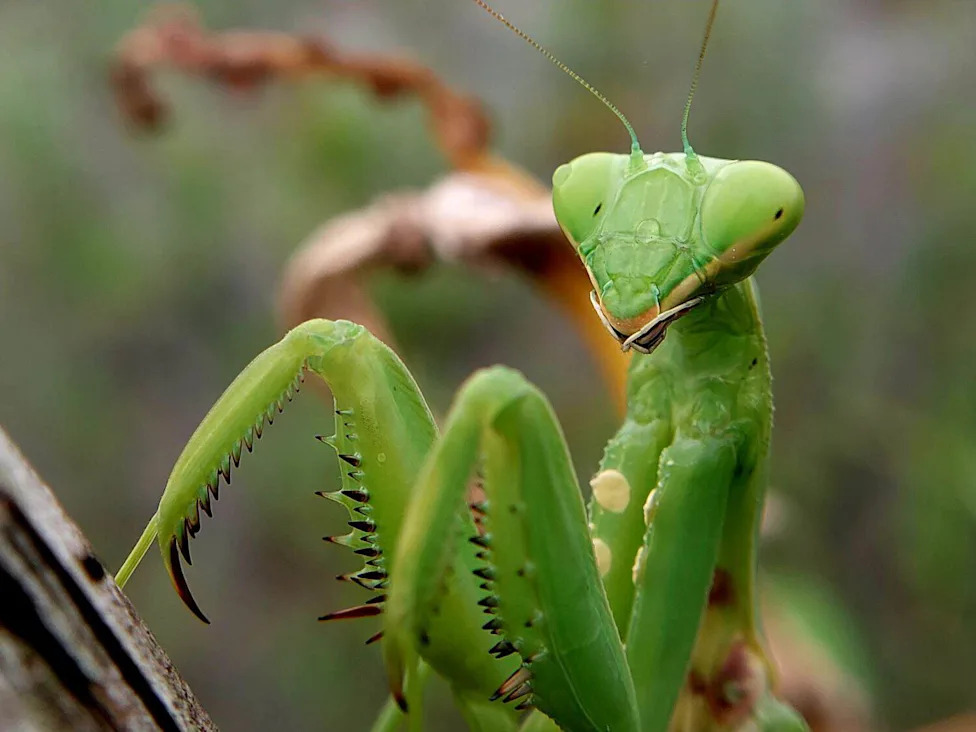
Hierodula patellifera — one of the invasive species of praying mantis.
©tamu1500/Shutterstock.com
«"Due to climate change, they're moving further north," Battiston explained in a press release. "This study was conducted to help people answer these questions and develop strategies to curb their spread.".
Climate change has allowed invasive mantises to spread from South Asia to Europe, but factors such as "urban heat islands" allow this species to survive longer in colder temperatures, further expanding its range. Without action, it is highly likely that invasive mantises will outcompete native species in the coming years.
How did the invasive praying mantis population increase so quickly?
Praying mantises Hierodula tenuidentata и Hierodula patellifera They proved to be highly adaptive. They found shelter in trees and shrubs where a stable prey population resides nearby. Consequently, according to the study, they lay their eggs in these areas, creating the next generation of invasive mantises.
Unlike native mantises, which lay approximately 100 eggs at a time, the study shows that the invasive species lays twice as many. Furthermore, young invasive mantises are less likely to prey on each other. Therefore, the survival rate of young invasive mantises is higher than that of native species.
Hierodula patellifera species и Hierodula tenuidentata are capable of laying twice as many eggs as native species.
©tamu1500/Shutterstock.com
Invasive females also attract native males for mating. After mating, the invasive females kill the males, further reducing the native species' population.
But many may not expect that urban pest control efforts are leading to an increase in the population of invasive praying mantises. This invasive species actively seeks out "pest hotels" to snatch immobilized prey. The insects find easy prey without any effort.
Cats may be key to reducing the population of invasive praying mantises.
Cats play a key role in the decline of praying mantis populations in Europe. Thanks to their stealth and quick reactions, cats have reduced the populations. Hierodula tenuidentata и Hierodula patellifera 45%. While these numbers are encouraging, there's a downside. Cats are unable to distinguish between invasive mantises and native European species. Consequently, some mantis populations, already declining due to competition from invasive species, are dying out.
Cats play an important role in reducing the population of invasive praying mantises.
©Ivan Kacarov/Shutterstock.com
The study does not indicate how many native praying mantises were preyed upon by the cats. However, given such a large percentage of invasive mantises eradicated, the benefits may outweigh the risks, namely, a significant population decline. Hierodula tenuidentata и Hierodula patellifera , compared to the risk of losing some of the local praying mantises.
How people can help fight invasive Asian mantises
Stop the spread of invasive praying mantises Hierodula tenuidentata и Hierodula patellifera This is impossible to achieve by researchers alone. It will require the help of both enthusiastic praying mantis researchers and attentive citizens across Europe.
Battiston said his colleagues have already created a citizen science project that has resulted in more than 2,300 reports of invasive mantises.
Reporting the presence of invasive praying mantis species and removing oothecae can help reduce their populations.
©tamu1500/Shutterstock.com
«"My colleagues William di Pietro and Antonio Fasano (GRIO) have successfully launched a large-scale citizen science project and collected over 2,300 reports from enthusiasts and ordinary citizens," Battiston explained in a press release. "Citizen science is a fundamental tool not only for monitoring but also for raising awareness and informing people about these issues in an active and interactive way.".
In addition to reports of observed cases, the press release states that researchers are urging the removal of brown egg capsules, also known as oothecae, during the winter. Although egg capsule removal does not cause pain to developing mantises, Battiston recommended consulting a specialist before removal to ensure that the oothecae are removed from invasive species and not native mantises.
As climate change warms some regions to temperatures capable of supporting species previously thought impossible, invasive species are expanding into new territories. Saving native species requires both the scientific community and citizen scientists. Without this teamwork, the future of native species is uncertain.
The article "Invasive praying mantis quietly conquers Europe, country after country" first appeared on the AZ Animals website.