






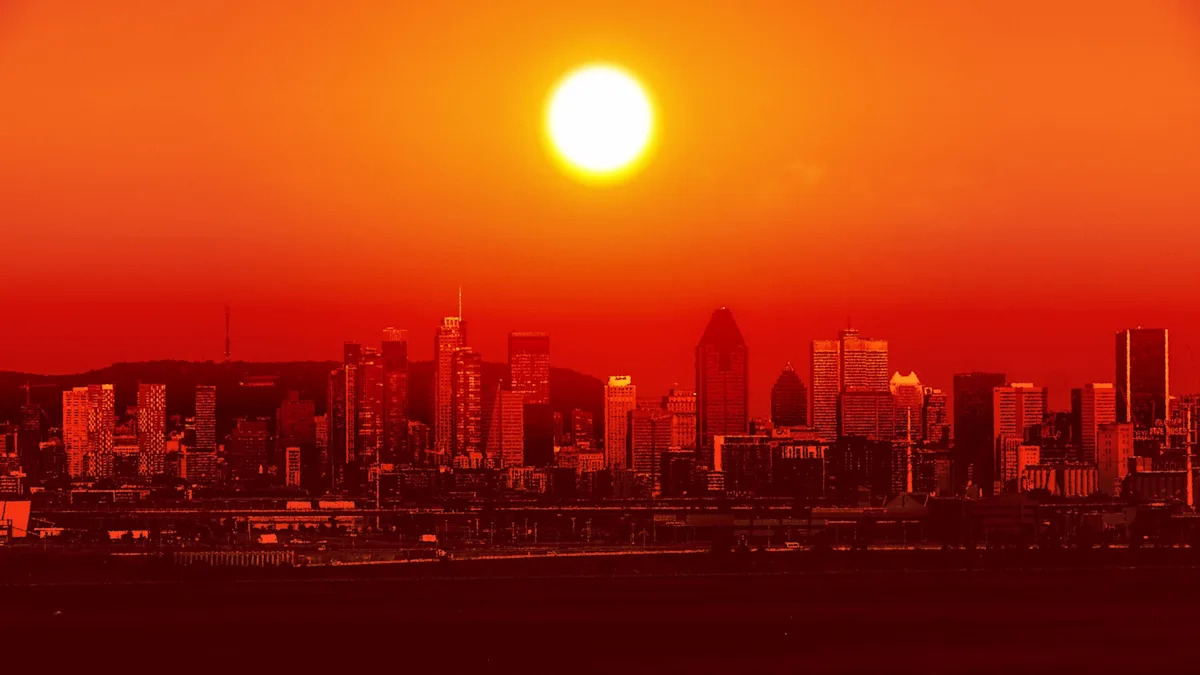
The planet will breach a key climate benchmark again and again over the next five years, according to a new United Nations forecast, and scientists say this could mean even more dangerous heatwaves, droughts, floods and wildfires.
According to the Associated Press, the World Meteorological Organization and the UK Met Office predict a 75 percent chance that the average global temperature between 2026 and 2030 will exceed 2.7 degrees Fahrenheit above pre-industrial levels. The 2.7 degree mark is the threshold that countries agreed to strive for under the Paris Climate Agreement.
The report also states, according to data cited by the Associated Press, that there is a 911% chance that at least one of the next five years will exceed this level, and an 861% chance that one of those years will surpass 2024 as the hottest year on record. Every year through 2030 is expected to be 2.3 to 3.4 degrees Fahrenheit warmer than in the late 1800s.
Researchers pointed to a likely strong El Niño event as one of the reasons for possible further temperature increases. Report co-author Melissa Seabrook stated that 2027 could be the year the current global temperature record is broken.
In addition to the global average, the report notes particularly strong warming in the Arctic, where temperatures are expected to rise much faster than the rest of the world. It also warns of hotter and drier conditions in the Amazon and heavier rainfall in Africa's Sahel region.
Scientists have long warned that every fraction of a degree matters. Passing the 2.7 degree mark doesn't mean the planet will suddenly collapse, but it does increase the likelihood of more severe and frequent disasters. Coral reefs, glaciers, and other sensitive ecosystems are particularly vulnerable.
Increased extreme weather events can threaten public health due to dangerous heat, wildfire smoke, and the risk of disease. They can also undermine public safety through floods, fires, and storms, and weaken economic stability by damaging homes, roads, crops, and power grids. The result could be higher food prices, insurance disruptions, job losses, and costly recovery.
The UN report also warns that the Amazon is becoming hotter and drier, increasing the risk of wildfires in one of the Earth's most important carbon storage regions. In the Arctic, declining snow and sea ice means less sunlight is reflected back into space, further accelerating warming.
As Friederike Otto, a climate scientist at Imperial College London, put it, such high temperatures could lead to extreme weather events that would exceed "everything we had anticipated in terms of urban planning, agriculture, etc.".
UN officials say current efforts to slow climate change are still not fast enough. They say cutting emissions from burning coal, oil, and gas remains crucial if the world is to reduce future warming and limit the damage from increasingly severe weather.
«"This will lead to many deaths, we will see a sharp drop in food prices and an increase in forest fires," Otto said.
Subscribe to TCD's free newsletters to receive helpful tips, actionable advice, and a chance to win $5,000 toward your home improvement. To see more stories like this, change your Google preferences here.