






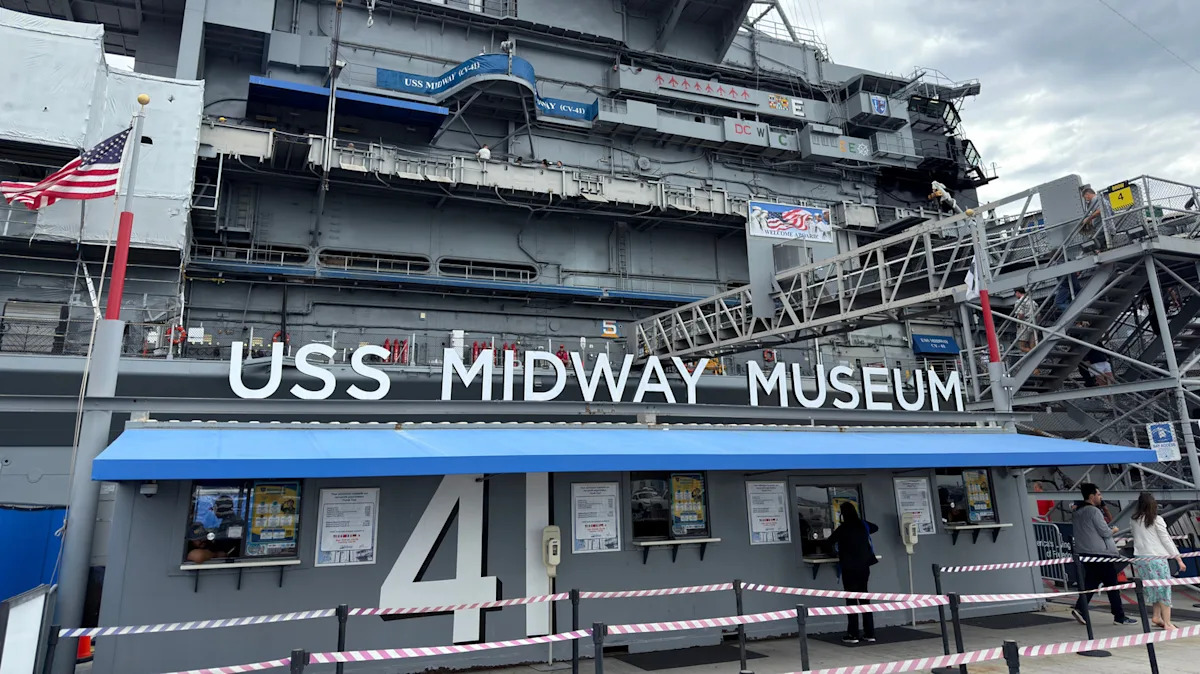
Scattered across the country are five American aircraft carriers converted into museums: USS Midway (CV-41) in San Diego, USS Intrepid (CV-11) in New York, USS Hornet (CV-12) in Alameda, California, USS Lexington (CV-16) in Texas, and USS Yorktown (CV-10) in South Carolina. All of these carriers were powered by conventional propulsion systems and therefore exempt from the strict federal and environmental laws governing the dismantling and long-term storage of nuclear reactors.
Nuclear reactors power all 11 aircraft carriers in the U.S. Navy. Unfortunately, none of them will ever become floating museums due to the highly radioactive payload. The first nuclear-powered carrier was the USS Enterprise (CVN-65), which had eight reactors—two for each of its four propellers—and served flawlessly for over 50 years before being decommissioned in 2012. This $500 million warship has yet to be dismantled.
In a 2012 interview with the Daily Press, Rear Admiral Thomas Moore said, "Decommissioning nuclear-powered aircraft carriers requires dismantling large sections of the ship's structure to facilitate the removal and disposal of the reactor compartment." Modern carriers are built around their reactors, so accessing them—located deep within the ship—requires dismantling much of the vessel. What remains resembles a scattered pile of Lego pieces rather than a real warship, and reassembling them would be prohibitively expensive.
Read also: All Japanese aircraft carriers sunk in World War II
There are no nuclear museums.
The aircraft carrier USS Enterprise at Naval Air Station Norfolk, Virginia, in 1990. — National Archives in College Park/Wikimedia Commons
The reactors that power Navy aircraft carriers and submarines are housed in shielded compartments protecting sailors from radiation and leave behind residual radiologically active waste, preventing its use in SINKEX exercises. This waste must be carefully removed, sealed, and loaded onto barges, where the Navy, adhering to strict Department of Transportation regulations, escorts it to approved disposal sites. Some of the material is stored at a dedicated waste disposal facility in Hanford, Washington, and disposed of by the Department of Energy. The nuclear fuel is shipped to the Naval Reactor Station in Idaho. The remainder is stored at the Puget Sound Naval Shipyard in Bremerton, Washington.
Despite being defuelled many years ago, the aircraft carrier USS Enterprise still sits moored in Newport News, Virginia, gathering dust. In 2025, a contract was awarded to dismantle the Enterprise; however, the Procurement Integrated Enterprise Environment website used to submit bids for these rights malfunctioned. One company subsequently appealed, claiming an error prevented it from submitting its bid. In February 2026, a judge ordered bids to be resumed, so Enterprise is still awaiting a final decision.
Want to stay on top of the latest tech and automotive trends? Subscribe to our free newsletter to receive the latest headlines, expert guides, and practical advice, one email at a time. You can also add us to your preferred search sources in Google.
Read the original article on SlashGear.