






Every car owner sooner or later faces a situation where the trunk space is no longer enough. Whether it's transporting building materials, taking a boat or ATV on a camping trip, or going on a trip with extra cargo, a trailer can be a lifesaver. But how can you choose the right one? What models are available, and what should you pay attention to? Let's take a closer look.
Do you even need a trailer?
It might seem like there's no point in bothering with an extra wheeled device when you can rent a truck or order delivery. But experience shows that a trailer is a versatile solution that:
- Cheaper transport rental.
- More convenient — no need to look for a driver or adjust to someone else’s schedule.
- More mobile - can be used at any time.
The range of trailer applications is vast: from transporting furniture to hauling heavy equipment. The key is choosing the right model.
Types of Trailers: Which One is Right for You?

1. Cargo trailers (flatbed and curtain-sided)
A classic of the genre, the open body with drop sides is the most common option.
- Onboard — simple, without a roof, suitable for transporting building materials, firewood, and garden tools.
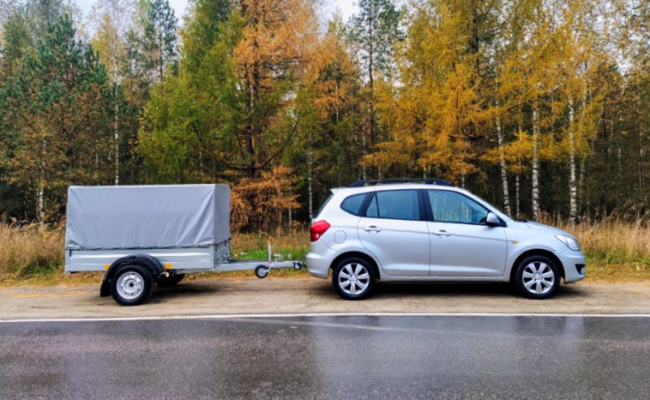
- Tented — protect cargo from rain and wind; the awning can be removed or rolled up.
Pros: affordable price, simple design, easy to maintain.
Cons: no theft protection, limited versatility.
2. Platform trailers (for equipment)
If you need to transport a motorcycle, ATV, or snowmobile, a standard flatbed trailer won't do. Flatbed trailers have:
- Ramps (folding ramps) for entry.
- Anchor points for securing wheels.
- Reinforced construction.
Some models are equipped with winch - useful if the equipment is not working.
3. Caravans and campers
For those who love to travel in comfort, this is no longer just a cargo platform, but a mobile home on wheels. Depending on the model, the interior may contain:
- Sleeping place.
- Mini kitchenette.
- Lighting system.
Minus: high price and the need for a more powerful towing vehicle.
4. Specialized trailers
- For boats and motorboats — with roller or keel supports.
- For transporting animals - with ventilation and reinforced construction.
- Car transporters — for transporting passenger cars (rarely used due to their dimensions).
How to choose a trailer: key parameters
The choice is truly not an easy one—models vary in load capacity, design, materials, and additional features. To avoid overpaying for unnecessary options or, conversely, compromising on reliability, it's important to research key parameters in advance.

Let's look at the main selection criteria.
1. Load capacity
The most important thing. Trailers are conventionally divided into:
- Lungs (up to 750 kg) - suitable for transporting household goods.
- Average (750–1500 kg) — for building materials and equipment.
- Heavy (from 1500 kg) - require category "E" in the license.
Important: You must not exceed the maximum load - it is dangerous and illegal.
2. Suspension type
- Spring - can withstand heavy loads, but is a bit stiff.
- Torsion (on independent levers) - smooth running, but less repairable.
3. Body material
- Steel - durable, but heavy and prone to corrosion.
- Aluminum - lighter, does not rust, but more expensive.
- Plastic - lightweight but fragile (suitable only for light loads).
4. Additional options
- Electric brakes (relevant for heavy models).
- Anti-roll bar (reduces swinging).
- Spare wheel (not all manufacturers include it).
Trailer Registration: What You Need to Know
Buying a trailer is only half the battle. It's important to register it correctly:
- Registration with the State Traffic Safety Inspectorate — a vehicle title, a sales contract, and the owner’s passport are required.
- Insurance — OSAGO is mandatory, but it is inexpensive.
- Technical inspection — not needed for trailers up to 3.5 t.
Important: If the trailer weighs more than 750 kg, the vehicle must have reinforced towbar mounts.
Operating tips
- Check your tire pressure regularly - uneven wear will damage the suspension.
- Lubricate the towbar - to avoid creaking and corrosion.
- Don't forget about the dimensions — the trailer «increases» the length of the car, making parking more difficult.
Conclusion: Is it worth buying a trailer?
If you need to transport large-sized cargo at least 2-3 times a year, definitely Yes. It will pay for itself after just a few trips. The key is to choose a model that suits your needs and not skimp on quality.
Do you have any experience using trailers? Share your experiences in the comments!