








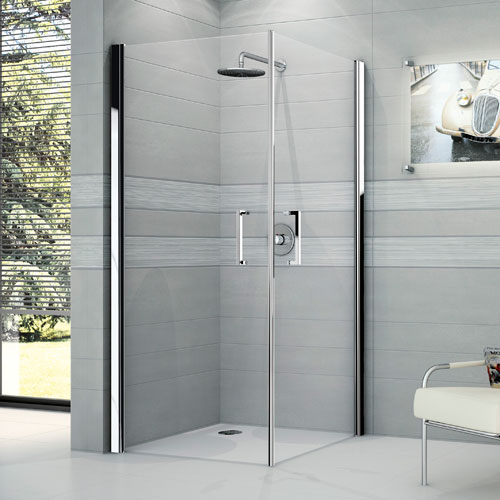
Curbless shower enclosures are increasingly common in modern bathroom design—lightweight and elegant designs that are a radical departure from traditional shower enclosures with massive trays. They create a sense of spaciousness and lightness while providing effective splash protection. Over the years, I've become convinced that this isn't just a fashionable trend, but a functional solution with numerous advantages.
Advantages of palletless fencing
Designing a curbless shower offers a number of significant advantages that my clients have appreciated. Visually expanding the space is key for small bathrooms. The absence of a bulky curb creates a feeling of spaciousness, even in small bathrooms. This is especially noticeable in combined bathrooms, where every centimeter counts.
Accessibility is another important aspect. A low threshold, or no threshold at all, is convenient for people with limited mobility and the elderly. In my experience, I've seen many times how such a simple detail significantly improves the comfort of daily use. Hygiene is also worth noting—the absence of hard-to-reach areas for cleaning makes it easier to maintain.

- Visual expansion of space
- Accessibility for people with limited mobility
- Modern aesthetic look
- Easy to clean and maintain
- Versatility for different interior styles
- Cost savings compared to traditional cabins
Types of fencing and their features
The modern market offers a variety of solutions for creating a shower space without a base. Frameless glass enclosures are elegant solutions made of tempered glass with no visible profiles. They look modern and stylish, are easy to clean, and offer a long service life. However, there's a catch: these systems are expensive, and installation requires professionalism.
Frame systems are classic solutions with aluminum or plastic profiles. They are affordable, easy to install, and reliable. However, the profiles create difficult-to-clean areas where dirt and mold can accumulate. Combination solutions combine different materials and design approaches, offering configuration flexibility and individuality.
- Frameless systems: modern look, easy cleaning
- Frame systems: affordable price, easy installation
- Combined solutions: flexibility, individuality
- Differences in cost and installation complexity
- Different durability and care requirements
- The difference is in visual perception and integration into the interior
Design features and fastening systems
Understanding the design of shower enclosures helps you make an informed choice and use them correctly. Mounting systems vary by installation method and their impact on the room's structure. Floor-mounted mounts provide stability and reliability but require drilling into the floor. In my practice, I always check the condition of the screed and the presence of waterproofing before installation.
Wall-mounted systems minimize stress on the floor but require strong walls. This can be problematic in panel buildings, as hollow-core slabs can't always support the load. Combined systems offer maximum stability by distributing the load between the floor and wall. Self-supporting structures are modern solutions without visible fasteners, creating the effect of floating glass.
- Floor mounts: stability, reliability
- Wall mounts: minimal impact on the floor
- Combined systems: maximum stability
- Self-supporting structures: a modern look
- Difference in installation complexity
- Different requirements for the foundation and supporting structures
Materials of manufacture: from glass to metal
The quality of the materials determines the durability and appearance of the fence. Glass elements are typically made of tempered glass, a durable and safe material. When broken, this glass shatters into small, blunt-edged pieces. Triplex glass, a multi-layered glass with increased impact resistance, is difficult to break, even intentionally.
Frosted glass hides splashes and streaks, making it easier to clean. Decorative finishes, such as sandblasting and photo printing, add a personal touch but require careful handling. Aluminum profile systems are lightweight and corrosion-resistant, while stainless steel ones are durable and prestigious. Plastic profiles are a budget-friendly option with a variety of colors but are less durable.
- Tempered glass: strength and safety
- Triplex: increased impact resistance
- Matte finish: hides splashes and streaks
- Aluminum profiles: lightweight, corrosion resistant
- Stainless steel: strength, prestigious appearance
- Plastic profiles: a budget option with a variety of colors
Drainage and waterproofing
Proper drainage is a key aspect of a functioning shower without a tray. Drain systems vary in design and efficiency. Linear drains are suitable for large areas, ensuring efficient water collection. Point drains are compact solutions for standard showers. Concealed systems integrate into the floor design, creating a unified surface.
Creating a floor slope is essential to ensure water drainage. A minimum slope of 1-1.51 TP3T is sufficient for most cases, while an optimal slope of 21 TP3T ensures effective water drainage. Slope creation methods include screeds, wedge-shaped insulation, and self-leveling compounds. Quality control includes precise alignment and angles.
Waterproofing works protect structures from moisture. Coated waterproofing—bitumen, polymer, and cementitious compounds—creates a seamless coating. Membrane systems—roll materials—ensure reliability and durability. Sprayed waterproofing—liquid rubber—is suitable for complex shapes. Penetrating waterproofing—deep-penetrating compounds—strengthen the concrete structure.

- Linear drains for large areas
- Point drains for standard showers
- Hidden systems for integration into design
- Floor slope 1-2% for gravity water flow
- Screed, insulation, mixtures for creating a slope
- Coating, membrane, spray waterproofing
- Penetrating compounds for strengthening concrete
Shower area design: dimensions and ergonomics
Careful planning is the key to a successful project. Dimensions and proportions determine user comfort. Minimum dimensions of 80x80 cm are sufficient to comfortably accommodate one person. Optimal dimensions of 90x90 cm and 100x100 cm offer a balance of comfort and space efficiency. Spacious solutions from 120x120 cm provide maximum comfort.
Ergonomic considerations include the placement of controls for easy access. Organizing space for bath accessories enhances functionality. Ensuring comfortable access for different users takes anthropometric measurements into account. In my practice, I always advise clients to test the layout before beginning work—stand in the marked area and assess its comfort.
Integration into the interior requires consistency with the overall style of the bathroom. Harmony with other plumbing fixtures creates a cohesive look. Using compatible materials and colors ensures visual unity. Creating a unified design ensemble transforms a functional element into a decorative element.
- Minimum dimensions 80×80 cm
- Optimal dimensions are 90×90 cm, 100×100 cm
- Spacious solutions from 120×120 cm
- Convenient arrangement of controls
- Organizing space for accessories
- Accounting for users' anthropometric data
- Matching the overall style of the interior
The installation process: from preparation to completion
Proper installation ensures the durability and reliability of the structure. Preparatory work includes precise measurements of the room and openings. Surface preparation—leveling and priming—ensures a high-quality fit. Marking the positions of all elements requires precision and attention to detail. Preparing tools and materials in advance saves time.
Installation of enclosing structures begins with the installation of floor guides or brackets. Installing glass panels with vertical alignment checks ensures proper operation. Installing door systems and adjusting mechanisms requires patience and precision. Sealing all joints and connections prevents leaks and protects against moisture.
Final work includes checking the operation of all mechanisms. Adjusting seals ensures a tight seal. Cleaning surfaces of contaminants maintains the aesthetic appearance. Functional testing of the system identifies potential problems before use.
- Accurate measurements of the room and openings
- Surface preparation: leveling, priming
- Marking the position of all elements
- Installation of floor and wall mounts
- Installation of glass panels with verticality control
- Installation of door systems and adjustment of mechanisms
- Sealing joints and testing the work
Operation and regular maintenance
Proper care ensures the longevity and impeccable appearance of your fence. Regular maintenance includes daily rinsing with clean water to remove soap scum. Regular cleaning of glass surfaces with specialized cleaners maintains clarity. Lubricating moving mechanisms ensures smooth operation. Checking the condition of seals and replacing them promptly prevents leaks.
Removing limescale requires the use of specialized glass and metal cleaners. Avoiding abrasive cleaners preserves the surfaces. Using soft sponges and cloths prevents scratches. Regular preventative cleaning reduces limescale buildup.
Seasonal maintenance includes checking all fasteners and connections. Adjusting door mechanisms ensures proper operation. Assessing the condition of glass and metal elements helps identify problems early. Preventative replacement of worn components prevents unexpected breakdowns.
- Rinse daily with clean water
- Regular cleaning of glass surfaces
- Lubrication of moving mechanisms
- Checking the condition of the seals
- Use of specialized cleaning products
- Avoiding abrasive materials
- Seasonal fastening check and adjustment
Operational safety and design aspects
Ensuring the safe use of a shower enclosure requires careful consideration of materials and design. The use of tempered safety glass minimizes the risk of injury. The strength and reliability of all fastenings ensures the stability of the structure. The absence of sharp edges and hazardous elements prevents accidental injury.
Organizing a safe space includes ensuring stability on wet surfaces. Anti-slip surfaces or special mats enhance safety. Convenient and safe access is provided taking into account the needs of all users. Compliance with regulatory requirements and standards ensures compliance with modern regulations.
Design aspects of interior integration include stylistic solutions. Modern minimalism with clean lines and simple forms creates a sense of spaciousness. High-tech with metallic accents and technological advancements is suitable for contemporary interiors. Scandinavian style with light tones and naturalness adds a cozy feel. Loft style with industrial elements and rough textures creates character.

- Tempered safety glass
- Strong and reliable fastenings
- No sharp edges
- Wet stability
- Modern minimalism, high-tech, Scandinavian style
- Transparent, frosted, tinted glass
- Colored profiles for accent solutions
Comparison with traditional solutions
Analyzing the advantages and disadvantages of curbless showers compared to traditional shower enclosures helps you make an informed decision. The advantages of curbless showers include: visual expansion of space, ease of access for all users, ease of cleaning and maintenance, a modern aesthetic, and configuration flexibility.
The advantages of traditional shower enclosures with a tray include: protection against leaks to the floor below, a traditional look, the ability to add additional features, and ease of installation without altering the floor structure. Each type has its own application: trayless enclosures are suitable for modern interiors and spaces with limited space, while traditional shower enclosures are suitable for standard solutions and rental properties.
- Pallet-less fencing: visually expanding space
- Traditional cabins: leak protection
- Difference in accessibility
- The difference is in the ease of cleaning and maintenance
- Different configuration flexibility
- Difference in installation complexity
- Various areas of application
Economic aspects and development trends
Assessing the costs and benefits of choosing a curbless shower enclosure helps make a rational decision. Cost factors include the quality of materials (glass, profiles, fittings), and the complexity of the design. vs Radius solutions, additional work such as drainage and waterproofing. Brand and country of manufacture also influence the price.
The ROI assessment takes into account the service life of high-quality fencing, space savings, improved ergonomics, and the preservation of its appearance over time. Increased property value is also important—modern solutions enhance the market appeal of a property.
Trends and innovations in the field of curbless shower enclosures offer increasingly sophisticated solutions. Technological innovations: self-cleaning glass coatings, smart control systems – motion sensors, automatic opening, energy-saving solutions – LED- backlighting, environmentally friendly materials - recyclable glass, aluminum.
- Quality of materials and complexity of design
- Volume of additional work
- Brand and country of manufacture
- Service life and appearance retention
- Increase in property values
- Self-cleaning coatings and smart controls
- Energy-saving and environmentally friendly solutions
Conclusion: A modern approach to shower space organization
Curbless shower enclosures are a modern and progressive solution for organizing the shower space in the bathroom. They combine aesthetic appeal, functionality, and practicality, offering new possibilities for interior design. A properly selected and properly installed curbless shower enclosure not only effectively provides protection but also becomes an important interior design element.
It offers the optimal combination of form and function, ensuring comfort and convenience in daily use. Choosing a curbless shower enclosure is a choice for modernity, practicality, and aesthetics, one that will delight you for years to come with its reliability and impeccable appearance. With proper selection, installation, and maintenance, this solution will last a long time, maintaining its functional and aesthetic qualities.