








Ensuring a reliable water supply in a country house or summer cottage requires a well-designed water supply system. Pumping stations with storage tanks are an effective solution that combines reliability and practicality. In this detailed guide, we'll cover the operating principles, selection and installation considerations for these systems, and their operational benefits.
Design features of pumping stations
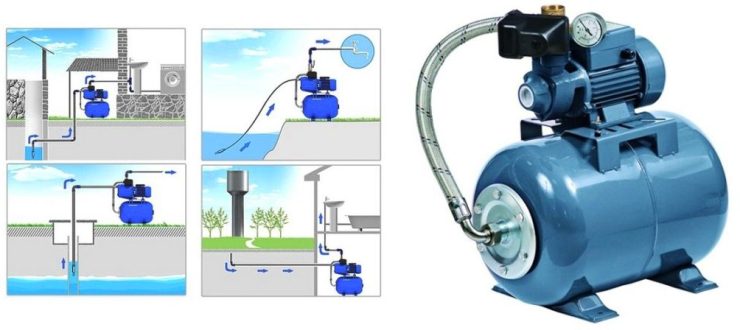
A modern pumping station is a complex engineering system consisting of several interconnected components. Understanding the function of each element allows for optimal equipment operation and timely maintenance.
The pump is the heart of the system, responsible for lifting water from the source and delivering it to the pipeline. Depending on the water intake depth and required pressure, surface or submersible models can be used. Centrifugal pumps are the most common in domestic systems due to their reliability and efficiency.
The hydraulic accumulator acts as a buffer tank, maintaining stable pressure in the system. The membrane tank is divided into two sections—a water chamber and an air chamber. When filled with water, the membrane expands, compressing the air in the opposite chamber and creating the required pressure.
A pressure switch is an automatic controller that manages pump operation. When the pressure drops below a set minimum, the switch turns the pump on; when the maximum pressure is reached, it turns it off. Properly setting the switch significantly impacts the equipment's service life.
The pressure gauge provides visual information about the current system pressure, allowing for rapid monitoring of its condition. A check valve prevents backflow of water when the pump is turned off, maintaining system pressure.

The operating principle of a system with a storage tank
Integrating a storage tank into the water supply system creates additional reserve water and stabilizes the equipment's operation. The operating principle is based on the gradual filling of the tank and subsequent supply of pressurized water.
In the first stage, the pump pumps water into the storage tank, creating operating pressure. When the tank is full, the pump shuts off, and the system enters standby mode. When the tap is opened, the pressure in the system gradually decreases due to the water flow from the tank.
The automation monitors the pressure level and restarts the pump when the minimum threshold is reached. This cyclic operation significantly reduces the number of motor starts, which positively impacts its lifespan. Reducing the on/off frequency is especially important for pumps with high inrush currents.
The storage tank's capacity is selected based on daily water consumption and pump capacity. For a family of 3-4 people, a tank with a capacity of 50-100 liters is usually sufficient. A tank that's too large can lead to stagnant water, while one that's too small can result in frequent pump activation.

Types of storage tanks and their features
The modern market offers a variety of storage tank models, varying in material, design, and purpose. Choosing the right tank determines water quality and the longevity of the system.
Plastic tanks made of food-grade polyethylene are the most common in household systems. They are lightweight, corrosion-resistant, and safe for storing drinking water. High-quality models feature UV protection and structural reinforcement to maintain their shape when filled.
Stainless steel or enamel-coated metal tanks offer increased strength and durability. They can withstand higher pressures and are less sensitive to temperature fluctuations. However, these tanks are significantly more expensive than their plastic counterparts.
Only tanks made of certified food-grade materials are used to store drinking water. The interior surface must be smooth, free of pores and seams where bacteria can accumulate. Regular cleaning and disinfection are essential to maintain water quality.
Tanks for industrial water—for irrigation and household needs—can be made from more economical materials. However, they must also comply with sanitary standards, especially if the water is used for watering garden crops.
Requirements for placement and operation
Proper installation of the storage tank and pumping station directly impacts their efficiency and service life. Compliance with technical requirements ensures trouble-free operation of the system for many years.
The equipment room must be dry, well-ventilated, and protected from direct sunlight. Ultraviolet radiation promotes the growth of microorganisms in water, and high temperatures accelerate the decomposition of plastic.
For drinking water tanks, protection from overheating is critical. The ideal storage temperature is between 5°C and 15°C. During hot weather, additional cooling is recommended, or the tank should be installed on the north side of the building.
The base of the tank must be level and sturdy, capable of supporting the weight of the filled container. For a 100-liter water tank, this is approximately 100-120 kg. Uneven loading can cause deformation of the casing and leakage.
The piping system must be of sufficient diameter to ensure the nominal water flow. The minimum pipe diameter is 1 inch for main lines and 3/4 inch for distribution to the points of consumption. All connections must be leak-proof and accessible for maintenance.
Advantages of systems with storage tanks
Integrating a storage tank into a water supply system offers a number of significant advantages, making this solution particularly attractive for country houses and summer cottages.
The system's reserve water supply is a key advantage. In the event of a power outage or pump failure, the user still has access to the water stored in the tank. For a family of several people, a 100-liter tank provides 4-6 hours of autonomous operation with economical consumption.
Stabilizing system pressure is especially important when using multiple water intake points simultaneously. The tank compensates for pressure surges, ensuring a uniform water supply to all faucets. This improves user comfort and extends the life of the plumbing fixtures.
The energy efficiency of a system with a storage tank is significantly higher than that of direct water supply systems. Reducing the number of pump starts reduces energy consumption and reduces the load on the electrical grid. Long-term savings can amount to 20-30% of the energy consumed.
Protecting equipment from frequent startups is critical to extending pump life. Starting currents place maximum stress on the motor winding, so reducing the number of startups significantly increases the time between repairs.
Maintenance recommendations
Regular maintenance of a pumping station with a storage tank ensures its smooth operation and prevents serious breakdowns. Preventive maintenance should be performed at least once per season.
The pressure in the hydraulic accumulator is monitored using a pressure gauge. If the pressure deviates from the nominal values, air is added through the nipple or excess air is released. The optimal pressure in the air chamber is usually 10% below the pump cut-in pressure.
Checking the check valve's condition involves cleaning the seat and checking for leaks. A clogged valve can cause backflow and a drop in pressure in the system. Regular flushing prevents deposits from building up.
The storage tank should be cleaned at least once a year. This involves draining the water, removing the manhole cover, and mechanically removing sediment from the bottom. Disinfecting the interior with special disinfectants kills bacteria and algae.
- Check all connections regularly for leaks.
- Monitor water quality - turbidity, odor, color
- Monitor the operation of the automation - the accuracy of the pressure relay operation
- Replace coarse filters in a timely manner
A system with a storage tank and pumping station is a reliable and practical solution for an autonomous water supply. Properly designed and installed, it ensures comfortable water use with minimal operating costs. Consideration of the specific site, careful selection of equipment, and regular maintenance guarantee years of trouble-free operation, making country living no less comfortable than living in a city apartment with a centralized water supply.