






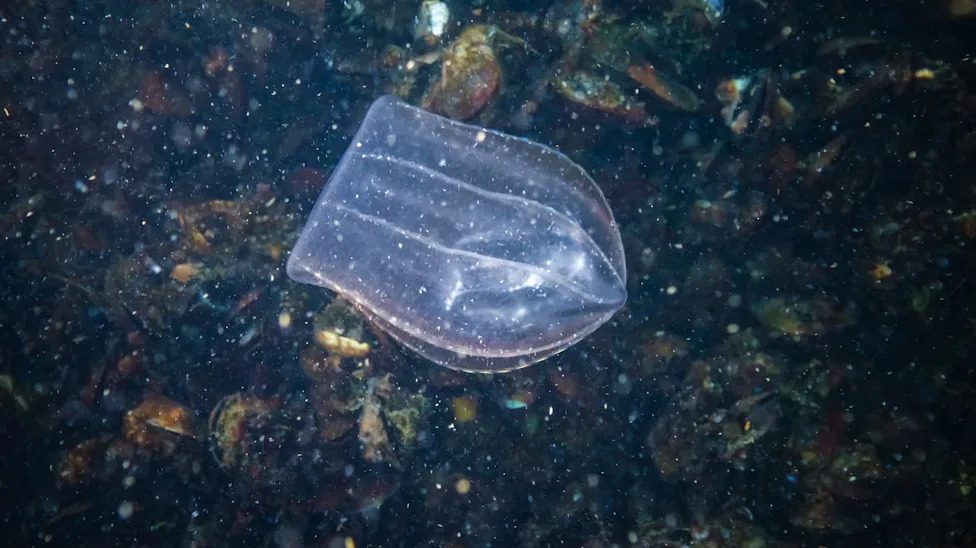
A glowing, jelly-like invader capable of eating its own offspring is spreading across the Baltic Sea, and scientists say its spread could create even greater problems for already threatened fish populations.
Although Mnemiopsis leidyi is often classified as a jellyfish, it is a comb jelly, not a true jellyfish, and does not sting. Scientists warn that its growing distribution could seriously damage coastal ecosystems and the communities that depend on them.
What's happening?
According to Euronews, scientists claim that Mnemiopsis leidyi is rapidly spreading across the Baltic Sea. They believe the species likely entered European waters in the 1980s on ships passing through Black Sea ports, after migrating from the Atlantic coasts of North and South America.
The species' history elsewhere illustrates why researchers are concerned. In the Black Sea, populations reached approximately 400 individuals per 35 cubic feet (1 cubic meter) in 1988. After consuming large quantities of zooplankton, its primary food source, the population subsequently declined, but only after the comb jelly had become one of the dominant organisms in the region.
The Baltic Sea hasn't yet seen such high levels, but new research suggests that the sea's expansion is accelerating. This expansion may be partly due to the spread of oxygen-poor waters, sometimes referred to as dead zones or "oxygen deserts.".
This species is also difficult to starve. Adults lay large numbers of eggs, which can serve as an emergency energy reserve, and when food is scarce, they can consume their own larvae. They also actively feed on zooplankton, as well as fish eggs and larvae, which poses a particular threat to fish such as sprats and sardines.
Why is this important?
Because the comb jelly feeds on eggs and larvae, it can reduce future fish stocks, which could spill over into commercial fisheries, food supply chains, and coastal economies.
The expansion of this species' range also indicates broader changes in the Baltic Sea. Climate change makes the sea more susceptible to invasive species, as warmer water and expanding low-oxygen zones may favor organisms better adapted to rapid environmental change.
The Baltic Sea already faces fluctuating water levels, worsening hypoxia and other climate disturbances that can weaken native species while creating opportunities for new ones to emerge.
What is being done?
Researchers are studying one potential natural defense already present in the Baltic Sea: the native three-spined stickleback (Gasterosteus aculeatus). A study published in January 2026 in the Journal of Plankton Research found that this fish could help curb the spread of the invasive species by feeding on comb jellies.
However, this protective measure may be weakening. Hypoxia appears to suppress the activity of sticklebacks and reduce the amount of food they receive from these larvae, meaning that one of the Baltic Sea's natural control systems may fail just when the invasive species has the greatest opportunity to spread.
The Baltic Sea remains a dynamic ecosystem, but is increasingly shaped by anthropogenic change.
Its glow may appear alien, but the spread of this so-called "marine cannibal" points to very real changes in the Baltic Sea. As "oxygen deserts" expand and natural barriers weaken, the restoration of marine life and the lives of the people who depend most on the sea may become more difficult.
Subscribe to TCD's free newsletters to receive helpful tips, actionable advice, and a chance to win $5,000 toward your home improvement. To see more stories like this, change your Google preferences here.