








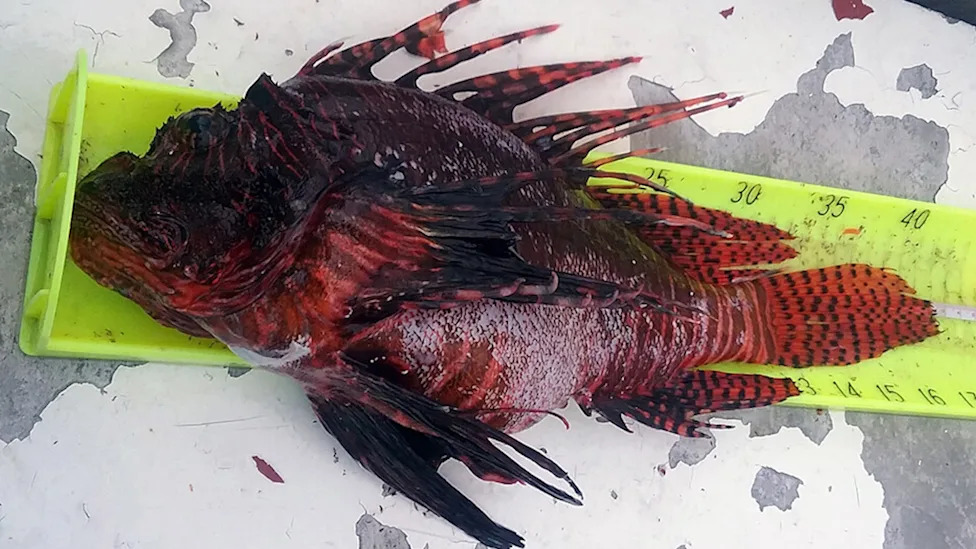
During an expedition in the Gulf of Mexico, around Flower Garden Banks and nearby artificial reefs, 30 divers removed 157 invasive lionfish.
The expedition reduces pressure on one of the region's key coral reef ecosystems, The Galveston County Daily News reported.
What's happened?
Lionfish in the Gulf of Mexico have no natural predators, so during the second of three planned research expeditions to study the lionfish, divers specifically looked for them.
The Daily News reported that the group left Freeport aboard the M/V Fling, traveled approximately 120 miles to Flower Garden Banks, and used spears and puncture-resistant containers to catch fish.
The Texas Parks and Wildlife Department, the National Oceanic and Atmospheric Administration, Texas A&M University at Galveston and the nonprofit Lionfish Invitational Inc. are participating in the expedition, the newspaper reported.
Rachel Bowman, president of Lionfish Invitational Inc., said collaboration is one of the main benefits of the event.
«"There's a tremendous collaboration between all these different organizations to gather as much data as possible," Bowman told the Daily News.
«"We caught a lot of large lionfish this time, which is a bit unusual for us," Bowman added. "We usually have a medium-sized fish ratio, but many of these fish were quite large.".
Why is this important?
Despite their impressive appearance, lionfish pose a serious problem for the Persian Gulf ecosystem. They inhabit the waters of Southeast Asia and feed on fish, shrimp, and crabs, potentially displacing native species and disrupting the food chain.
Biodiversity, tourism, and recreational fishing depend on healthy fish populations in these sensitive marine habitats. Hannah Bauer of Texas Parks and Wildlife told the Daily News that regular fish removals could significantly impact the situation.
«"Obviously, lionfish aren't going anywhere, but regularly harvesting them can help reduce their impact on sensitive ecosystems and important recreational fish species like red snapper," she said.
The article notes that the Flower Garden Banks reef system in the Gulf of Mexico has demonstrated greater resilience than some other coral reefs.
What is being done?
This event is unlike a typical lionfish fishing competition. Spearfishing is generally prohibited in the Flower Garden Banks National Marine Sanctuary, but organizers obtain federal permits to fish for lionfish in the area.
The article also states that the trip was research-based. Each lionfish is tagged and measured before being frozen, and then scientists study its stomach contents, genetics, and age, while Texas Parks and Wildlife staff survey fish and invertebrates around artificial reefs in the coastal area.
To participate in the 2026 expedition, participants were required to pay a fee of $1,100, as well as possess an advanced diver certificate, a nitrox certificate, and dive insurance. Applications for this year's expedition, which will take place from September 6 to 10, are now closed; registration typically opens at the end of the year and closes in March.
This collaboration is beneficial both for the local ecosystem and for scientific research.
«"There are also amateur scientists who want to dive in an interesting place, but are also very excited about the opportunity to help scientists with their work and data collection," Bowman explained to the publication.
Subscribe to TCD's free newsletters to receive helpful tips, actionable advice, and a chance to win $5,000 toward your home improvement. To see more stories like this, change your Google preferences here.