








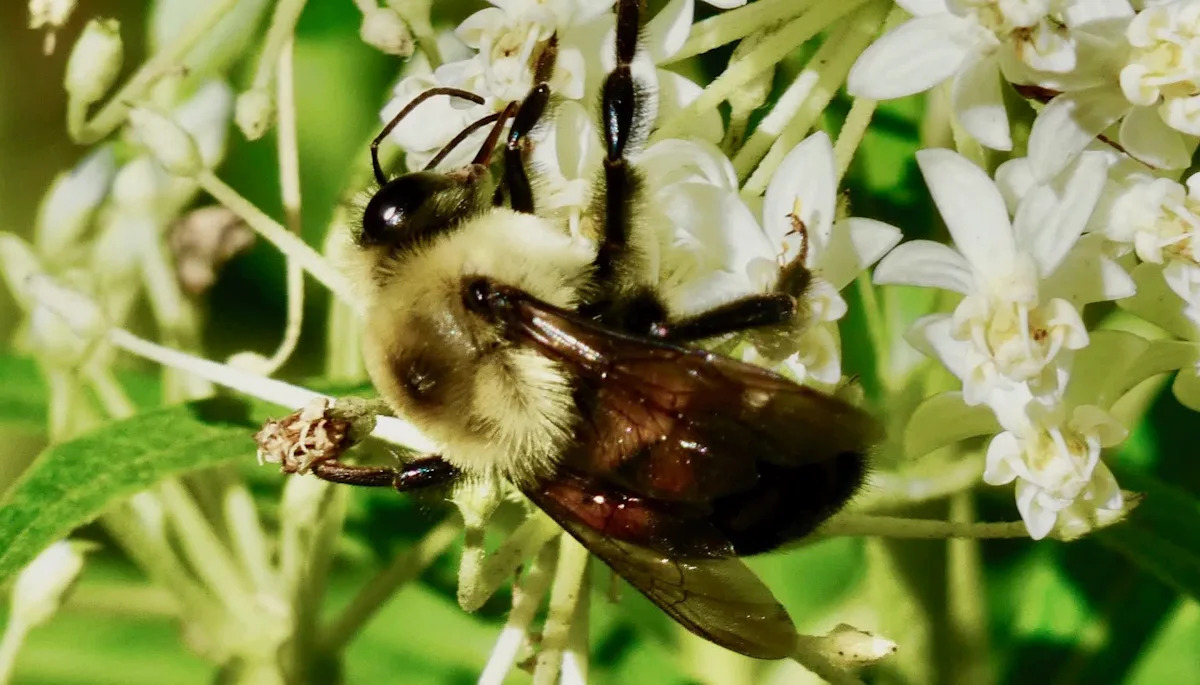
The bumblebee population, once widespread across much of the area, is receiving significant support from federal conservation agencies.
The Fish and Wildlife Service has designated nearly 1.5 million acres as critical habitat for the endangered rusty-spotted bumblebee, drawing attention to a species that has disappeared from about half its historical range.
What's happened?
The rusty-spotted bumblebee once inhabited a vast swath of the country. But since 2000, confirmed sightings have only been reported in a few regions. In 2017, according to an article on yourerie.com, it became the first bee species to be federally designated as endangered.
Now, the Fish and Wildlife Service announces that lands in Illinois, Iowa, Minnesota, Virginia, Wisconsin, and West Virginia will be designated as critical habitat for this species. While this move does not create new protected areas or change land ownership, it does help shape the planning, permitting, and implementation of projects involving the federal government.
«"The designation may impact development or other activities in which federal agencies participate in the planning, permitting, or implementation," the Fish and Wildlife Service said in a statement.
This bee gets its name from the rusty-brown spot near its wings, although this marking is found only on workers and males. Recent maps compiled by conservation authorities show that its current range is concentrated primarily in the Upper Midwest and Northeast, as well as in some areas considered promising for population recovery.
Why is this important?
Pollinators play a key role in the life cycle of plants.; They support crop yields, vegetable gardens, and healthy ecosystems. Protecting habitats benefits both wildlife and people.
Scientists say the decline of the rusty-spotted bumblebee is likely due to a combination of factors, including habitat loss, pesticides, pathogens, parasites, bee farming, and climate change. As natural meadows and flowering landscapes disappear, pollinators lose the food and shelter they need to survive.
Protecting important habitats helps strengthen pollinator populations. Wildlife experts say the same measures that help the rusty-spotted bumblebee, such as planting native flowers that bloom from spring to fall and reducing pesticide use, can also help other endangered species, including monarch butterflies.
What do people say?
Environmental groups said the move was long overdue.
«"Protecting this species' last remaining habitat from further destruction is just common sense," said Lucas Rhodes, a senior attorney with NRDC.
Jay Watson, a conservation biologist with the Department of Natural Resources, also pointed to a practical step people can take at home.
«"The best way to attract a variety of bumblebee species and other pollinators to your property throughout the season is to provide them with a favorable habitat," Watson said.