








Concrete is one of the most popular building materials in the world. Its versatility, durability, and affordability make it indispensable in a wide variety of construction projects, from building construction to road infrastructure. Let's look at the main types of construction work in which concrete is widely used, as well as its advantages.
Why is concrete so popular?
Concrete is an artificial stone material formed by the hardening of a mixture of cement, water, and aggregates. Its main advantages are:
- Strength and durability. Concrete is capable of withstanding heavy loads and resisting external influences.
- Versatility. The material is suitable for the construction of buildings, bridges, roads, foundations and even decorative elements.
- Cost-effectiveness. The relatively low cost makes concrete accessible for various types of construction.
- Ease of use. Concrete can be easily molded into the desired shapes before it hardens.
Now let's look at where concrete is most often used.
The main types of construction work using concrete
1. Construction of foundations
The foundation is the basis of any building, and concrete is the key material here.
Types of foundations:
- Strip foundation — is poured under the load-bearing walls of the building.
- Slab foundation - used for soft soils.
- Columnar foundation - used for light construction.
A concrete foundation ensures the stability of the building and prevents it from subsiding and collapsing.
2. Construction of walls and ceilings
Concrete walls and floors are durable structures that are often used in residential and industrial buildings.
Construction technologies:
- Monolithic construction. Concrete is poured into pre-prepared formwork.
- Block construction. Concrete blocks or panels are used.
Concrete walls have excellent sound insulation, fire resistance and high load-bearing capacity.
3. Production of road surfaces
Roads, sidewalks and bridges are often made of concrete due to its load-bearing properties and durability.
Advantages of concrete roads:
- Long service life.
- Resistance to temperature changes.
- Minimal maintenance costs.
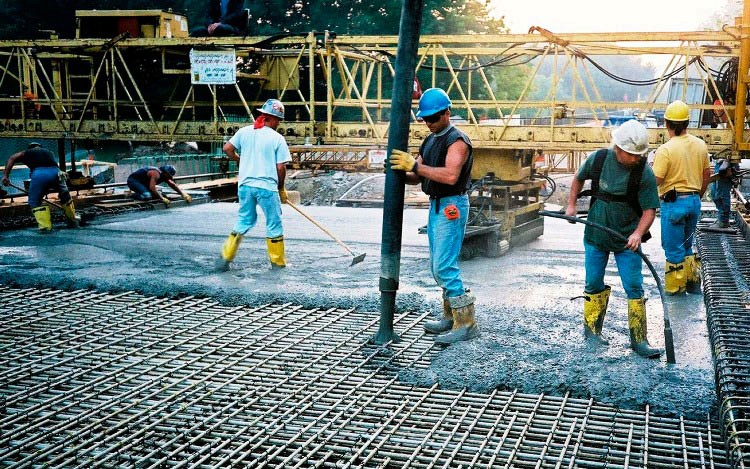
4. Construction of bridges
Concrete bridges are a symbol of engineering excellence. They are constructed using reinforced concrete structures, which boast high load-bearing capacity.
Types of bridges:
- Arched bridges. They are distinguished by their decorative properties and durability.
- Beam bridges. Used to cover large distances.
- Suspension bridges. Often combined with concrete supports.
5. Arrangement of floors and screeds
Concrete floors are in demand in residential and industrial premises.
Types of concrete floors:
- Polished floors. They look aesthetically pleasing and are suitable for offices.
- Technical floors. They are used in warehouses and production facilities.
- Decorative floors. With the addition of pigments and textures.
6. Production of small architectural forms
Concrete is used not only in large construction projects, but also in landscape design.
Examples of architectural forms:
- Garden paths.
- Flower boxes and vases.
- Benches and gazebos.
Concrete elements are resistant to weather conditions and retain their attractive appearance for a long time.
7. Repair and restoration of structures
Concrete is also used to repair damaged structures. It can be used to:
- Strengthen cracks.
- Restore the destroyed parts.
- Strengthen walls and foundations.
How to choose the right concrete for different jobs?
The choice of concrete type depends on the specific project. The table below lists the main types of concrete and their applications:
| Type of concrete | Main application |
|---|---|
| Heavy concrete | Construction of walls, foundations, bridges |
| Lightweight concrete | Thermal insulation panels, partitions |
| Decorative concrete | Finishing, architectural elements |
| Rapid-hardening concrete | Urgent construction work |
Conclusion
Concrete is a versatile building material with a wide range of applications. It is used in the construction of buildings, roads, bridges, and even hardscape. Its durability, strength, and affordability make it an indispensable tool in construction.
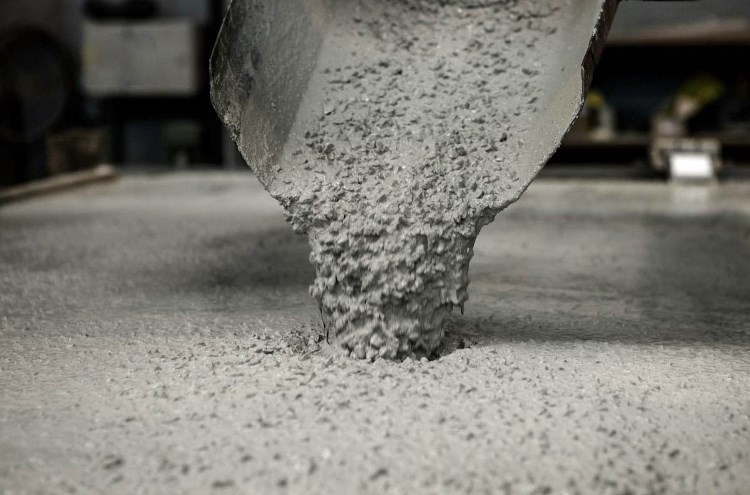
The cost of concrete can vary depending on its type, grade, additives, and region of purchase. However, it's important to remember that high-quality concrete directly impacts the reliability and durability of the entire structure.