








The world is changing rapidly, and hobbies are changing with it. Here are the top 10 weirdest hobbies and unusual hobbies, which are gaining popularity in different countries. Some of them are many years old and are becoming more popular year after year, while others are very young.
10. Marbling (ebru)
One of the trending hobbies looks even better than it sounds. Marbling is painting with special paints on a smooth surface of water. The paints are water-resistant, and the design can then be transferred to a paper or fabric base.
9. Sneaky licks
The main goal of this pastime, which teenagers have become obsessed with thanks to TikTok, was to steal a large, noticeable object from school and display it online, accompanied by the viral phrase "Devious Licks" (a slang meme).
Naturally, several teenagers were caught red-handed, having posted incriminating evidence against themselves. Ultimately, TikTok simply banned videos related to theft. However, like any viral teen trend that sends parents into a panic, this craze will always recur in one form or another.
8. Red light, green light
We owe this hobby to the incredible popularity of the TV series "The Squid Game." It's primarily enjoyed by elementary and high school-aged children, who play a game in which they move when the light turns green and freeze when the light turns red. They sing a song in Korean while imitating a puppet from the series.
7. Chessboxing
Combining chess and boxing is a great option for hot-tempered people. If you lose, you knock out your opponent.
Of course, the idea of a knockout due to insult is a joke, but the hybrid sport of chessboxing really does exist. To qualify for professional participation, athletes must have competed in at least fifty amateur boxing matches and have an ELO chess rating of at least 1600 (second tier).
This game forces participants to constantly switch between physical and psychological combat. Chessboxing is officially held in various countries, including Russia, among adults and even schoolchildren.
6. Alternate reality games
Blending game content with the real world creates a new, alternate reality experience (ARG). And one of the fundamental principles of such entertainment sounds rather odd: "It's not a game." For example, objects important to the plot must actually exist.
Arguably the first modern ARG is Ong's Hat, a false conspiracy theory that has spread both online and offline. It's a fictional account of a real-life ghost town in New Jersey. The game's story involves occult rituals and interdimensional travel, prompting players to comb through old texts and examine media reports to discover what truly happened to the town's residents.
ARGs like these blur the line between fiction and fact, making gameplay particularly engaging.
5. Biohacking
Modern biologists also enjoy having fun. But their pastimes extend far beyond chessboxing and involve genetic and physiological research in home laboratories, often set up in garages.
While many of these biologists engage in legitimate science, others focus on body hacking and implants, attempting to alter their bodies and push the limits of human capabilities. In the most extreme cases, some biohacking masters actually attempt to fuse their bodies with electronics to begin their transformation into cyborgs.
Incidentally, it was thanks to biohackers working in collaboration with Medtronic that the first automatic insulin pump—an artificial pancreas—was developed.
4. Geocaching
This hobby emerged in the early 2000s and has only grown in popularity over the years. Geocaching originated with someone posting GPS coordinates online and challenging others to find an item at those coordinates. This model of "digital treasure hunting" remains relevant, but geocaching has spawned some bizarre variations.
- First, several caches were created as deliberate attempts to lure people into danger. For example, one cache was placed in a minefield in Bagram, Afghanistan.
- Furthermore, thousands of caches have been abandoned on private and protected lands, such as national parks and nature reserves. Geocaching in such areas can be dangerous to the environment—or to the user themselves. In 2011, 71-year-old Manuel Soria Heim was found guilty of assaulting two people. He shot at geocachers searching for a cache on his property—and this is just one of many similar cases involving geocaching.
Despite all the dangers, the number of fans of this tourist game is growing daily. After all, it's a great opportunity to explore unfamiliar places, experience the thrill of treasure hunting, and the joy of connecting with like-minded people. Geocaching is also an unconventional way to train future surveyors.
3. Swamp football
This unusual form of football was apparently invented by a very resilient man with a ton of unwanted clothing. Players compete on soft, muddy ground. This makes the sport more challenging and tiring, but its whimsical nature and added challenge are precisely what attracts both athletes and spectators.
Instead of just watching people kicking a ball around a field for 90 minutes, spectators can watch teams of 5 people each struggle through sticky mud, fall over, lose boots, and finally score a goal.
This sport originated in Finland, where it was apparently used as a form of exercise for athletes and soldiers. Try playing on marshy ground without a good level of physical fitness.
While there is a competitive element to swamp football, even championship teams are usually made up of groups of friends who play for fun rather than with the desire to win trophies.
2. Quidditch
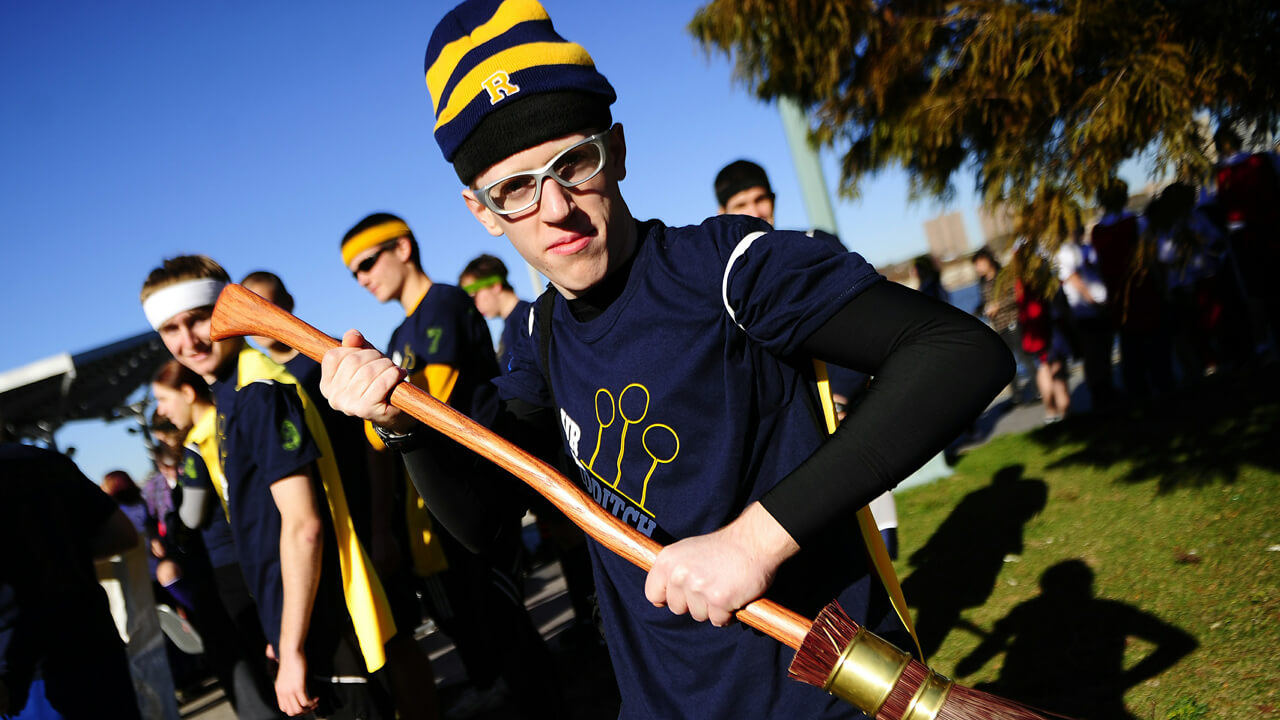
A real-life version of the wizarding sport from the Harry Potter series was created in 2005. And, as in the books, Quidditch received its share of media attention. And how could one not notice the game, in which participants hold brooms between their legs to simulate magical flight?.
Quidditch quickly spread around the world and became a legitimate sport. Currently, 39 countries are members of the International Quidditch Association and participate in various ranking matches and even cups. There are European and Asian cups, and even a Quidditch World Cup.
The strangest thing is that the various Quidditch leagues pay their athletes, which has allowed Quidditch to become a truly professional sport. It seems there might be more gold in this game than in the Golden Snitch.
1. The Journey of a Toy
People who take up this hobby take photos of their toy in front of various landmarks and also fill out travel journals on the ToyVoyagers website.
Some people pass their toys on to other travelers or leave them where other tourists can pick them up. Each toy traveler has a tag with an identification number, which contains a link to the toy's blog (Travelog).
Do you have a toy that needs a vacation?