








For a long time, if you wanted to travel the world, you had to travel on water at some point. And the thing about water is that everything literally floats smoothly on the surface. However, when something goes wrong, you drown. Drowning sucks. It's cold, you can't breathe, the pressure can crush you, and all sorts of things will eat you. Please avoid drowning at all costs.
Historically, not everyone has escaped the flood, and sometimes the stories of what happened are much stranger than you might think.
10. USS Bowfin - the submarine that sank the bus
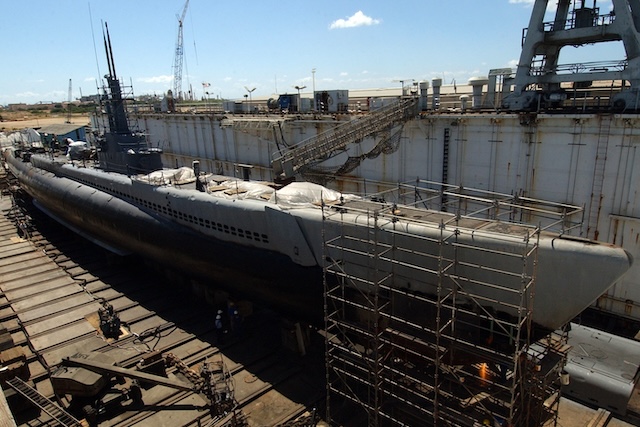
Submarines from both sides sank thousands of ships during World War II. They proved to be among the most valuable naval assets a country could possess. They were so good at their job that the aircraft carrier USS Bowfin managed to sink the bus. Think about that for a second.
A bus, let's be clear, is not a watercraft. However, back in 1944, after repairs in Pearl Harbor, «Bowfin» He set out to sea. He followed a Japanese convoy to the islands near Okinawa. Three ships with a crane, some supplies, and the like were moored in the harbor.
Taking advantage of the opportunity, «Bowfin» Launched three torpedoes, then quickly changed position and launched three more. The result was the destruction of several Japanese ships, as well as a pier. This meant that in addition to sinking the enemy ships, Bowfin managed to disable a crane and a bus parked on the pier. This is the only recorded instance of a submarine disabling public transportation.
9. L. Ron Hubbard claimed to have sunk two mysterious submarines during World War II.

Scientology founder L. Ron Hubbard had a great love for the sea. There's an entire Scientology aquatic division, a story for another time, but Hubbard himself was also a naval officer and served at sea in the Army. Or at least he had some colorful stories about it.
Back in 1943, Hubbard fought in World War II. He claimed to be an absolute MCU-level hero, like Captain America. According to the Navy, not so much. He claimed to have sunk two Japanese vessels off the Oregon coast in May of that year. The problem was, the Navy couldn't find any trace of the vessels, although it appears his crew fired at a log at one point. Hubbard later claimed this was a cover story because the military didn't want anyone to know the Japanese were so close to shore.
Hubbard later lost command after accidentally straying into Mexican waters and firing on an island without cause.
8. North Korea said it sank a decommissioned American ship.

Many things are difficult to decipher in the fog of war, and some small details have likely been lost to history across the globe in every conflict in human history. Sometimes it's less about the uncertainty of who fired first, or what started a particular battle and where, and more about someone simply lying. But if you're going to lie, try to make it believable. North Korea failed at that.
North Korea claimed to have sunk a US warship back in 1950. «Baltimore» . She was a heavy cruiser, and the destruction of this ship would be significant for the history of any army. However, official records state that the Baltimore was decommissioned in 1947. .
7. The US military sank a radioactive aircraft carrier.
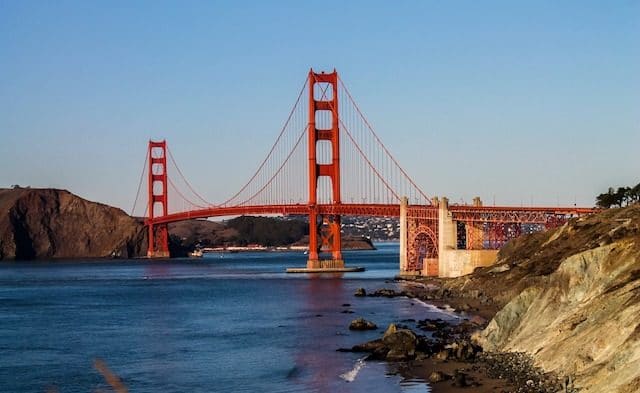
When a submarine is deliberately sunk by the military or the company that owns it, it's called scuttling. There's nothing wrong with that, and sometimes it's even used to create artificial reefs for fish and cool diving spots. It's an effective form of recycling. But one would hope that if someone were to scuttle a ship, they would let people know it was happening. Especially if the ship was radioactive.
USS Independent — an aircraft carrier involved in nuclear bomb tests. As a result, the ship absorbed more radiation than it should have. They used it as a target ship at Bikini Atoll.
In the late 1940s, they returned the ship to San Francisco to study nuclear decontamination, and then, in 1951, they towed it 30 miles offshore and scuttled it. Experts stated that the ocean is a good buffer against radiation, and contamination is minimal, so the risk of it contaminating fish you might eat is also minimal. Which, of course, doesn't mean nonexistent. Just minimal.
6. Twin ship «Titanic »" sank a submarine
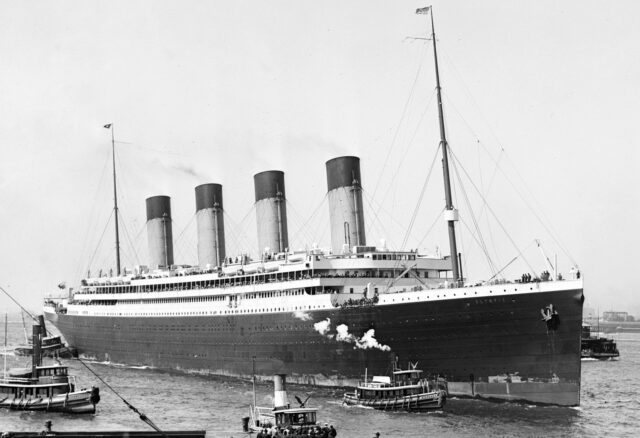
RMS Olympic Launched in 1910, it was the largest ship in the world at the time. It was the first of three revolutionary ocean liners, the third of which was far more famous – «Titanic» . But before that,« Titanic» stole her glory, "« Olympic"» was of great importance. In fact, she was one of the ships that responded to the distress call. «Titanic» , when it sank.
Since the First World War broke out, no one was transporting huge cruise ships by sea, but "« Olympic"» painted gray, closed the portholes and made other changes to make it less visible to enemy ships. She became Olympic champion The HMT served as a warship. Its paint job was changed to a bright camouflage scheme and it was equipped with weapons.
In 1918 Olympic The crew spotted a German submarine in the English Channel and repelled its torpedoes, ramming the enemy ship and sinking it.
5. Eight nuclear submarines sank at sea.

Nuclear submarines have been in existence since 1955. With such a long history, you can safely assume that not all of them are still in service, but you might not want to know what's happening to them all, as that history isn't exactly reassuring. Not every nuclear submarine has returned safely to harbor for a safe and amicable decommissioning.
At least eight nuclear submarines have been lost at sea. This means their nuclear reactors and weapons have sunk into the icy depths, perhaps lost forever. The general consensus is that this isn't such a bad thing, as the reactors are protected and can remain safe for centuries, by which time most of the fuel will have been lost anyway. Fun!
Russia had planned to recover some of its lost ships: the K-159, sunk in 1963, and the K-27, sunk in 1982, despite moderate radioactivity. So far, nothing has happened on this front.
4. Garfield's phones from a sunken shipping container have been washing up on the beach for decades.
The sea eventually returns everything to land. Some items can disappear at sea for years before washing up somewhere. For nearly 40 years, Garfield's phones have been washing up on the shores of Brittany, thanks in part to a shipwreck with the most impressive cargo of all time.
In 2019, after years of fighting with the phones, their full transport was finally identified container, which sank in the 1980s. The container was carried into a cave, accessible at low tide, as if it were some strange pirate treasure.
3. An overflowing toilet sank a submarine.

U-boats were terrifying during the war, sinking up to 3,000 Allied ships. Obviously, this resulted in a great loss of life and damage, so anything that could destroy a submarine was welcomed. And in one case, one ended up in the toilet.
U-1206 fought towards the end of the war and was one of the fleet's most advanced ships. For some reason, German engineers decided that removing the septic system to save space was a good idea. Instead, the U-boats simply dumped the waste into the sea. The problem was, it only worked near the surface.
Having trouble getting the toilet to work on the maiden voyage, the captain called an engineer, who turned the wrong valve and began flooding the submarine with seawater and feces. Why was there a valve that allowed this to happen? Who knows?
A mixture of feces and seawater flooded the battery room, which was conveniently located under the bathtub. As a result, the batteries began to emit a toxic gas. .
After filling and gassing the submarine, it had to surface, and it had to do so quickly. They launched torpedoes to increase buoyancy and then surfaced right before the Allied attackers. Most of the crew was captured, and U-1206 sank.
2. In case of flooding Eastland more people died than on the Titanic
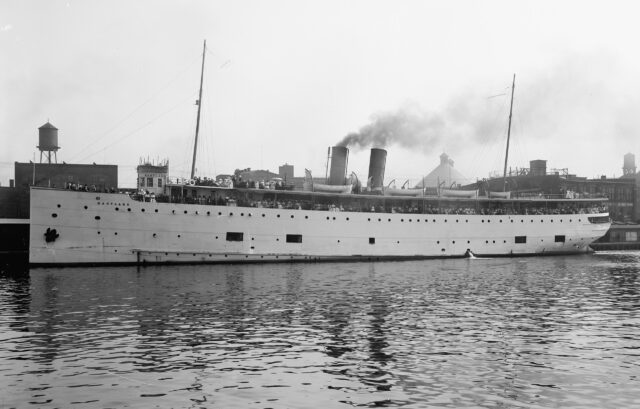
Some maritime disasters can be attributed to bad luck, but not all. Eastland The disaster was a tragedy, and the death toll is due to extremely poor planning. Unlike« Titanic"» , The Eastland never sailed; it was on Lake Michigan. And when it sank, nearly 850 people died.
« Eastland"» The liner was carrying 2,573 passengers from Chicago across the lake to the park for a day trip and picnic. The boat, one of five carried by Western Electric Company employees, was already known for its instability and had nearly capsized in the past. .
On the day of the fateful voyage, it pulled into port before all the passengers were on board. Instead of canceling the voyage, the crew simply tried using ballast to balance the boat. They fixed it, but then the pages started to read differently.
At 7:25, it was listing 25 degrees to port and taking on water. At 7:30, it set off anyway, then rolled onto its side. Because so many people were on board, even though this happened right in the port in full view of the public, hundreds were trapped under the boat and could not be rescued. A total of 844 people died.
No one was ever held accountable for the deaths, and it was assumed the cause was indirectly related to the Titanic. The boat was equipped with new lifeboats after the sinking. «Titanic» , which were short of passengers. It is believed that the lifeboats «Eastland »" made the boat heavy, which led to instability.
1. Whaling ship «Essex» was sunk by a sperm whale
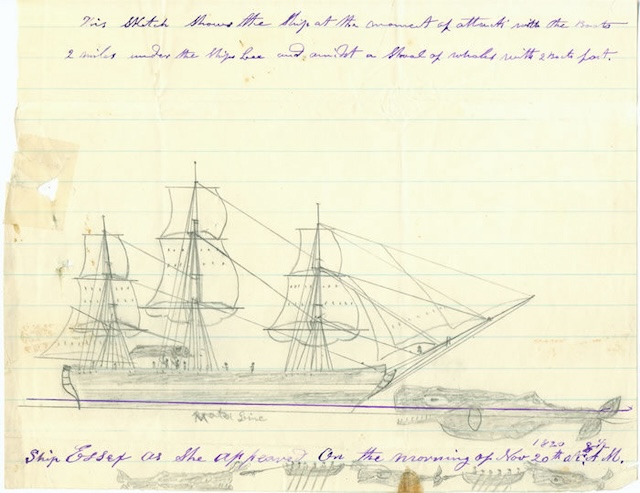
Whaling ship «Essex» sank on November 20, 1820, and this can be considered the most dramatic sinking in history after the "« Titanic"» , at least in terms of the overall impact it had on culture. At first glance, this seems difficult to understand, since everyone knows Titanic and probably very few know« Essex"» . But he is famous not so much for the fact that « Essex"» sank, how many themes , Why he sank.
Vessel «Essex» rammed by a sperm whale. He was on a two-and-a-half-year whaling voyage when he came across the capsule. Smaller boats were sent to harpoon the whales, and one of them was hit.
At the same time, one whale broke away from the pod, and it was big. Reports say it was 85 feet long, much longer than the average 65 feet for adult sperm whales. It headed straight for «Essex» and crashed into the hull. The size and speed were too great even for the 238-ton whaling vessel. The hull caved in, and the boat sank.
If this story seems vaguely familiar, it might be because it served as the inspiration for «Moby Dick» Herman Melville.