








Diamonds, rubies, emeralds, and other precious stones are timeless symbols of wealth and luxury. They are credited with magical properties and passed down from generation to generation, with the powerful even amassing entire collections of gemstone jewelry, the value of which reaches astronomical sums.
Have you ever wondered what the most expensive jewelry in the world looks like? Well, we're happy to answer your question.
10. The 201 Karat Bracelet Watch«
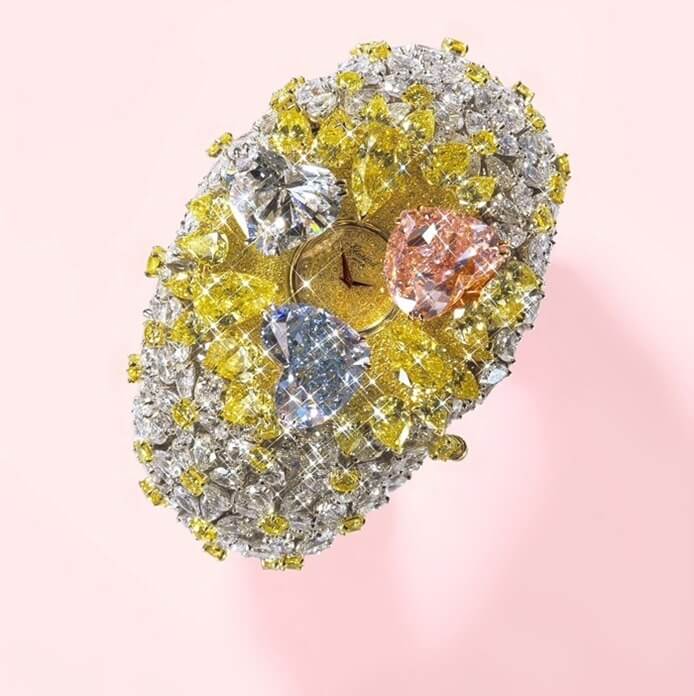
Telling time for $25 million.
Imagine this: you're walking down the street and a stranger asks, "Could you tell me the time?" You casually pull down your sleeve and reveal your wrist, which is wearing... a watch made of 874 diamonds!
Chopard's 201-carat bracelet watch is a masterpiece not only of timekeeping but also of jewelry. The colorful array of diamonds on this elegant piece brings its price tag to $25 million, making it one of the top ten most expensive wristwatches in the world.
But, unlike other super-expensive wristwatches, Chopard's 201 carat can only be worn on a bracelet. Its dial is hidden until a special mechanism reveals three large diamonds in the center of the bracelet.
9. Hutton-Mdivani Necklace
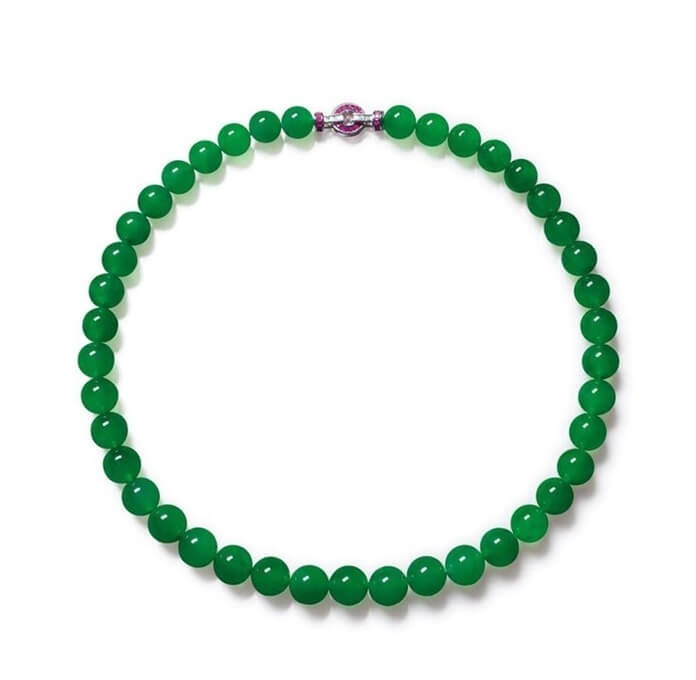
Valued at $27.4 million.
One of the most famous and expensive pieces of jewelry in the world consists of 27 jade beads with a diameter of 15 mm, with a clasp made of 18-karat yellow gold, rubies and diamonds.
Its most famous owner was American Barbara Hutton, who received the necklace from her father as a wedding gift to Georgian Prince Alexis Mdivani in 1933. The marriage ended two years later, but the necklace remained in the Mdivani family for a long time.
Nina Mdivani, the wife of Conan Doyle's son, never parted with the necklace even during her darkest hour. However, after her death, the jade necklace was eventually sold for $2 million. Since then, it has been resold twice more before ending up at Cartier, where it remains to this day.
8. Blue Moon of Josephine
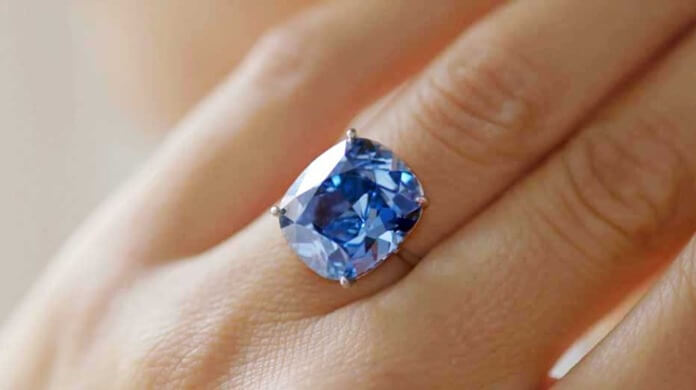
The diamond is worth $48.4 million.
In 2015, Hong Kong billionaire Joseph Lau purchased the stunning blue diamond for his daughter, after whom it was named.
The diamond that later became the "Blue Moon of Josephine" was discovered in 2014 in a South African mine. Uncut, it weighed 29.6 carats, but after being cut, it significantly slimmed down to 12.03 carats.
Along with the Blue Moon, Joseph Lau's daughter, Josephine, became the owner of another precious stone – a pink diamond worth $28.5 million. It was named, simply, "Sweet Josephine." What can you say, she was a lucky girl.
7. Pink Graff
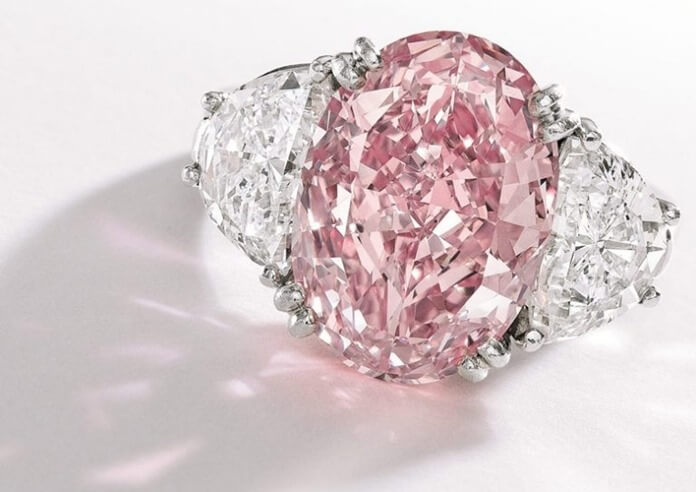
One of the most expensive rings in the world, worth $46.2 million.
This ring, which features a nearly 25-carat pink diamond, once belonged to New York jeweler Gary Winston, who kept it in his private collection for nearly 60 years.
When a rare pink diamond appeared at Sotheby's auction in 2010, no one expected it to sell for $46.2 million. The ring was valued at no more than $38 million. However, the new owner, billionaire Laurence Graff, paid an incredible sum for the right to name this precious jewel after himself.
6. Necklace "Incomparable"«
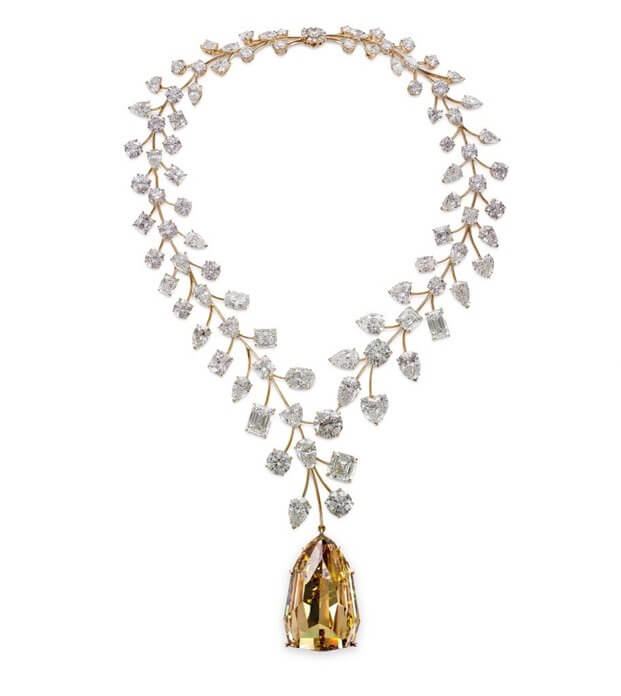
Available for purchase for $55 million.
In 2013, Lebanese jewelry brand Mouawad unveiled the "Incomparable" necklace, crafted from diamonds totaling 637 carats. At its center is the largest yellow diamond known, weighing 407.48 carats.
According to legend, a young woman from the Congo found the yellow gemstone in a pile of ordinary stones. Before being cut, it weighed 890 carats.
5. Blue Oppenheimer
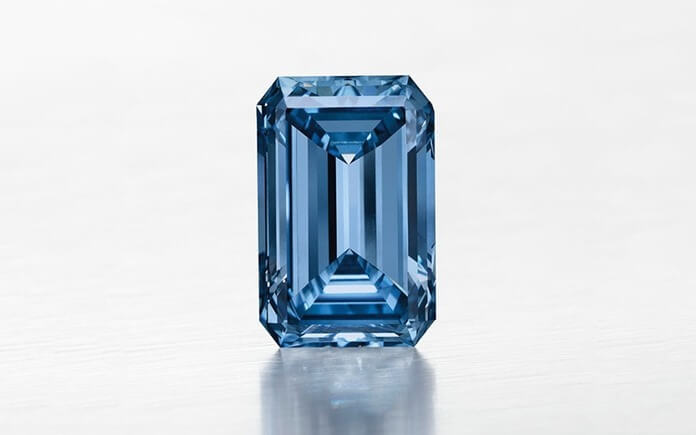
It was sold by Christie's auction house for $57.5 million.
One of the most expensive jewels in the world weighs 14.62 carats.
Much of the history of Oppenheimer Blue is shrouded in mystery, except for the fact that it was mined somewhere in South Africa, probably in the early 20th century.
The diamond was given to Sir Philip Oppenheimer, whose family long controlled the De Beers company. He purchased the stone as a gift for his wife, although details about when this occurred and the cost are unknown.
In 2016, Christie's auctioned off the famous rectangular-cut blue diamond. It took just 25 minutes for it to be purchased by an anonymous buyer.
4. Pink Star
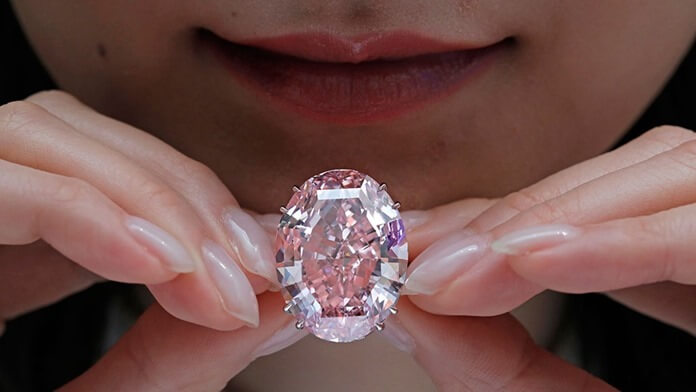
This diamond is worth $71.2 million.
Before becoming a luxury jewelry piece, the 59.6-carat Pink Star was a 132.5-carat rough diamond mined by De Beers in South Africa in 1999.
After 20 months of work by the top jewelers at Steinmetz Diamonds, the "Pink Star" acquired its current form. In 2017, it was sold at Sotheby's for $1,040,000 (US$71.2 million). The buyer was Hong Kong-based jewelry company Chow Tai Fook, who renamed the diamond the CTF Pink in its honor.
3. Diamond Peacock
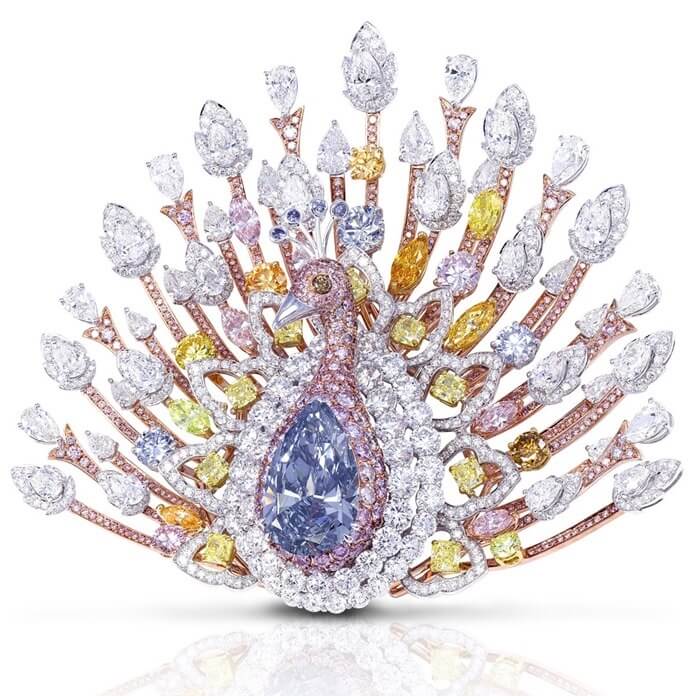
The price of the jewel is 100 million dollars.
It's hard to believe that this small, 10-centimeter piece of jewelry is one of the most expensive items in the world. It was made by Graff Diamonds, a jewelry company that creates luxury items that are as beautiful as they are expensive.
The brooch, shaped like a peacock with an open tail, contains over 1,300 white, yellow, blue, and orange diamonds, totaling 120.81 carats. At the tip of each feather is a white diamond shaped like a flower bud.
A very rare, deep blue pear-shaped diamond is set in the center of the brooch, weighing up to 20.02 carats. It can be removed from the brooch and worn as a pendant.
2. Necklace "Blooming Heritage"«
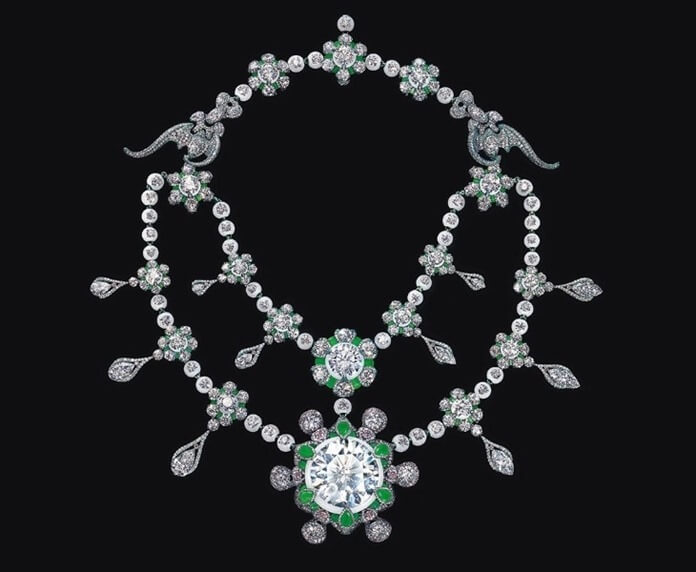
Heritage in Bloom is priced at $200 million.
The world's most expensive diamond necklace was created by Chinese jeweler Wallace Chan and blends elements of Eastern and Western cultures. It features a complex design consisting of hundreds of components, some of which share a common ancestor—they were crafted from the 507.55-carat Cullinan Heritage diamond.
At the center of the necklace is a flawless 104-carat diamond (also part of the "Cullinan Legacy"). A total of 598 pink diamonds, 10,953 small white diamonds, and 24 large diamonds were used to create this triumph of wealth and beauty. Chan also used green jadeite and hundreds of white jade beads encrusted with diamonds. Because the weight of thousands of stones is difficult to support, the frame of the "Blooming Legacy" is made of lightweight titanium.
1. Hope Diamond
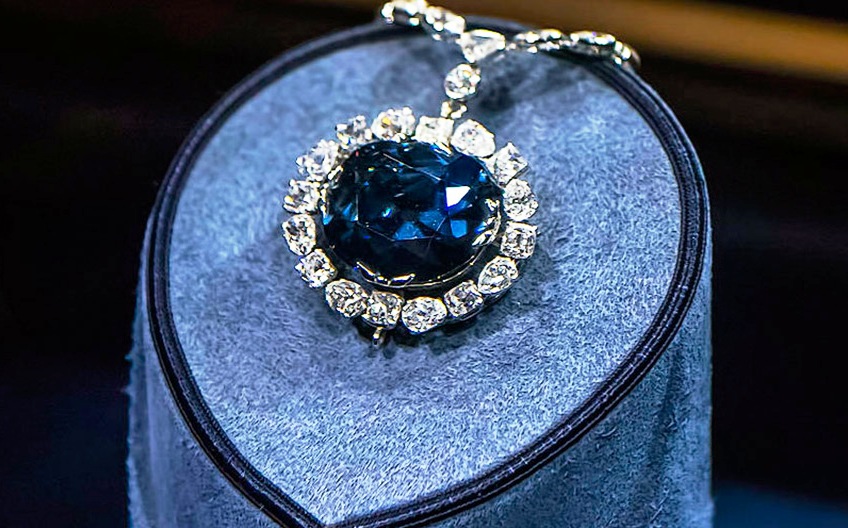
The cost of the most expensive piece of jewelry in the world is $250 million.
«"The Cursed Stone," "The French Blue," "The Left Eye of Rama," "The Stone of the Goddess Sita"—this famous cut diamond has been called many things. Weighing 45.52 carats, it is one of the largest diamonds in the world. Experts believe its unusual sapphire-blue color is due to the presence of trace amounts of boron atoms.
Before becoming the Hope Diamond, the stone was even larger than it is today. It is believed to have been mined in one of the Golconda mines in southern India. In 1666, it was purchased by a French jeweler named Jean-Baptiste Tavernier and named the Tavernier Blue Diamond. After some time, the stone was cut into several pieces.
- One of the small stones was set into the ring of the Russian Empress Maria Feodorovna and is now in the Diamond Fund.
- Another, the 69-carat "French Blue," was sold to King Louis XIV and for a long time was among the French Crown Jewels. After the French Revolution, it was auctioned off and lost track of. Supposedly, the recut stone somehow came into the possession of the English aristocrat Henry Hope.
It seemed that not only people, but also evil forces showed increased interest in the blue diamond.
- The thief who tried to steal it from the statue of Sita, according to legend, died after being struck by lightning.
- During one of his travels, Tavernier suddenly fell ill and died in Moscow, on the way from Copenhagen to Persia.
- In 1715, Louis XIV, who frequently wore the stone, showed it to the Persian Shah's ambassador to demonstrate its complete safety. That same year, the French king died.
- But Louis XV escaped the curse by ordering the stone to be kept in a chest.
- Marie Antoinette, who wore the diamond, was executed by guillotine, as was her husband, the French King Louis XVI.
These are only the most famous examples, as the "blue Frenchman" had many owners.
Currently, the blue diamond is one of the stars of the exhibition at the Smithsonian Institution's National Museum of Natural History in the United States.