






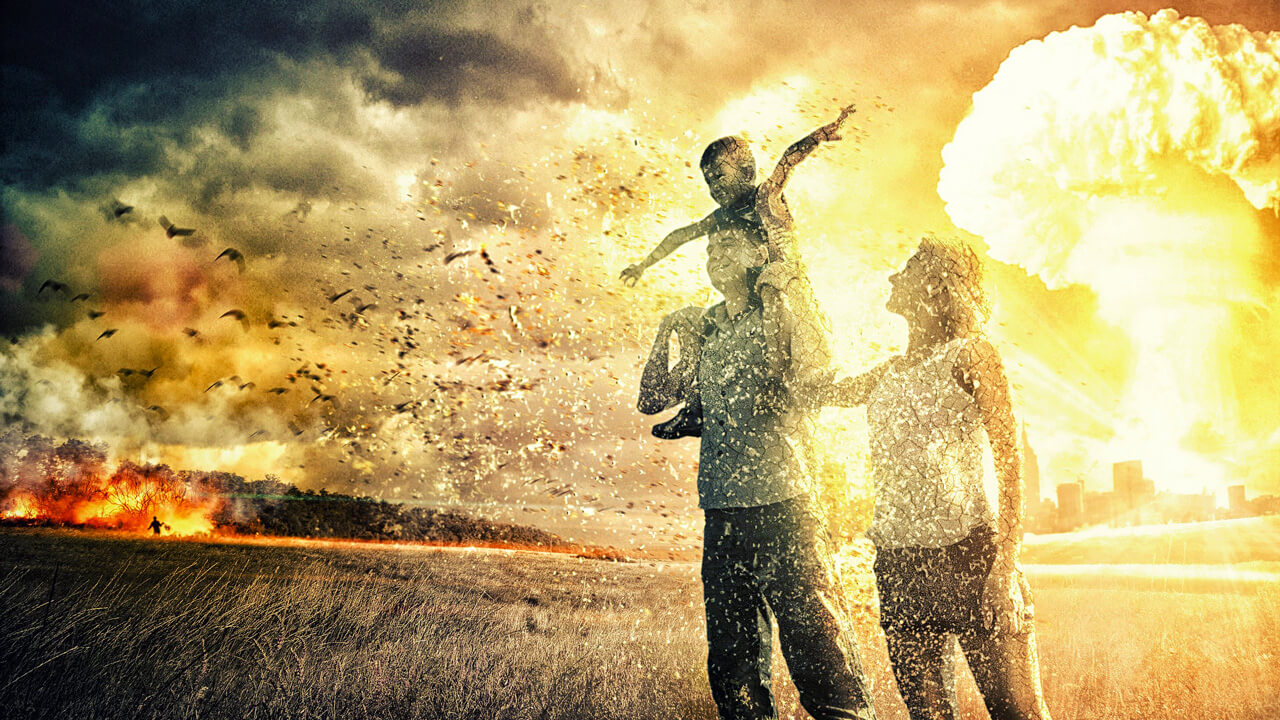
There will be a nuclear war someday, believe me. So goes a cynical song. But don't dwell on it, because besides nuclear war, humanity could be destroyed by one of many other threats.
And while we're still alive and safe, let's take a look at the top 10 most likely causes of the End of the World. It's based on the latest report from the Global Challenges Foundation, an organization working to alleviate global challenges that threaten humanity.
10. Ecological collapse
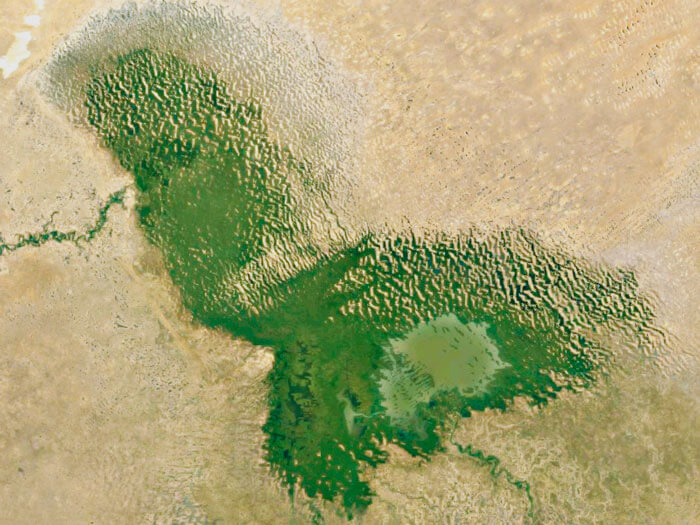
An ecosystem is a community of living organisms, such as humans and animals, interacting with non-living environments, such as air and water. Ecosystems can recover from certain human impacts, but only to a certain point.
Lake Chad in West Africa is an example of modern ecological collapse. Sixty years of drought, overuse, and the effects of climate change have shrunk the lake by 90 percent, negatively impacting the livelihoods of over 40 million people in Chad, Nigeria, Niger, and Cameroon.
Scientists believe this historical moment represents a new geological era, called the Anthropocene. Humans are now the primary agents of change, rapidly destroying what makes the planet habitable.
9. Artificial Intelligence
 This is one of the most well-known and anticipated end-of-the-world scenarios. Just think of end-of-the-world movies like "Terminator." Incidentally, they exploit the most common misconception about artificial intelligence.
Many scientists are concerned not that AI will be evil, but that it will become too good at its job. As a UN research group report puts it: "If you ask a well-behaved, intelligent machine to get you to the airport as quickly as possible, you might be chased by helicopters along the way (probably for speeding) and arrive covered in vomit. In other words, the machine will do not what you wanted, but literally what you asked."«
8. Solar geoengineering
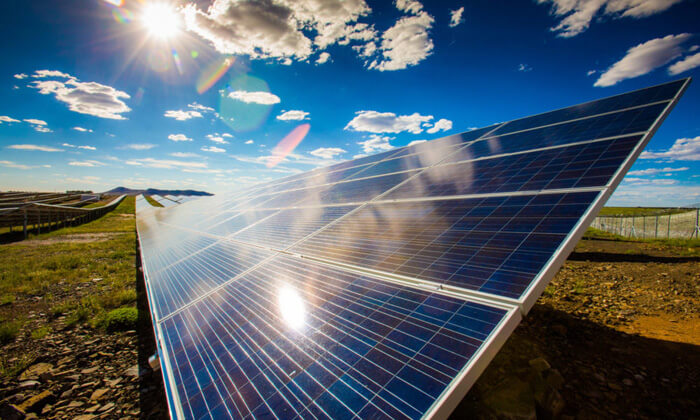 It is one of two new technologies that can manipulate the atmosphere and reduce climate risks.
Another option is to directly remove carbon dioxide from the atmosphere. This is currently impossible to achieve on a large enough scale.
If solar geoengineering were to be deployed, it would affect our planet's entire atmosphere and would be the largest global human effort ever undertaken.
However, it is still unknown whether solar geoengineering could destabilize local and global climates or ecosystems. Manipulation on such a scale, without understanding the consequences, would likely prove catastrophic for humanity.
7. Pandemic
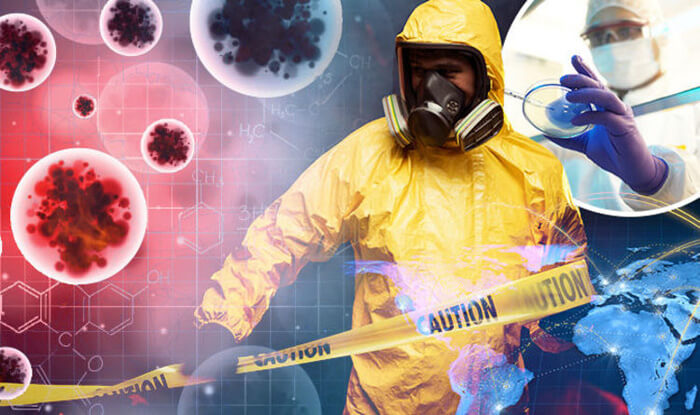 Twice in its history, humanity has faced epidemics that devastated entire countries.
- The first time was in the 5th century. The "Plague of Justinian," which lasted 60 years, destroyed almost all the countries of the Mediterranean.
- The second pandemic occurred in the 14th century. The Black Death killed up to 601,000,000 people in Europe.
Although fatal diseases capable of spreading globally are rare, they do occur. Just a century ago, the Spanish flu killed over 50 million people (3 million of them in Russia). Ebola outbreaks in recent years have also raised alarm.
Antibiotics, our best defense against disease, are becoming less effective as some strains of bacteria have developed resistance to them.
6. Biological or chemical warfare
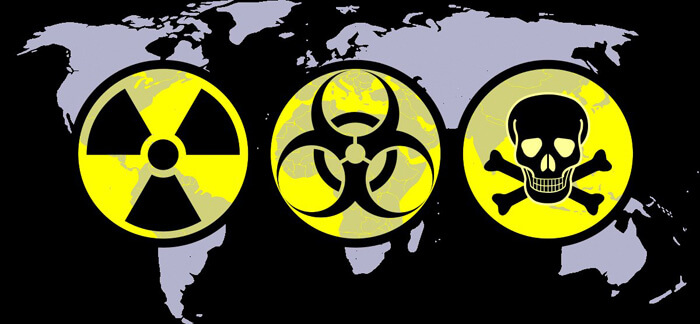 History contains many examples of the use of biological and chemical weapons.
For example, during the Battle of Changde in 1941, the Japanese dropped fleas infected with bubonic plague, found in grain, on a Chinese city. The resulting epidemic killed over 7,000 city residents within four months.
During the Vietnam War (1962-71), the Americans used various chemical agents against the Vietnamese, the most notorious of which was Agent Orange. According to the Vietnamese Red Cross, 3 million people suffered from this chemical, including 150,000 children born with mutations.
5. The strongest geomagnetic storm
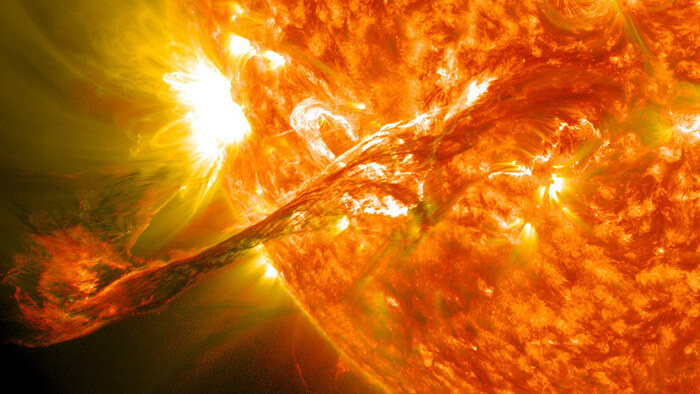 It's ironic that one of the most likely end-of-the-world scenarios involves the Sun. More specifically, coronal mass ejections (CMEs), which are huge clouds of solar plasma.
CMEs don't directly harm people, but their effects can be dramatic. By injecting charged particles into the Earth's magnetic field, they can trigger geomagnetic storms and induce dangerous electrical currents in power lines. These currents last only a few minutes, but they can disrupt power grids by damaging high-voltage transformers.
The largest geomagnetic storm in history occurred in 1859 and was named the Carrington Event, after the British astronomer who witnessed the most powerful solar flare. It was followed by a coronal mass ejection (CME) hurtling toward Earth. It disrupted telegraph systems worldwide, and the solar flare was visible as far away as Cuba.
If another such geomagnetic storm hits today's infrastructure, the consequences would be catastrophic. Vast parts of entire continents would be plunged into darkness for weeks or months, perhaps even years. The problem is that custom-made transformers the size of a house can't be purchased at a regular store. And nuclear power plants could also be left uncontrolled. Imagine what could happen then.
4. Eruption of Yellowstone or another supervolcano
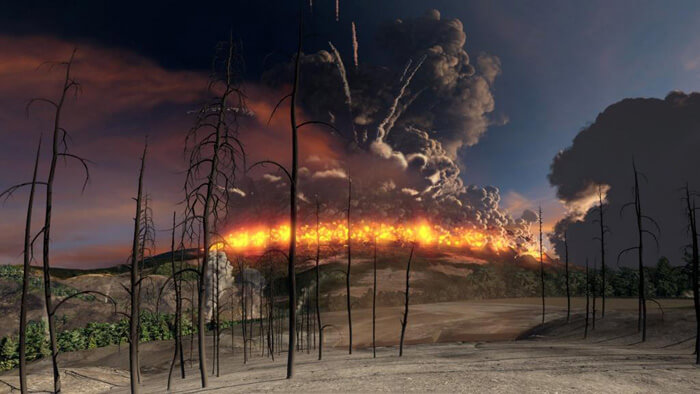 The most relentless threat to our civilization could cause far more damage than geomagnetic storms. Every 100,000 years or so, somewhere on Earth, a caldera up to 50 kilometers in diameter collapses and "burps" a volcanic magma.
A supervolcano is a type of volcano that can trigger climate change on Earth. It erupts over 450 cubic kilometers of magma—approximately 50 times more than the 1815 eruption of Mount Tambora (Indonesia) and 500 times more than the 1991 eruption of Mount Pinatubo (Philippines).
Geologists "read" the history of such natural disasters in deposits of a rock called "tuff." And these rock "records" show that supervolcanoes tend to erupt repeatedly.
Locations that remain active today include the following supervolcanoes:
- Toba on the island of Sumatra;
- Yellowstone in the northwestern United States;
- Long Valley Caldera in eastern California;
- Taupo in New Zealand;
- and several places in the Andes.
3. Catastrophic climate change
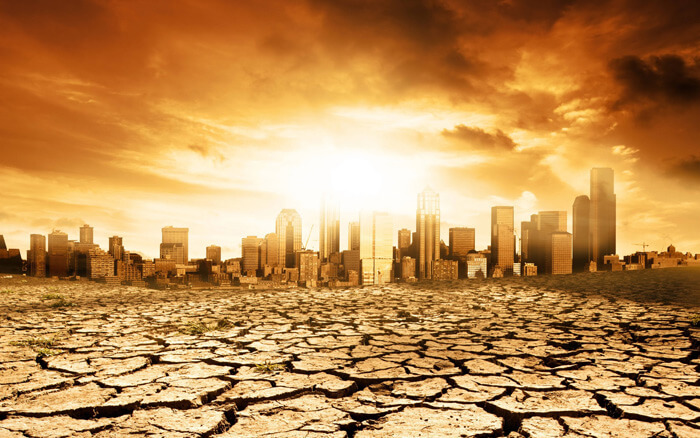 We have just 12 years to keep global warming to moderate levels, according to a report published by a group of United Nations scientists.
Projections of the impacts of climate change vary depending on how much the Earth warms (warming of 1–3 degrees Celsius is typically modeled). None of the scenarios looks favorable.
- At best, the planet will be plagued by frequent and strong tropical cyclones.
- Medium-range projections include the loss of most of the world's agricultural land and freshwater sources, with major coastal cities like New York and Mumbai underwater.
- In the worst case, human civilization will come to an end.
Even if countries' current carbon emission reduction commitments are met, there is a chance that the Earth's temperature will rise by 3°C, flooding much of Florida and Bangladesh.
2. Fall of a meteorite or comet
 An asteroid 10 kilometers in diameter destroyed the dinosaurs, but a smaller meteorite would have been enough for humans.
All life at the impact site will be destroyed, and powerful earthquakes and massive tsunamis could spread across the entire planet. But the lingering effects will be the most devastating. Depending on the speed and angle of approach of an object up to 1 kilometer in diameter, enough particles could enter the air to block sunlight for a month.
Fortunately, large asteroids hit Earth only once every few million years, and "dinosaur-killer" ones only once every 100 million years or so.
1. Nuclear war
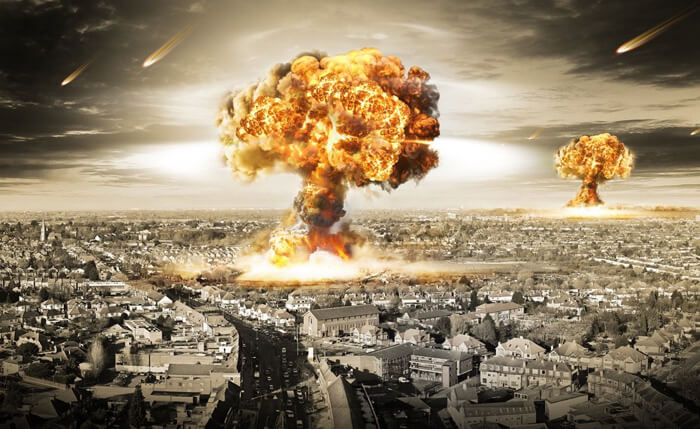 Being instantly killed by a nuclear bomb is not the worst thing that could happen if humanity does enter the phase of the Last War.
The worst thing is a nuclear winter. Clouds of soot and smoke envelop the planet and block sunlight, causing temperatures to plummet, possibly for decades. The few remaining humans will be unable to grow food, and chaos and violence will follow.
The most likely cause of a nuclear war would be an accident or miscommunication between the world's largest nuclear powers. Consider, for example, the incident of September 26, 1983, when the Soviet Oko system, designed to warn of a nuclear strike, signaled that five Minuteman missiles had been launched by the United States.
Only the restraint of Lieutenant Colonel Stanislav Petrov, who ruled out a false alarm from the Oka system, saved the world from the outbreak of World War III. It turned out that the system, after analyzing the optical signal from satellites, mistook sunlight reflecting off clouds in the upper atmosphere for the glow of operating rocket engines.