






Inventors may be considered eccentrics, even crazy, but they move the world forward. And inventions that seem useless at first glance may surprise you upon second glance.
Here are the top 7 unusual innovations that will find practical application.
7. Peel-off superglue
Superglue holds firmly, but sometimes it needs to be peeled off and re-applied. That's where snails come to the rescue! Or rather, snail mucus, which Philadelphia scientists studied to create a reversible superglue.
Snail mucus hardens as it dries, creating a structure that is both protective and adhesive. This structure is called the epiphragm. It insulates the snail within its shell, protecting it from predators. As the evening temperature drops and humidity increases, the mucus liquefies. The snail can now move and continue its journey.
Reversible superglue works on the same principle. When hydrated, it becomes soft and sticky, and when dry, it bonds like regular superglue. For most glues, surface roughness is a problem, as it reduces the contact between the glue and the surface, making the glue less sticky. But reversible superglue fills these tiny gaps, creating a tight bond. It can also—theoretically—support the weight of a person.
6. The whitest paint in the world
What we perceive as white in everyday life is never pure white. True white is a rare color, only observed in unfiltered sunlight, just as pure black can only be found in the depths of a black hole.
But now everything has changed, thanks to scientists from Purdue University in Indiana. They have created the whitest acrylic paint known to man. This discovery has been included in the Guinness Book of World Records.
The new composition is capable of reflecting 98.11 TP3T of solar radiation. This means that anything painted with this composition will absorb significantly less heat than surrounding objects. According to scientists, using the world's whitest paint on the roof of a 93-square-meter building will cool it by 10 kilowatts. This would eliminate the need for air conditioning.
5. A toilet that analyzes health based on feces

Toto, a company known for its variety of bathroom products, unveiled a number of new products at CES 2021, including a smart toilet that analyzes skin and feces as a person empties their bowels.
Then, via a mobile app, the toilet owner receives recommendations on how to improve their health.
Toto claims such a smart toilet could hit the market within the next few years. "A wealth of health data can be collected from feces," the company says.
4. Ninu SMART Perfume

This patent-pending smart perfume is controlled by a dedicated app. Each tube contains three different scents, allowing you to choose according to your mood or occasion, and even combine scents.
Using the app, you can also tone down the scent or add an exotic touch.
Ninu SMART 100% perfume is made with vegan ingredients sourced from sustainable sources and is free of phthalates, parabens, and sulfates. And there are over a million scents to choose from.
«"Just add water!"—this slogan partially describes this new-generation plastic, which quickly heals underwater even in harsh conditions. It retains its strength after self-healing, making it useful in emergency situations at sea, such as repairing a damaged oxygen tank.
Scientists at China's Tsinghua University developed the material, called the Rapid Underwater Self-Healing Rigid Elastomer (RUSSE), because most self-healing polymers perform poorly underwater.
2. Device for communicating with a Venus flytrap
This title sounds like you're about to watch a B-movie horror film, right? But the device itself isn't a horror prop, and it can even be useful.
A team from Nanyang Technological University has equipped a Venus flytrap with a tiny electrode communicator. It receives electrical signals emitted by the plant and responds with its own pulses.
Researchers hope the technology could be used to detect early signs of problems in valuable crops.
1. Contraceptive testicular bath
An ultrasonic bath developed by Rebecca Weiss could be a game changer in the male contraceptive market.
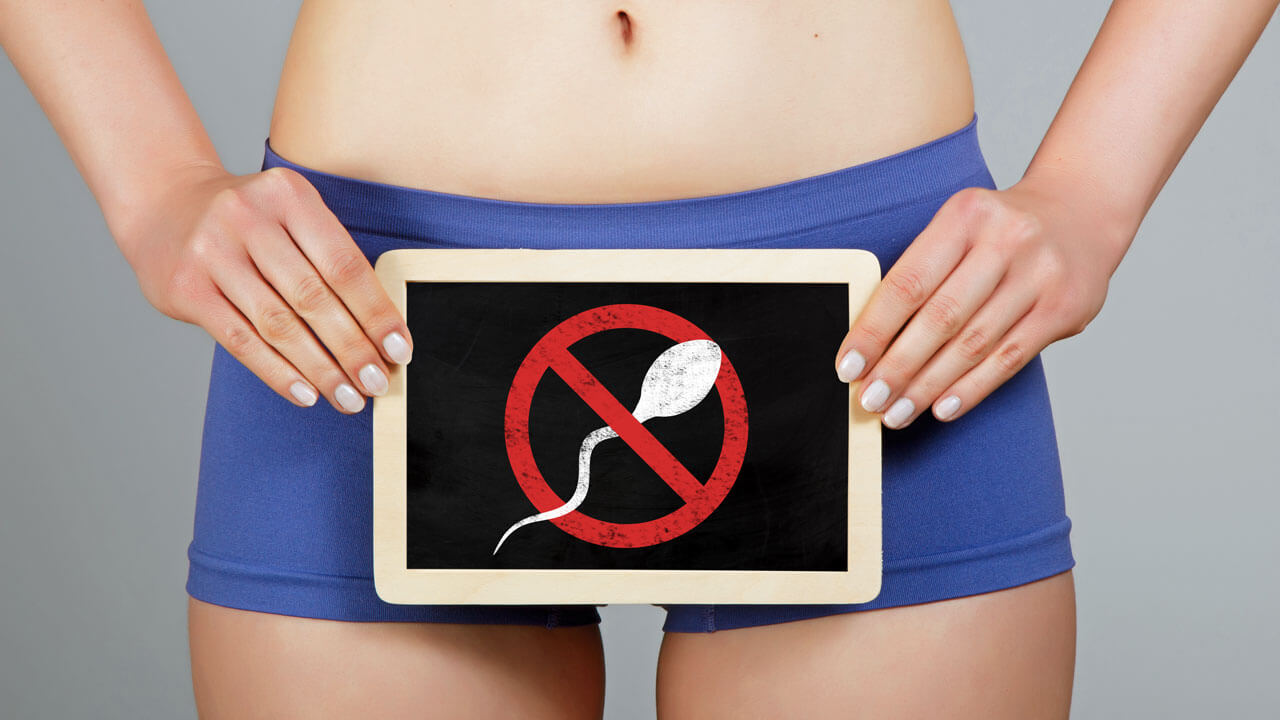
Currently, condoms are available to men, which are useful for preventing sexually transmitted diseases but are inconvenient for most partners as continuous pregnancy prevention, and vasectomy, perhaps the safest but irreversible method of birth control.
Weiss's invention is a small, smooth cup that uses ultrasound waves to temporarily interrupt sperm production. This allows a man to have safe (for conception) sex for two weeks.
All the user needs to do is fill the container with warm water and insert their testicles. This mechanism has been successfully tested on animals, but has not yet been used on humans.