








A bathroom renovation is always a complex puzzle, requiring dozens of elements to come together, from the rough-in to choosing the right door handle. Often, caught up in the design and choosing beautiful tiles, we overlook the purely technical, yet critical, aspects that ultimately determine the comfort and durability of the renovation. It's these less-than-obvious, yet practical, details that should be focused on to avoid common mistakes and ultimately create a space that's not just beautiful, but also smart and comfortable. Experience from numerous renovations shows that it's thoughtful engineering, not just aesthetics, that makes a bathroom truly comfortable.
It's worth starting with an analysis of the existing conditions. Where do the risers exit? How does the existing ventilation system work? What is the humidity level in the room after taking a shower? The answers to these questions will form the foundation for all subsequent decisions. For example, if the ventilation is poor, there's no point in installing expensive moisture-resistant paint—it will still become covered in condensation and mold. Or if the pipes are old and noisy, it's better to replace them immediately or conceal them in sound-insulated enclosures rather than suffer from constant humming later. A renovation is the perfect time to resolve any lingering engineering issues once and for all.
Bathroom Door: An Unobvious but Important Choice
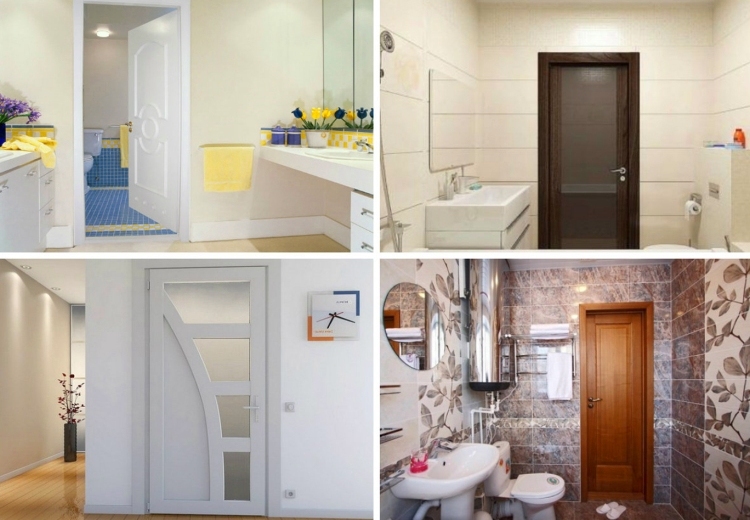
A standard interior door is the first thing that comes to mind, but it's far from the best option for a bathroom. A wooden door, even coated with moisture-resistant paint, will swell over time from constant changes in humidity, become difficult to close, and mold may appear on the edges. Two alternatives offer optimal solutions for modern renovations.
The first and most popular option is moisture-resistant doors with a honeycomb core made of MDF, covered with PVC film or veneer. They are lighter than solid wood, are moisture-resistant, easy to clean, and relatively inexpensive. A more advanced and stylish solution is tempered glass doors. They are completely impervious to moisture, do not visually weigh down the space, especially in small bathrooms, and allow light to pass through, which is important for windowless spaces. Frosted, satin, or tinted glass ensures privacy. Formats vary: hinged, sliding (coupe), or folding (folding, accordion) for very narrow openings.
- Gap under the door. Be sure to leave a gap of at least 15-20 mm between the canvas and the floor. This is necessary for proper air circulation, especially if the bathroom has no window. This gap will allow fresh air from the apartment to flow to the exhaust vent, preventing moisture stagnation.
- Fittings. Handles and hinges should be stainless steel or have an anti-corrosion coating. Regular steel will quickly rust in conditions of constant humidity.
- Opening. Consider how the door will open. It shouldn't block access to the light switch or interfere with the sink or toilet. In cramped bathrooms, an outward-opening door is often optimal.
Door installation is one of the final stages of renovation, but it's important to choose and order it early on to ensure you know the exact dimensions of the opening and prepare it in time.
Ventilation: How to ensure dry and fresh air
Stale air, condensation on mirrors and walls, and a damp smell are sure signs of poor ventilation. The standard ventilation shaft in multi-story buildings often fails, especially in summer when there's no temperature difference to create draft. Simply installing a fan in the vent isn't a panacea unless several nuances are considered.
The fan's power should be selected based on the room's volume. The formula is simple: multiply the bathroom's volume (area x height) by 7-8 (the bathroom's air exchange rate). A 2x2 m room with a height of 2.5 m requires a fan with a capacity of approximately 90-100 m³/h. An overly powerful model will create excessive vacuum, may reduce the draft in the common area, or may draw air from other ventilation ducts (for example, the kitchen), spreading odors throughout the apartment.
- Automation. The most convenient models are equipped with a humidity sensor (hygrostat) and a timer. The fan automatically turns on when the humidity exceeds a set threshold (e.g., 60%) and turns off after a set time once it returns to normal. This saves energy and extends the life of the device.
- Check valve. This is a useful option that prevents backdraft and air (and sometimes odors) from flowing back into the bathroom when the fan is off. However, models with a permanently closed damper (valveless) are not recommended, as they completely block natural ventilation when the fan is off.
- Noisiness. Pay attention to the noise level, especially if the bathroom is next to the bedroom. High-quality models operate virtually silently (25-30 dB).
- Ventilation during renovation. People often forget to ventilate the room while screeds, plaster, and adhesives are drying. Excess moisture from building materials is absorbed into the walls and then vents for years. After major wet work, it's a good idea to run a fan continuously for a couple of weeks or keep the door open.
Remember that a range hood requires airflow to operate. If the bathroom door is tightly closed and there's no clearance underneath, the fan will run idle, circulating the same moist air. The solution is either to create a gap under the door or to install special transfer grilles at the bottom of the door or wall.
Underfloor heating and heated towel rails: comfort and moisture control
Humidity and cold tile floors are the main enemies of bathroom comfort. An underfloor heating system solves both problems. It's not just a whim, but a practical engineering solution that performs several functions: it dries the air and surfaces after a shower, creates a pleasant microclimate, prevents mold in hard-to-reach places, and, of course, provides the incredible pleasure of walking barefoot on warm tiles. There are two main types: electric (wired or opaque) and hydronic (integrated into the heating system).
Electric underfloor heating is easier to install (especially infrared film heating), but it increases energy consumption. Hydronic heating is more energy-efficient, but its installation in apartment buildings often requires approval, as it is connected to the building's central heating system. It's best to install the system under tile, which accumulates and releases heat well. Be sure to use a thermostat with a floor temperature sensor to avoid overheating the floor and save energy.
- Heated towel rail: water vs electric. A heated towel rail connected to the hot water system is a classic solution. However, it has its drawbacks: it only operates during the heating season (unless connected to the hot water circuit) and its temperature cannot be adjusted. An electric heated towel rail is a modern and more flexible alternative. It operates year-round, regardless of the season, can be turned on/off using a timer (for example, an hour before waking up), and the temperature can be adjusted. Modern models consume little energy (from 50 watts) and have a stylish design.
- Safety. All electrical equipment in the bathroom must have a protection rating of at least IP44 (splash protection). Sockets (if needed for a hairdryer or razor) must have shutters and be located at least 60 cm away from water sources (bath, sink, shower). All metal objects (sink, bathtub, pipes) must be grounded.
- Rational arrangement. Consider where you'll hang your heated towel rail. It should be within easy reach of the shower/bath, but not obstruct free movement. A great location is on the wall next to the bathtub or on the end wall of the shower stall.
Shower space: abandoning bulky cubicles in favor of open solutions
The idea of replacing a bathtub with a shower stall to save space isn't always practical. Many ready-made stalls, especially inexpensive ones, take up a lot of space due to their thick walls and trays, quickly break down (plastic parts crack, connections leak), and their hydromassage functions only work with sufficient water pressure. A more modern, flexible, and aesthetically pleasing alternative is to organize the shower area with a glass enclosure and a concealed drain.
The idea is this: a section of the room (usually a corner or alcove) is converted into a shower area. The floor in this area is sloped (1-2 cm per meter) toward the drain. The walls and floor are tiled. A ceiling-mounted shower system or a simple wall-mounted showerhead is mounted on the ceiling. The space is partitioned off with a sliding or hinged glass door, or simply a glass screen (half-size). The advantages of this approach are obvious: visual lightness and openness, greater freedom of movement in the shower, ease of cleaning, the ability to use any faucets and shower heads, even the most powerful ones, and seamless integration into the overall bathroom design.
- Waterproofing is the foundation of foundations. Before tiling, the entire shower area (floor and walls at least 20 cm high) is thoroughly coated with a waterproofing membrane or roll-on waterproofing material. Seams and corners are additionally sealed with waterproofing tape. This ensures leak-free surfaces.
- Selecting a trap. A concealed (linear or point) drain, flush with the tile, looks stylish and doesn't interfere with cleaning the floor. It's important to choose a model with a trap to prevent odors and an easily accessible inspection hatch for cleaning.
- Glass fencing. Tempered glass, 8-10 mm thick, is safe and durable. For easy maintenance, you can order glass with a hydrophobic coating that allows water to roll off, leaving virtually no marks. Fastenings (posts, hinges) should be made of stainless steel.
- Heating. A heated floor in the shower area will be especially pleasant. This will quickly dry the tiles after use and prevent a damp feeling.
If you do choose a ready-made shower cabin, consider models with a minimalist design, a slim profile, and a low tray. It's better to forego many unnecessary features in favor of the quality of the basic materials (glass, profile, faucet).
Faucets and smart plumbing: convenience and savings
A faucet is an item we use dozens of times a day. Its convenience and functionality directly impact comfort. Beyond standard two-handle and single-lever models, there are technologically advanced solutions that make life easier.
Thermostatic faucets are a real find for families with children or for those tired of constantly adjusting the water temperature. Inside the faucet is a heating element (wax or bimetal) that instantly responds to changes in the pressure or temperature of the incoming water, maintaining the set output temperature with precision down to the degree. You set a comfortable temperature once (for example, 38°C), and then simply turn on the water—it immediately flows at the desired temperature. This is not only convenient but also safe (no risk of scalding) and economical (no water is wasted while you're adjusting it).
- Touchless (sensor) faucets. They turn on when you place your hands under the spout and turn off when you remove them. They're hygienic (no need to touch them with dirty hands) and economical (the water flows just as needed). Ideal for the sink. However, they require an electrical connection or batteries.
- Mixers with built-in filter. They allow you to have a separate spout for drinking water that has undergone fine purification. This is useful if you brush your teeth or drink water in the bathroom.
- Quality of the insides. Regardless of the type, pay attention to the ceramic cartridge—it should be from a reputable manufacturer (for example, German-made Kerox or Sedal). This determines the smoothness and durability of the faucet. The body is best made of brass rather than silumin (a light alloy), which is fragile and easily damaged.
- Height and reach of the spout. For the sink, choose a faucet with a tall, long spout to make it easy to wash your hands and fill containers with water. For a bathtub or shower, a convenient adjustment handle that can be turned even with a wet elbow is important.
Remember that plumbing fixtures are one of those things you shouldn't skimp on. A good faucet from a trusted brand will last 10-15 years without problems, while a cheap, no-name knockoff may start leaking or break after just a year. While this won't significantly change the final cost of the repair, the comfort and hassle-free experience will. Consider every detail with the long-term perspective in mind, and your new bathroom will delight you with years of flawless service.