






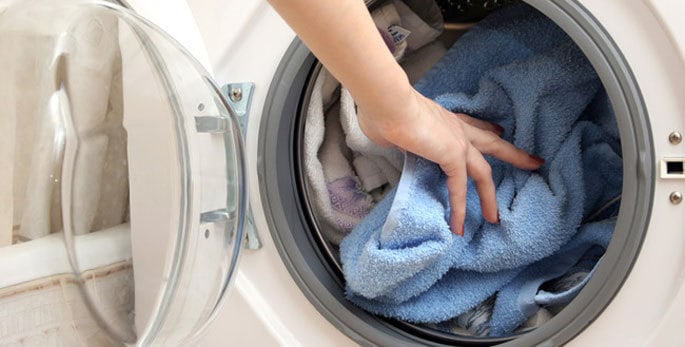
Many people are familiar with the situation when a washing machine produces a wet, dripping lump of laundry after completing a cycle. This isn't just an annoying nuisance, but a sign of a malfunction that needs to be diagnosed and fixed as quickly as possible. Ignoring the problem can lead to more serious problems, such as motor or control module failure. Before panicking and calling a repairman, it's worth conducting a basic diagnosis yourself. In 30-40% cases, the reason why your washing machine won't spin doesn't require professional intervention and can be resolved in just a few minutes. In this article, we'll cover the seven most common causes in detail—from the simplest to the most complex—and provide clear instructions on what to do in each case.

The first thing to understand is that the spin cycle is the final stage, which depends on the proper operation of all the previous stages: water intake, heating, washing, and drainage. If any of these stages fail, the spin cycle may not start. Therefore, troubleshooting always begins with checking the simplest things. Get the manual for your model (if you've lost it, you can almost always find it online using the model number). Make sure you understand how your appliance works.

Reason 1: User errors and incorrect programs
More often than not, it's not the appliance's fault, but its owner's. Modern washing machines are smart, but they only perform the program you set.
- No spin in the selected mode. Many programs for delicate fabrics (wool, silk, hand wash) do not include a spin cycle at all or only spin at a very low speed, leaving the laundry damp. Some models also have a separate spin cycle stop button—check that it's not pressed.
- Unfinished cycle. If you manually interrupt the wash cycle by opening the door, the machine may stop and not begin the spin cycle. Complete the program, allowing the machine to complete all steps automatically.
- Activating the Easy Iron or Crease Free function. In this mode, the machine pauses with water-filled laundry or spins at a very low speed to prevent wrinkles. Simply turn this option off.
What to do: Carefully examine the control panel. Run a short cotton program with spin at maximum speed (e.g., "Quick 30°"). If the spin works in this mode, the problem was with the settings.
Reason 2: Overloading or uneven distribution of laundry (imbalance)
This is a classic situation. The imbalance sensor (pressure switch) detects that the laundry in the drum has become lumped together on one side. When attempting to spin, this uneven drum begins to vibrate violently. To protect the mechanism from damage, the electronics stop the spinning and either make several repeated attempts to pump the laundry, or terminate the program immediately, skipping the spin cycle.
Symptoms: The machine takes a long time to spin the drum, there is a knocking sound, strong vibration, then it may stop and display an error (for example, UE for LG, E2 for Indesit, H2O for Ardo) or simply finish washing without spinning.
What to do:
1. Open the door and manually distribute the laundry evenly along the walls of the drum. Break up any clumps, and separate small items (socks, scarves) between larger items (sheets, towels).
2. If there is too much laundry (you loaded it to the brim), you need to take some out.
3. Close the door and select the "Spin" or "Drain & Spin" mode on the control panel. Start the machine. In 90% cases, the machine will spin normally after the imbalance is corrected.
Reason 3: The drainage system is clogged – water does not drain
Before spinning, the machine must completely drain the drum. If the drain is blocked, the program will not proceed to the next stage. The most common clogged areas are:
- Drain filter. It's located behind a small door at the bottom of the front panel. Unscrew it (lay some rags underneath to catch the water), rinse it under running water, and remove any accumulated debris: coins, buttons, threads, hair.
- Drain hose. Disconnect it from the drain and the machine, blow it out or rinse it. Check for kinks.
- The pipe connecting the tank to the pump. Accessing it typically requires removing the rear or front panel of the machine. Small objects (bra underwires, laces) can become stuck inside the hose.
- The pump itself (drain pump). If it's burned out or jammed, water won't drain at all. A telltale sign is a distinctive humming or squeaking sound when you try to drain, but the water stays stuck. The pump needs to be replaced.
Reason 4: Malfunction of the tachometer (speed sensor)
This is a small sensor that tells the control module how fast the drum is rotating. If it's broken or its contacts are corroded, the machine's "brains" don't receive the correct speed signal and can't properly control the motor during the spin cycle. The motor either doesn't reach the desired speed or does so in an intermittent manner.
Symptoms: The drum rotates very slowly, does not pick up speed, the spin is weak, or the machine, while trying to spin, constantly changes the rotation speed, and then displays an error.
What to do: A multimeter diagnosis is required. The sensor is usually located on the rear of the engine or on the fuel tank body. Its resistance should change as the sensor shaft rotates. Most often, the sensor is replaced with a new one. This job requires someone with repair experience.
Reason 5: Motor problems: brushes and windings
Commutator motors (found in most machines) have graphite brushes that transmit current to the rotating part (the rotor). Over time, these brushes wear down. When the brushes become too short, contact deteriorates, and the motor can't develop full power and the high RPMs needed for spinning.
Symptoms: The machine may wash normally (requiring less power), but during the spin cycle, the drum spins sluggishly or doesn't spin at all. Sometimes, a loud crackling noise and sparking can be heard due to poor electrical connections.
What to do: You need to disassemble the machine, remove the motor, and replace the brushes. This is a consumable part and is inexpensive. You should also check the motor windings for shorts or open circuits. If the motor is burned out, replace the entire motor.
Reason 6: Worn or broken drum bearings
If the bearing assembly is worn or damaged, the drum rotates with extreme difficulty, rattling and grinding. The machine physically cannot spin it up to the spin speed. This is one of the most serious and costly failures, as it requires complete disassembly of the drum and replacement of the bearings and seal.
Symptoms: During the spin cycle (and often during the wash cycle), a loud humming, grinding, or metallic clanking sound is heard. The drum may not spin properly when the machine is turned off. Water or an oily liquid may leak from under the drum.
What to do: This is a complex repair, but doable by an experienced mechanic. A special tool is needed to press in new bearings. If the tank is non-separable, the entire unit must be replaced, which is very expensive. If these symptoms occur, it's best to immediately contact a professional for an accurate diagnosis.
Reason 7: Control module (electronic board) failure
This is the "brain" of the washing machine. It sends commands to all components: the water inlet valve, the heating element, the motor, and the pump. If any components on the board burn out, the program crashes, or the contacts are corroded, it may not send the spin command, even though all other components are working properly.
Symptoms: The machine is behaving erratically: strange errors appear on the display, programs crash, and the spin cycle starts randomly. Or, conversely, there's a complete lack of response to the spin command, even though the motor, pump, and sensors are working properly.
What to do: Diagnosing and repairing an electronic board is a highly technical endeavor. It requires extensive knowledge of electronics and soldering. Most often, the board is either reflashed, faulty components (transistors, relays, controllers) are replaced, or a new one is installed. Without specialized skills, attempting to repair the board is futile and dangerous.
Conclusion: When dealing with a spin cycle problem, the solution should always proceed from the simple to the complex. Start by checking the program and laundry distribution, then clean the filter. If this doesn't help, and you don't feel up to further disassembly, call a technician. A proper diagnosis will save you time and money, and timely repairs will extend the life of your washer for many years.