








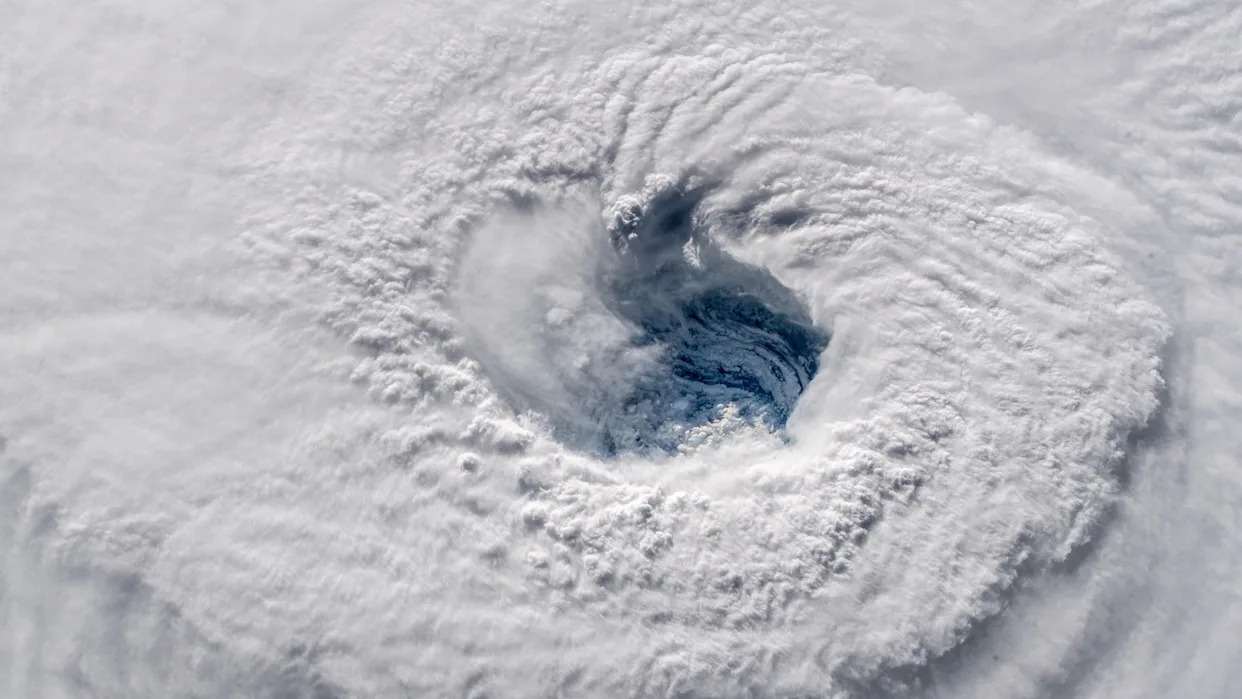
A new study from Arizona State University makes a provocative claim: that humanity may have the technology needed to deflect hurricanes away from populated areas.
If we could achieve this, hurricane management could save countless lives and property. The National Oceanic and Atmospheric Administration (NOAA) states that climate change is increasing the intensity of storms, causing the strongest hurricanes to account for a larger share of all storms. Since a major hurricane can claim hundreds of lives and cause tens of billions of dollars in damage, this has obviously caught the attention of many people.
In an article published in the journal PLOS Water , doesn't actually offer a single, definitive answer to the question of how to control a hurricane. Instead, it suggests that it might be possible to induce rainfall using existing cloud seeding technologies.
The researchers titled their paper "Weather Jiu-Jitsu: The Prospects of Atmospheric Influences for Mitigating Catastrophic Weather Events." By "jiu-jitsu," they mean the ability of a well-executed maneuver using relatively small forces to redirect a larger force within certain limits.
A hurricane is truly a powerful force. Hurricanes carry incalculable amounts of kinetic energy, making it difficult to quantify their power based solely on their size and complexity. How can a simple cloud spot control something so enormous?
Researchers believe it's all about pressure. By spraying certain iodine compounds at specific altitudes, meteorologists can often trigger rainfall and, as a result, change atmospheric pressure.
The aftermath of Hurricane Irma on Sint Maarten. Photo: Dutch Ministry of Defence.
They primarily used a resource called the Aurora Earth System Deep Learning Model, meaning their data is derived entirely from machine learning modeling. However, the modeling seems to suggest that sowing seeds in 2012 could have deflected Hurricane Sandy sufficiently to allow it to bypass New York City.
The study also states that the model projects an increase in the lowest temperature during the 2021 Texas freeze by about 18 degrees Fahrenheit and a decrease in precipitation during the 2022 California flood season by about 5%.
It's also possible that the study is flawed, and that existing technologies aren't capable of controlling hurricanes as the authors hope. Katja Friedrich, an atmospheric and oceanographic scientist not involved in the study, told USA Today via email that "there is currently NO scientific evidence" to support the idea that existing rainfall-inducing technologies can control large-scale weather systems.
It's precisely these kinds of ideas that AI models can be useful for: they suggest ideas that humans likely wouldn't have thought of on their own or would have discarded as soon as they occurred to them. Of course, this can also mislead scientists without providing any benefit.
Hurricanes are inherently difficult to predict and study. This paper leaves open the possibility of using other methods to achieve its stated goals, as cloud seeding is a promising but not guaranteed technology. However, the authors seem adamant that ultimately something it will work.
Channeling hurricanes is perhaps one of the least controversial uses of artificial precipitation, as many people are inherently concerned about any change to such an important component of the local climate as the weather itself. But saving major cities from disasters costing hundreds of billions of dollars? If it really works, it's unlikely to provoke much resistance.