







Many people believe that mathematics is an exclusively human science. However, research in recent decades shows that animals that can count are much more common than we thought. From simple number discrimination to complex arithmetic operations, the mathematical abilities of intelligent animals amaze scientists around the world.
What is mathematical ability in animals?
Mathematical abilities of animals include several levels of difficulty:
- Quantitative perception — the distinction between "more" and "less"«
- Exact score - determination of a specific number of objects
- Arithmetic operations - addition, subtraction, sometimes multiplication
- Understanding zero - awareness of the concept of "nothing"«
These skills did not develop in nature by chance. The ability to count helps animals survive: assess the number of predators, find optimal food sources, make decisions in critical situations.
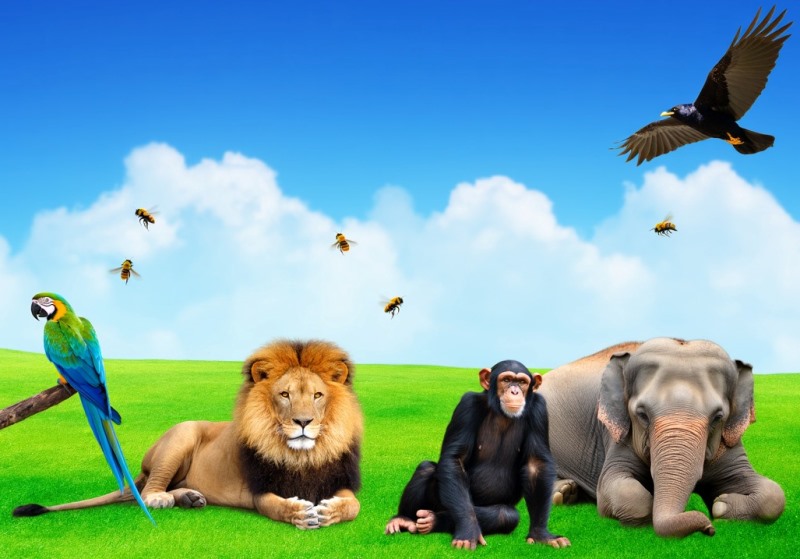
Top 8 Animals with Math Skills
1. African elephants are arithmetic geniuses
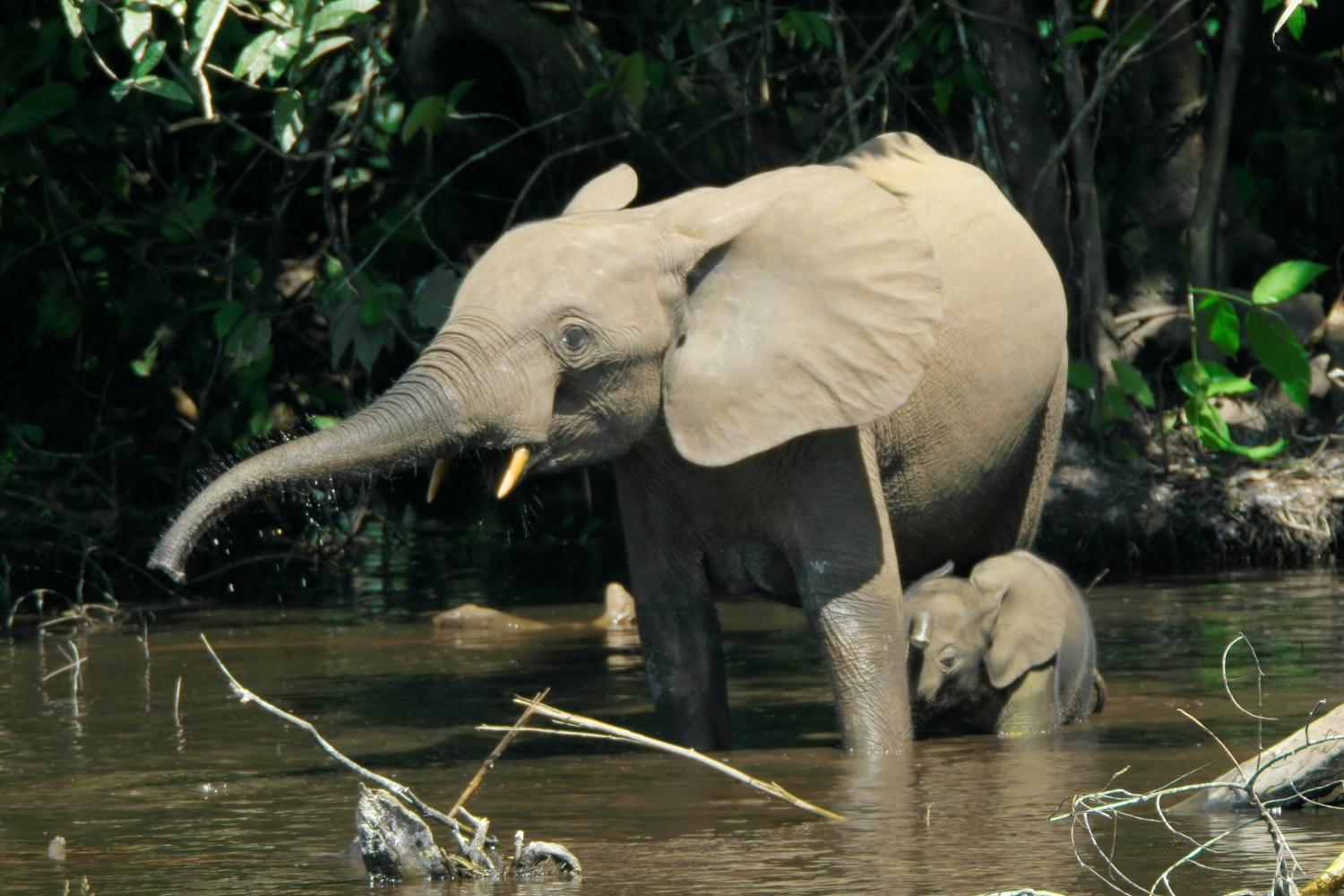
Elephants can count up to 10 and even perform simple arithmetic operations. Studies have shown that elephants distinguish quantities of objects and understand the concept of "more-less" with an accuracy of 80%.
Amazing fact: Elephants use mathematics to navigate, remembering the exact number of turns to take to reach a watering hole.
2. Crows are feathered mathematicians

Crows count to 7 and demonstrate an understanding of zero. In experiments, crows correctly chose containers with more worms, even when the difference was only one individual.
Interesting feature: New Caledonian crows use counting in tool making, creating hooks of specific lengths to extract insects.
3. Chimpanzees are our mathematical relatives

Chimpanzees have numerical skills comparable to 3-4 year olds. They distinguish quantities up to 9 and perform addition and subtraction of prime numbers.
Famous case: A chimpanzee named Ai from Japan has learned to recognize Arabic numerals and arrange them in the correct order faster than many people.
4. Dolphins are the sea's accountants

Dolphins can count and group objects by quantitative characteristics. They distinguish groups of 2-8 objects and use these skills to coordinate hunting.
5. Bees are microscopic mathematicians
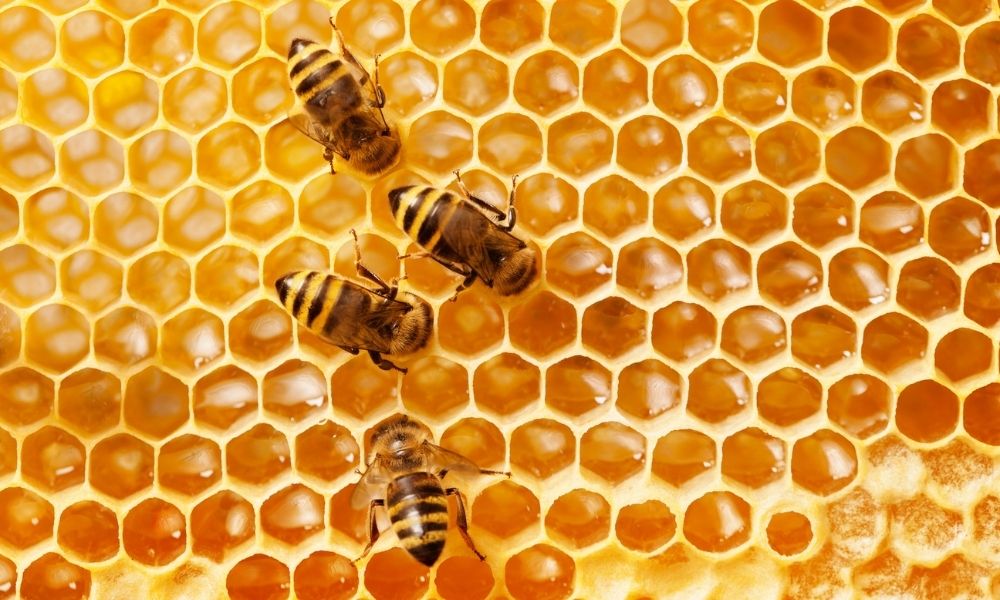
Despite the tiny brain, bees demonstrate numerical abilities. They count to 4, understand the concept of zero, and even perform basic arithmetic operations.
Application in nature: Bees count the number of flowers in an area, optimizing their nectar collection routes.
6. Parrots are talking accountants
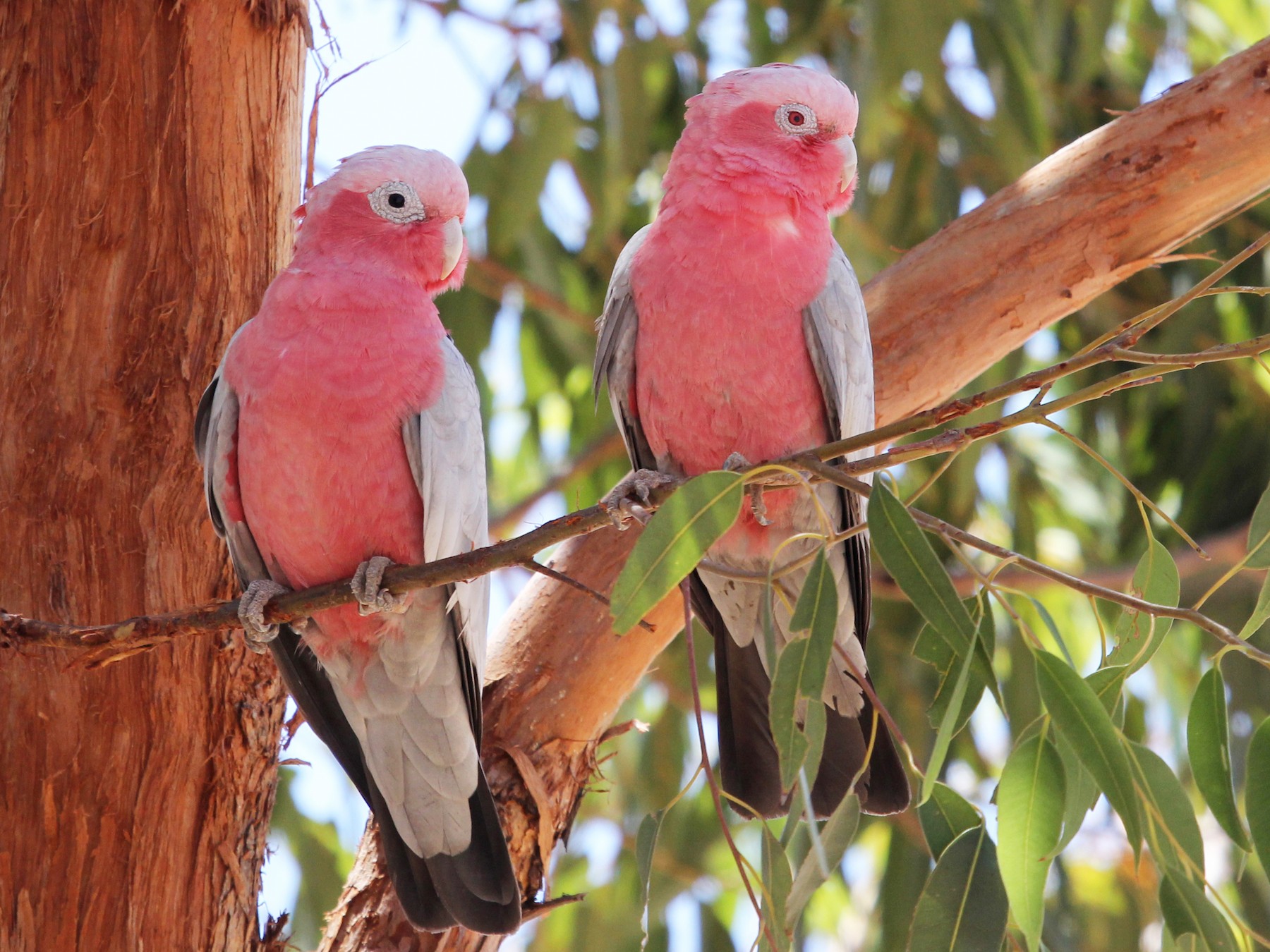
African grey parrots can count to 6. and understand that numbers represent quantity. The famous parrot Alex could name the number of objects of a certain color or shape.
7. Lions are strategic counters
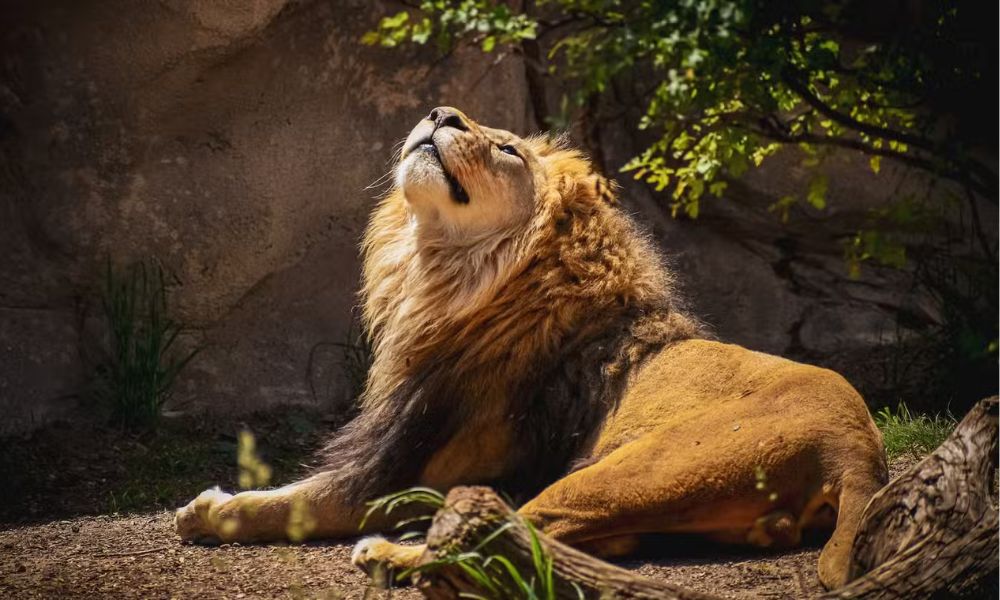
Leos use mathematics to make decisions about attacking. They count the number of members of a hostile pack and compare it to the size of their own group before attacking.
8. Ants are collective mathematicians

Ants count their steps and use mathematical algorithms to find the shortest routes to food sources. Their collective mathematics surpasses the capabilities of individual individuals.
How scientists study animals' mathematical abilities
Researchers use a variety of methods to study how, how animals count:
- Food reward testing — animals choose between containers with different amounts of treats
- Touch screens — primates and birds solve mathematical problems on special devices
- Observations in nature — the study of natural behavior associated with counting
- Neurobiological research — scanning the brains of animals while they solve numerical problems
Evolutionary reasons for the development of counting in animals
Why did animals learn to count? Evolution favored individuals with mathematical abilities for several reasons:
- Survival: Estimating the number of predators or allies
- Reproduction: Calculating offspring and resources for raising them
- Foraging: Determining the most cost-effective power sources
- Territorial behavior: Understanding numerical superiority
Limitations of animals' mathematical abilities
Despite impressive achievements, mathematical abilities of animals have limits:
- Most species do not count above 10
- Abstract mathematical concepts are not available
- Symbolic mathematics remains a human peculiarity
- Accuracy decreases as numbers increase.
The significance of discoveries for science
Studying that, Which animals can count?, helps scientists understand:
- The evolution of human intelligence
- Universal principles of numerical information processing
- Possibilities of creating artificial intelligence
- Methods of teaching mathematics to children
Amazing facts about counting in the animal kingdom
Did you know that:
- Salamanders can distinguish between numbers of up to 3
- Cichlid fish use counting to select schools with large numbers of individuals.
- Horses understand ordinal numbers
- Pigeons can arrange up to 9 objects in ascending order.
Conclusion
Animals that can count Found throughout the animal kingdom, from tiny bees to giant elephants, these abilities evolved as an adaptation to challenging survival conditions and continue to amaze researchers with their complexity.
Animals' mathematical skills remind us that intelligence takes many forms in nature. Each new discovery in this field expands our understanding of consciousness, evolution, and the human species' place in the world of living things.
Studying the mathematical abilities of animals continues, and each year brings new, amazing discoveries that change our understanding of the nature of the mind.
The article is based on scientific research in the field of ethology and cognitive zoology.