








We've heard tales of the glory of royalty, their lavish lifestyles, and their grand conquests. History has written many stories of royals from all over the world commanding thousands of armies and living in elegant palaces. However, not all of these individuals were benevolent and generous. They also had a wild side, and many were downright insane.
Here are some of the crazy things royals have done in the past that we don't know much about:
1. King Charles VI of France believed he was made of glass and made sure his clothes had iron rods sewn onto them to prevent them from «"Crashed" when meeting another person. He also once considered himself a saint.

King Charles VI, often called "Charles the Mad," ruled France for 42 years. Around the age of twenty-five, he experienced brief periods of psychosis that continued for the rest of his life. Before his first episode of insanity, his subjects addressed him as "the Beloved." Doctors believed his numerous mental illnesses were genetic, inherited from his mother, Joan of Bourbon.
In 1393, he didn't know who he was or what his name was. When his wife came to visit him, he ordered his servants to take her away, as he refused to recognize her. After this, he began posing as Saint George and pretended his coat of arms depicted a lion with a pierced sword. He often ran erratically through the corridors of the Hôtel Saint-Paul.« , His Parisian residence, and to prevent him from going outside and putting himself in danger, the castle was walled up. It's also known that he refused to wash or change clothes for five long months!
The most bizarre of all his psychotic episodes was a hallucination involving glass. He believed he was made of glass and tried various ways to protect himself from being "broken." He felt safer thinking he wouldn't "break" when touched by another person if he had iron rods sewn into his clothing. (source)
2. The Roman Emperor Caligula loved his horse so much Incitatus , who not only fed him oats with golden flakes, but also made him a priest and planned to appoint him consul.

Throughout history, we've read tales of royals' love for stallions, but this one is the wildest. The Roman Emperor Caligula gave his horse Incitatus as a gift. A collar adorned with precious stones and a marble horse. He is said to have fed it gold flakes mixed with oats and even built it a house. Such love for an animal on the part of an emperor known for his madness and cruelty caused confusion in his kingdom.
Caligula went even further and appointed his horse as a priest. He planned to appoint him as a consul at his court, pursuing a dual goal: to demonstrate his love for the horse and to humiliate the other consuls by suggesting that the horse would perform better than them. He wanted the horse to invite high-ranking officials to dine with him in his house, where they would be served by servants. The emperor's plans failed, as he was assassinated before he could accomplish this. make Incitatus the first equestrian official in the world. (1,2)
3. King Henry VIII of England had a "servant" who would talk to him while he defecated in a velvet box that doubled as a toilet. Being a "servant" was considered a privilege.
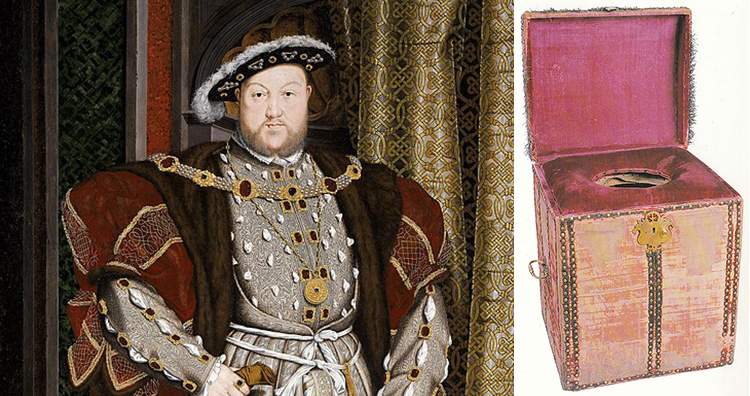
In the 15th century, King Henry VIII of England created a world of luxurious toilet facilities for himself. A chest-of-drawers-like drawer was made for him and kept in a special room next to his bedroom. The drawer's interior and exterior were lined with black velvet. Inside was a hole, and beneath it was a pewter bowl. While he was defecating, a high-ranking courtier would converse with him and assist him. This courtier was known as a "door-keeper." His job was to assist the king with his bowel movements.
«The "Hero of the Throne" was not considered a servant, but was highly respected at court, as during "intimate" moments spent with the King, he was privy to many important royal secrets. He also enjoyed the King's favor. If the monarch was a woman, the position was given to a high-ranking lady. Such officials were wealthy aristocrats and diplomats who owned considerable property. This position remained in the English royal family until the accession of King Edward in 1901. James Hamilton, 2nd Duke of Abercorn, was the last "Hero of the Throne." He was the great-great-grandfather of Princess Diana. (1,2,3)
4. King Mansa Musa of Mali was the richest man in history, who distributed so much gold throughout the Middle East that it devalued the metal and undermined the economy of every region he passed through.
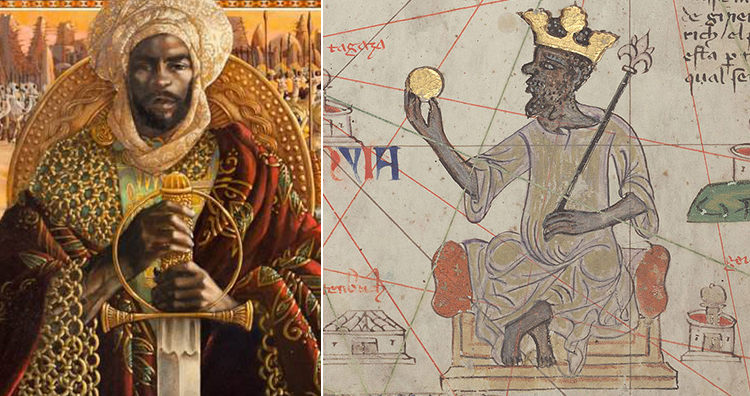
Mansa Musa was the tenth emperor of the wealthy West African region of Mali. During his reign, Mali was considered a major gold producer at a time when the metal was in high demand worldwide. Musa possessed vast gold reserves and made frequent pilgrimages. During his pilgrimage to Mecca between 1324 and 1325, he organized a procession of 60,000 men dressed in fine Persian silk. The procession also included 12,000 slaves, each carrying 1.8 kilograms of gold bars, and 80 camels, each carrying 23 to 136 kilograms of gold dust. Along the way, he generously distributed gold to the poor and exchanged it for souvenirs in every town he passed through. It is said that he built a mosque every Friday.
His excessive philanthropy with gold caused the metal's value to plummet, devastating the economies of every region he passed through. Commodity prices soared due to the sudden influx of metal into the economy. To combat the severe inflation that plagued cities over the next decade, he borrowed all the gold he could carry from moneylenders in Cairo at extremely high interest rates. This is known as the only well-documented instance in history of one man's actions controlling the price of gold and causing such dramatic fluctuations in the Mediterranean region. (source)
5. In 1698, Russian Emperor Peter the Great introduced a beard tax on all men who did not shave their beards, with the aim of modernizing Russia and increasing its competitiveness against Western powers.

Peter the Great ruled Russia in the 17th century and is remembered for the cultural revolution he ushered in during his reign. Both Peter the Great and Henry VIII of England imposed a beard tax on their subjects. But Peter the Great's motive was something that future generations would call "madness." While Europe was exploring the world by ship, Russia lagged behind because it lacked sufficient ships for the voyages. Disguised as "Sergeant Peter Mikhailov" on the "Grand Embassy," the Tsar spent nearly two years traveling across Europe, attempting to understand their way of life, their influence on the world, and their shipbuilding technologies.
Upon returning to Russia, he wanted to bring his country up to par with Western powers and begin modernization. Among other reforms, one of the most radical was the "no beard rule." At a reception in his honor, attended by many influential people, he took out a razor and began shaving his beard. He then personally shaved the beards of several stunned dignitaries present! At that time, the Russian Orthodox Church considered beardlessness "blasphemous.".
Finally, deciding to relax the rules, the tsar introduced a "beard tax"—a levy on those who wanted to grow a beard. For the nobility, this tax was very high, reaching 100 rubles. For commoners, it remained low—just one kopeck. Those who paid the tax received a token. Silver tokens were issued to the nobility, and copper ones to subjects. (source)
6. Emperor Wu of Jin in China had thousands of mistresses. He had trouble choosing just one, so he would mount a goat-drawn cart and travel to wherever the goats stayed. His women began planting plants near their doors to attract goats.

Emperor Wu of Jin became the first emperor of the Jin Dynasty in China, reigning from 266 to 290 CE. Legends surrounding him boasted that he had over ten thousand concubines. In 273, he began the practice of selecting the most beautiful women from across the empire for himself. He did not even spare the daughters of high-ranking officials. He banned marriages in the kingdom until this "selection process" was completed.
In 281, he seized 5,000 women from another emperor and brought them to himself. He took time away from state affairs and other important matters to spend time with these women.
But since there were thousands of women in the palace and he couldn't remember his last encounter with any of them, he simply boarded a goat-drawn cart and let the goats decide which woman he would spend the night with. Wherever the goats decided to stay, he entered the corresponding room. To attract the emperor to their chambers, the women left bamboo leaves and salt at the doors, as the goats preferred these foods and stopped to eat. (source)
7. Princess Diana once snuck into a gay bar dressed as a man with Freddie Mercury, and no one recognized her.

In the late 1980s, British singer Freddie Mercury and comedians Kenny Everett and Cleo Rocos secretly took Princess Diana to a gay bar in London. Princess Diana was known for her love of disguise to avoid public attention. When they visited the Royal Vauxhall Tavern in south London, Princess Diana managed to remain unnoticed by dressing as a male model.
It was the comedians and Mercury who attracted attention when Princess Diana, dressed in a military jacket, cap, and sunglasses, ordered drinks at the bar without warning. Rocos claimed this in her book. «The Power of Positive Alcohol Use »"The bar, located near MI6 headquarters, still exists today and was recently awarded Grade II listed status by the British government. It is one of the most famous gay bars in London. (1,2)
8. The Roman Emperor Nero beat his pregnant wife Poppaea to death and regretted it so much that after the castration, he married a young man who resembled her. He addressed him as "Poppaea.".
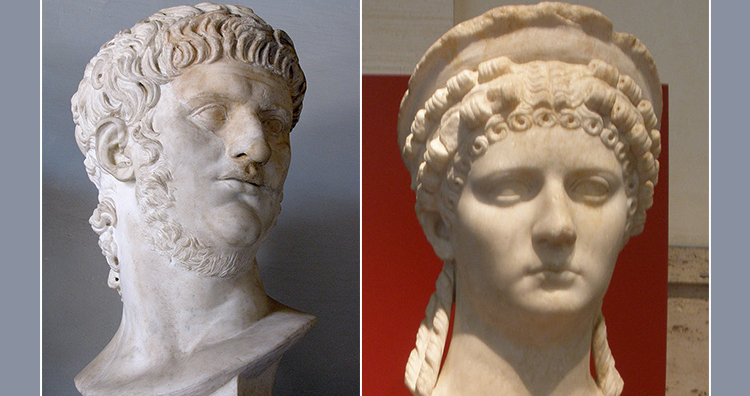
In 65, when Poppaea Sabina, the pregnant wife of Emperor Nero, died after he beat her to death, he married another woman. Following this marriage, he married a young man named Sporus, who bore an uncanny resemblance to Poppaea. He castrated Sporus and forced him to wear the traditional regalia that Roman empresses wore in public. He addressed Sporus as "lady," "empress," and "mistress," as a woman. Sometimes he addressed Sporus as "Poppaea.".
Little is known about Sporus's origins, except that he may have been a child slave who was later freed. Nero married another freedman named Pythagoras and treated him as his husband and Sporus as his wife. Some historians speculate that Nero felt guilty about killing his pregnant wife, and this is why he married Sporus.
Shortly before Nero's death, Sporus gave him a ring depicting a scene in which the ruler of the underworld forces a young girl to become his bride. This was considered one of the ill omens that led to Nero's downfall. (source)
9. Gaius Caesar, the Roman Emperor, ordered his guards to throw a whole section of the spectators into the arena to be eaten by wild animals, since there were no prisoners and he was bored.

Gaius Caesar, the Roman emperor, was named after Julius Caesar and then went by the name Caligula. Contemporaries described him as "mad" and "insane" for the scandals he caused. He deliberately spent money on bridge, causing famine in the kingdom, slept with other men's wives, and murdered people for his own amusement. He is accused of turning his castle into a brothel. He demanded that a statue be erected in the Temple of Jerusalem and wanted his subjects to worship him.
Once, during a game in the arena, he ordered his guards to throw an entire section of spectators into the arena during intermission. He wanted to watch them be devoured by wild animals for his own amusement, as there were no more prisoners to throw into the arena, and he was bored. (source)
10. After his father was poisoned, Mithridates VI of Pontus took small doses of the poison to build up an immunity. When he attempted suicide by poison after his defeat by the Roman leader Pompey, the poison had no effect.
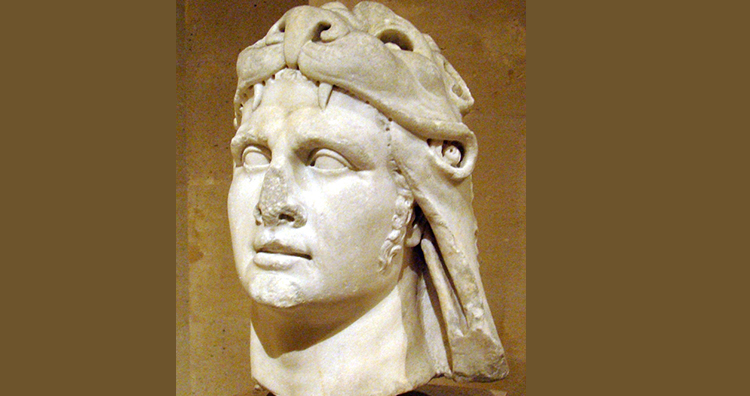
Mithridates VI's father, Mithridates V, was poisoned in 120 BC by unknown assailants at a banquet he attended. Mithridates VI's mother's role in his father's poisoning has been noted, and there were plots to assassinate him, orchestrated by his mother and Laodice VI, who were co-rulers of Pontus because they favored his younger brother, Mithridates Chrestus, for the throne. To avoid death, he went into hiding at a very young age, living in the desert for seven years.
During and after his time in hiding, he took small doses of poison for several years to build up an immunity and avoid repeating his father's fate. He later became a powerful ruler, but after his defeat by the Roman leader Pompey, he fled with his daughters to the lands north of the Black Sea. There, he attempted to raise an army to fight the Romans, but this proved too cruel for the locals, who had rebelled against him. He attempted suicide by taking poison and then administered the same to his daughters. His daughters died, but the poison had no effect on him due to his immunity. He then ordered his guards to kill him with a sword.
It is known that Mithridates created a complex antidote to poison, which was improved by several Roman doctors and was called "mitridates". (source)