








Everything comes from somewhere. This statement is so absurdly obvious that it's rarely worth making. And yet, its implications are rarely explored. Where are you from? Finding the exact time and place where humans emerged is difficult, and the same is true for most life forms. But there are some things we can trace with a fair degree of precision, often with surprising results.
10. Modern cattle can be traced back to a single herd about 11,000 years ago.

The average American eats 55 pounds of beef per year, so cow meat is very much loved here. Our ancient ancestors never had such a pleasure, because although herds of animals like aurochs once existed, modern cows as we know them never existed in the wild. In fact, we can trace our current global cattle family back to a herd of 81 female animals , which was bred almost 11,000 years ago.
Researchers from across Europe are analysing DNA samples from living cattle, as well as DNA from, extracted from the bones, taken from archaeological excavations dating back to the beginnings of agriculture as we know it. The genetic differences observed in modern cattle could only exist if the original herd was limited to about 80 animals, descended from the ancient aurochs, which were somewhat similar to modern cows but not quite the same and certainly much larger and wilder.
9. All domesticated hamsters trace their origins back to a single pair in Syria.
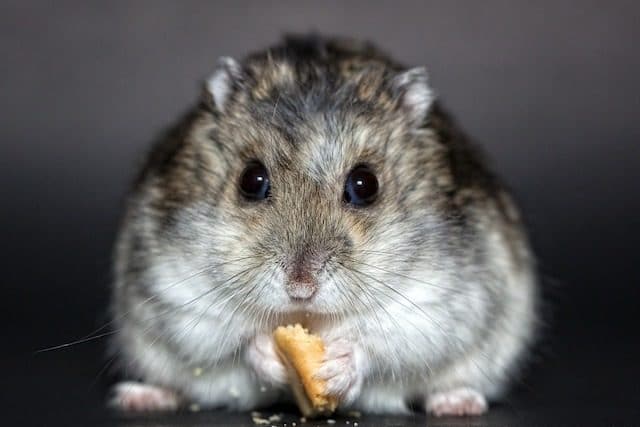
Much attention is paid to the domestication of both cats and dogs, the two most common pets in the world. Most of us know that dogs were domesticated long ago from wolves, and cats seem to have domesticated themselves along with humanity as a nearly strategic move to secure food and shelter. But people keep many other animals as pets, such as hamsters.
Wild hamsters are probably not something most of us have ever encountered, but they exist, and the modern domesticated hamster can be traced back to a specific breeding pair in Syria. Their history is both curious and remarkable.
Jewish biologist Israel Aharoni set himself the task of identifying the animals listed in the Torah. The problem was that the animals had no names, only very vague descriptions. And one animal he was particularly interested in had a name that translates into English as "« Mr. Saddlebags »"The only description of it was that it was golden. Not much to go on.
In 1930, Aaroni traveled to Syria and hired a hunter. They traveled the countryside searching for clues, then dug a hole on a farm and discovered a nest of small golden animals. He discovered hamsters. Mr. Saddlebags.
Aharoni took the hamsters, and the situation quickly spiraled out of control. The mother ate several of the babies. Several more escaped and were never found. But one pair of siblings reproduced, as hamsters often do. They became the Adam and Eve of the modern hamster world. This pair had 150 children . They were delivered to laboratories around the world and continued to breed. Today, if you see a hamster in a pet store anywhere in the world, it will almost certainly be a descendant of this breeding pair.
8. White mushrooms can be traced back to a Pennsylvania farm in 1925.

If you go to the grocery store looking for mushrooms right now, you'll likely have several options, depending on how diverse your store is. But if they sell fresh mushrooms at all, they'll be those porcini mushrooms, sometimes called table mushrooms or champignons. They're probably the most common type in the Western world, and they can all be traced back to a single farm in Pennsylvania in 1925.
Until 1925, mushrooms were mostly brown. Today, your local grocery store might sell brown button mushrooms next to white ones, and they look the same except for the color. That's because they're mostly brown.
Louis Ferdinand Lambert He was growing brown mushrooms at Keystone Mushroom Farm when he discovered a white mushroom in the mix. It was a mutation, just a fluke. But he was a budding mushroom researcher, so he took it back to his lab and cultured the spores.
The porcini mushrooms grew faster and were more uniform in shape and size. By 1933 It became the country's leading mushroom crop, soon producing tens of millions of pounds annually. Buyers were drawn to its color and shape, and today it remains the most popular mushroom, all thanks to one small mutant in 1925.
7. Australia's 200 million rabbits descended from a handful in the 1800s.

Australia is home to a population of wild rabbits numbering around 200 million individuals . Is that a lot of rabbits for a country the size of Australia? Definitely, considering it shouldn't be there. Rabbits, as one of many invasive species causing problems down there, should never have been there. All those 200 million came from a handful released in 1859.
Although the animals were on the continent as early as 1788, it is believed that 13 or 24 of them were released in 1859 from the farm of settler Thomas Austin. He allowed the animals to run free in his yard and possibly released them to hunt. Apparently, he was unable to hunt them all.
Since then, Australians have been fighting a losing battle with rabbits. In the late 1800s, they were killing two million a year and achieving nothing. The most famous of these is their attempt to build rabbit-proof fence Across the country, it's effective against larger animals, but it didn't work against rabbits. They were already on the other side of the fence before construction was completed.
6. Golden retrievers are descended from two dogs named Nous and Belle.

According to the American Kennel Club, the golden retriever was third most popular The most popular dog breed in America in 2021. In fact, it consistently ranks among the top ten breeds. They are sweet and a little silly, and they seem to make good family dogs. The entire breed can also be traced back to two specific dogs named Nous and Belle in 1868.
A Scotsman named Sir Dudley Courts Marjoribanks owned the first representative of the breed, a dog named Nous, who was said to be a kind of yellow retriever. The original story was that Nous was a Russian circus dog, but there is no evidence to support this. The real story seems to be that he was just out for a walk one day, saw the dog, and bought it from a shoemaker .
Sir Dudley, as a breeder, led detailed breeding logs . Records are still available that show he mated the dog with another dog named Belle, a Tweed Water Spaniel, in 1868, and they had a litter of four puppies. The resulting retriever-water spaniel mix developed into an athletic, light-coated dog that clearly resonated with people.
5. South Dakota's mountain goats are descended from six escaped Canadian goats.

Mountain goats, more commonly known as Rocky Mountain goats, can be found in Western Canada and the United States. Their population is estimated to be between 75,000 to 100,000 people . All those found in the Black Hills can be traced back to six goats from Canada. They were donated to Custer State Park back in 1924, but goats are still goats; they weren't content to remain confined to their pens.
Six goats escaped and went into the wild, where they settled in the granite mountains. Today this number exceeded 200 , and there are no signs of slowing down anytime soon.
4. Most macadamia trees can be traced back to a single Australian tree.

Hawaii is famous for many things, from beautiful beaches to luaus. Macadamia nuts are also abundant in the state: in 2019, it was produced 40 million pounds sterling. Although the majority of the world's macadamia nuts come from Australia and South Africa , their origin is not so diverse. Seventy percent All the world's macadamia nuts come from a single tree in Australia.
Plant biodiversity is of great importance. The lack of banana diversity has already led to the extinction of an entire banana variety, making this area of great interest to scientists. Trying to trace the origins of macadamia trees, they tested samples from farmed trees in Hawaii and wild ones in Australia and found that they all traced back to a very small population on a private island called Molu. The genetic differences between the trees were so small that they believe they probably all came from the same individual tree.
3. Most purebreds can be traced back to the Darley Arabian.

When a horse excels on the racetrack, it is often retired to stud, where breeders attempt to continue and improve its genetic line. It seems no horse has accomplished this task better than the Darley Arabian.
There are 500,000 Thoroughbred horses in the world. While sometimes used interchangeably with "Thoroughbred," Thoroughbred is more accurately a distinctive breed of racehorse. They are generally considered the finest racehorses in the world, and nearly all half a million can trace their ancestry to just 28 specific horses. Among them 95% all males can be attributed to one specific stallion - Darley Arabian.
They say that Thomas Darley He bought, or perhaps stole, a foal from a sheikh in Syria. The horse's name was Manak or Manika. Many famous horses were bred by Arabs in England, and it is said that the horse lived to be 30 years old, a fairly advanced age for a horse.
2. Almost 150,000 Faroe Islanders are descended from one guy.

The Faroe Islands are located in the North Atlantic Ocean near Iceland. About 158,000 people live or have lived there, and the staggering149,000 of them can trace their lineage back to the same person. Family reunions should be epic.
The prolific ancestor of most Faroese people is known as Klemen Laugesen Follerup. Back in the 17th century, he had 23 children. This resulted in 66 grandchildren in 27 villages.
Back in 2006, the island's residents were registered in the so-called genetic biobank , a sort of national genetic registry for the Faroese. The computer program kept producing errors because everyone it registered turned out to be a cousin of everyone else.
1. Blue-eyed people can be traced back to a single ancestor.

Blue eyes are the second most common eye color in the world, although they only exist at 10% people. The color itself is a genetic mutation, and scientists have traced it back to a single common ancestor who lived between 6,000 and 10,000 years ago. Back then, only brown-eyed people existed. The mutation in a certain gene , responsible for eye color, occurred in one person and was passed down through generations of 10% blue-eyed people who exist today.
The gene mutation worked in such a way that turned it off The brown eye allele is present in the affected individual and their ancestors. Essentially, the variant for brown eyes has been removed because the body's ability to produce melanin is reduced by the mutation. This means brown eyes cannot fully develop, and you end up with blue eyes instead. There's no genetic advantage to the mutation, but there's no disadvantage either, and it seems to be one of those random things that arises in nature.