








Eponym - is a word denoting an object or action named in honor a person, usually the person who first created the object or action in question. The English language is filled with eponyms, many of which are obvious: Fahrenheit, Marxism, even America. But there are many others that are not so obvious, though we use them commonly. Here are 10 of them…
10. Nachos

One day in 1943, a maitre d' named Ignacio Anaya García welcomed a group of soldiers' wives to the restaurant where he worked, Club Victoria Not far from the Texas-Mexico border, the women had just visited their husbands at a nearby U.S. Army base and stopped at a restaurant for a quick bite. But there was just one problem: the chef was missing.
Anya had to improvise. He went into the kitchen and immediately cooked something. He took some tortilla chips, melted some Wisconsin cheese on them, and added a few sliced jalapeños.
The ladies loved it. When asked what the dish was called, Anaya replied that it was Nachos Especiales . He named it after himself, as "Nacho" was his nickname. Little did he know, he'd just created one of the most popular snacks in the world.
9. Fragments
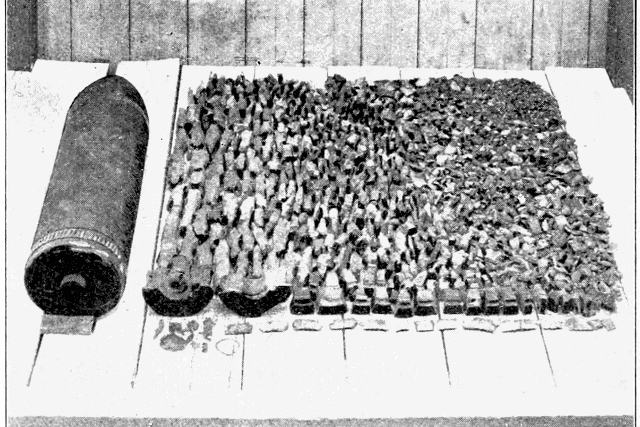
Back in the late 18th century, an enterprising British army officer named Henry Shrapnel He used his money and time to research and develop a new type of artillery shell. Designed for anti-personnel use, the shell consisted of a hollow cannonball filled with lead shot, designed to explode in the air using a delayed-action fuse.
Shrapnel had the opportunity to test his invention in combat conditions in the 1780s, but the British Army was slow to adopt it. It wasn't until 1803 that it adopted a redesigned version of the Shrapnel shell, using a more modern, elongated shell instead of the original spherical one. However, it was during the Napoleonic Wars that this new artillery shell, called the fragmentation shell , has really proven itself.
The shell was adopted by armies worldwide and became the primary artillery shell for approximately 100 years, until it was rendered obsolete by the high-explosive fragmentation shell. Although the shell itself fell out of favor, the name stuck, and even today, the word "shrapnel" has come to refer to any bomb or shell fragment propelled by an explosion.
8. Silhouette

We remain in the 18th century, but cross the English Channel to France, where a man named Étienne de Silhouette served as the country's Controller General of Finances, also known as the Minister of Finance. He faced the unenviable task of trying to replenish the country's coffers at a time when France was suffering a massive deficit due to the Seven Years' War. Therefore, de Silhouette adopted numerous stingy measures that were unpopular with the public and earned him a reputation as a miser.
First the phrase « "a la silhouette"» The word "cheap" meant "cheap," but it quickly evolved into a specific designation for shadow portraits, which were fashionable in France at the time. After all, most people didn't have the money to spend on a proper painted or drawn portrait of themselves, but a simple profile cut out of black paper and pasted onto a white background was much quicker and cheaper.
How exactly De Silhouette's name became attached to these shadow portraits is unknown, but the most popular story The minister himself claimed to be a fan and created them as a hobby. Since they were considered a cheap alternative, it made sense to name them after the country's most notorious miser.
7. Oscar
«"And the Oscar goes to..."—we've heard this phrase countless times. In fact, we hear it every year when the Academy of Motion Picture Arts and Sciences presents the most famous and recognizable award in the world. But the question arises: why is it called an Oscar?
There is no definitive answer to this, but the version supported by the Academy itself gives credit to its former executive director Margaret Herrick . In the early 1930s, when Herrick served as the Academy's first librarian, she saw the statue and joked that it looked like her uncle Oscar . Other employees began calling the statuette an Oscar, as its technical name, "Oscar of Merit," was a bit verbose, and it quickly became unofficial.
However, the first documented use of the word dates back to 1934 in an article Sidney Skolsky в New York Daily News . He called the award "the Oscar" but made no mention of Herrick or her uncle, instead claiming that the name came from an old vaudeville joke.
6. Miranda Wrights
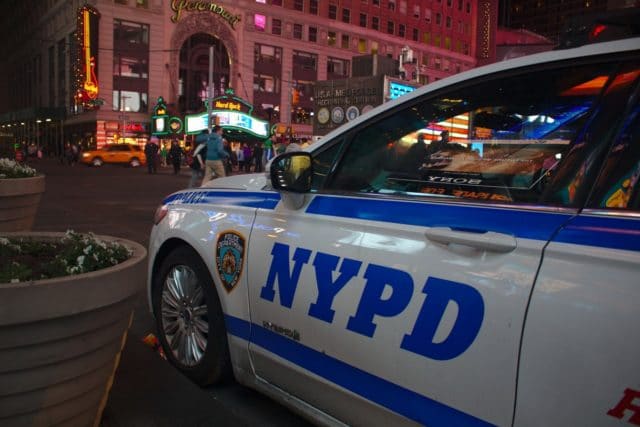
Here's a term we hear on every cop show: whenever a criminal is arrested, he must be "Mirandized" or read aloud. to him his Miranda rights . You know the ones—you have the right to remain silent, you have the right to a lawyer, blah blah blah, blah blah… It's not hard to guess that they were named after someone named Miranda, but who exactly?
His name was Ernesto Miranda , He was a 23-year-old Mexican immigrant in 1963 when he was arrested on charges of kidnapping and rape. His victim identified him during a lineup, and Miranda confessed to his crimes during interrogation, even signing a written confession. He was then sentenced to 20–30 years in prison.
However, during his appeal, his defense attorneys argued that the confession should have been inadmissible at trial because Miranda was unaware of his rights against self-incrimination. The Arizona court upheld the initial ruling, but the lawyers took the case all the way to the Supreme Court. In 1966, by a 5-4 vote, the U.S. Supreme Court sided with Miranda, holding that during police interrogation, a suspect must be informed of his rights and must expressly waive them. Miranda received a new trial, where he was again found guilty, but Miranda rights have become an important part of the American justice system.
5. Swimsuit

The leotard has become the unofficial uniform of dancers, acrobats, and gymnasts around the world, but it wasn't always called that. Originally, it was called mayo , but over the decades its name changed thanks to the man who popularized it, French acrobat Jules Leotard.
Born in 1838, Léotard initially studied law but discovered he was truly skilled at swinging the bars, ropes, and rings in his father's gymnasium. So he dropped out of law school and joined the Napoleonic Circus, where he created the first-ever number with a flying trapeze .
As part of his training regimen, Leotard was also interested in developing clothing that best suited his needs—something that was streamlined and didn't restrict his mobility at all. Bonus points if it also showed off his physique. So, was born swimsuit , although he didn't call it that. It was only some time after Leotard's tragic and sudden death in 1870 that the garments began to bear his name, both because of their strong association and in honor of one of the fathers of modern acrobatics.
4. Fraud
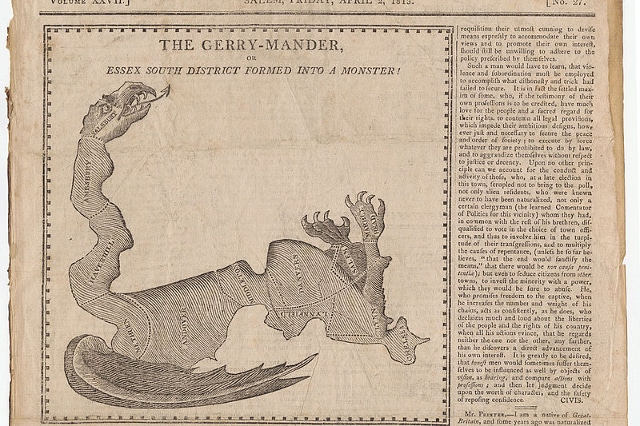
The word "gerrymandering" may not be a common everyday word, but it's certainly been used frequently in recent years. It refers to the political practice of manipulating district boundaries to give an unfair advantage to a particular group, usually a political party.
It is named after a founding father and former vice president of the United States. Elbridge Jerry , who used this shady tactic with great success in 1812. He wanted to give the Democratic-Republicans an advantage over the rival Federalist Party in Massachusetts state elections , so he redrew district lines and managed to get three Democratic-Republicans elected in a district where Federalists had previously held all five seats.
It was an effective strategy, though historians still debate the extent of Jerry's actual involvement. One thing was certain: the practice had its share of criticism, understandably so. First, the redrawing of the county map created long, thin, distorted districts. One newspaper published caricature , where the resulting neighborhoods seemed to form some kind of mythological salamander-like monster. Then they took the word "Gerry" and the word "salamander," combined them, and "gerrymander" was born.
3. Boycott
« Boycott »"To actively refuse to do business with a person or company because they do something you don't like." In the past, this has proven to be an effective way for "little guys" to attach themselves to a much larger corporation or wealthy employer, because it often impacts what they care about most—their bottom line.
This is true for the first case of boycott, which involved a person of the same name Charles Cunningham Boycott . In the 1870s, Boycott was a retired army officer who worked as a land agent for a wealthy peer who owned extensive land in County Mayo, Ireland. Essentially, Boycott's job was to collect exorbitant rents from local residents and evict those who didn't pay, by force if necessary.
In 1880, Boycott pushed too hard. He intended to evict 11 tenants at once, so the entire local community turned against him and turned him into a pariah. Employees wouldn't work for him, stores wouldn't sell to him, mail carriers wouldn't deliver his mail, and most people wouldn't speak to him anymore. Those who didn't voluntarily comply were forced and even threatened to ignore the boycott.
Finding no way out, the land agent ran back to London and recounted his plight in an article in« Times» . He found many sympathizers. Ultimately, the government didn't want Irish farmers to be influenced by any ideas, so it gathered 50 volunteers willing to go to County Mayo to harvest the crops, along with 1,000 members of the Royal Irish Constabulary and a regiment of Royal Hussars for their protection.
All this cost the government over £10,000 to collect £500 harvest . Obviously, this was not something they could repeat, so Boycott left County Mayo a defeated man, and his name became forever associated with his failure.
2. Guy
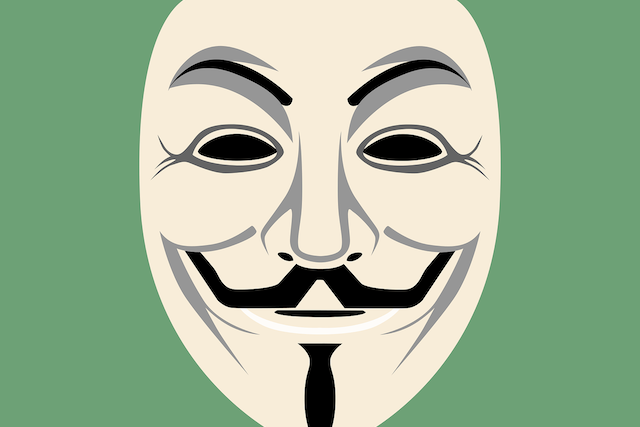
«"Remember, remember, November 5th." These words immediately brought us back to the failed Gunpowder Plot In 1605, a group of conspirators attempted to blow up the House of Lords. Although Guy Fawkes wasn't the mastermind behind the plot, he became its face, to the point that people began burning effigies of him to commemorate the failed plot. Every year on Bonfire Night, people would construct grotesque, ragged figures of Guy Fawkes, along with unpopular public figures of the time, and burn them all in a fireworks display.
These images became known as "« guys »" and then the meaning gradually transformed to refer to ordinary people, usually poor, ragged, and plain. It still had a strong negative connotation, and only after it was accepted in America , the word acquired a neutral meaning for any person.
1. Fool
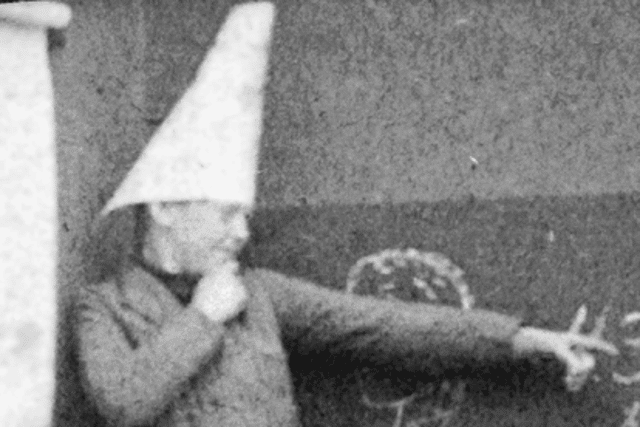
The word "blockhead" is defined as "« thick-headed or a stupid person." Although this practice has fallen out of fashion, we all remember the image of schoolchildren in those tall conical "» caps of idiots »" as a visual symbol of their idiocy. It was cruel enough for the children, but there was someone else who was unfairly treated by the dunce's cap—the man after whom it was named—John Duns Scotus.
Just imagine how you'd feel if your name became synonymous with stupidity. And what's worse, John Duns Scotus was far from stupid. He was a 13th-century Franciscan monk, philosopher, theologian, and university professor, earning the scholastic nickname Doctor Subtilis (« The Subtle Doctor »") for his inventive and precise way of thinking. Scott was indeed fond of wearing pointed hats, a practice also adopted by his followers, known as "Dancemen.".
For several hundred years, Duns Scotus was remembered as a scholar and intellectual, but this changed during the Reformation of the 16th century, when many of his ideas fell out of favor with the church. Clearly no longer around to defend himself, his critics ridiculed him, his ideas, and his pointy hats, and thus we have the blockhead we know today.