








The world is full of terrifying and dangerous beasts, from lions to great white sharks and black mambas. Nature is designed to kill, one way or another. So it's a relief to know that many creatures are innocent, harmless, and even friendly, right? Of course they are. Except when these seemingly harmless creatures have terrifyingly dangerous relatives.
10. Oyster mushrooms are carnivorous.
What could be less harmful than a mushroom? Well, except for all the deadly ones. But the deadly ones usually come with the catch. You usually can't die from a fungus unless you eat it. That's why you should never pick mushrooms unless you know what you're doing. However, the oyster mushroom is a different beast—meaning, yes, it's a mushroom, but it's also carnivorous.
While they may not be as intimidating or agile as some carnivores, oyster mushrooms are still capable of attack and paralyze nematodes , these tiny parasitic worms, before devouring them.
When a nematode gets too close to the fungus, tiny hair-like fibers paralyze the worm, and the toxin kills it. The tiny threads then penetrate the nematode's corpse, and the insides dissolve. and are absorbed mushroom. Strictly speaking, if you're a true vegan, you probably shouldn't eat oyster mushrooms.
9. Carnivorous sponges
Speaking of predators, if there's one creature in the world you'd think wouldn't dare stalk and kill any prey, it'd be a sponge. People generally know two things about sponges: they absorb moisture and sometimes wear square pants. However, they're not intimidating.
Deep in the ocean, at a depth of about 10,000 feet , you will find Chondrocladia lyra , also known as the harp sponge. It looks like a candelabra and may actually be less intimidating than a common sponge. Despite this, while it sits looking fragile on the ocean floor, its long, thin arms are hard at work devouring prey.
As ocean currents move tiny life forms and crustaceans, they become ensnared in the sponge's arms by tiny hooks. Once trapped, the sponge begins to form a membrane over them and digest them. This is just one of several related species discovered that can catch and consume live prey, unlike most sponges, which simply filter bacteria from the ocean floor.
8. Giant prehistoric penguins
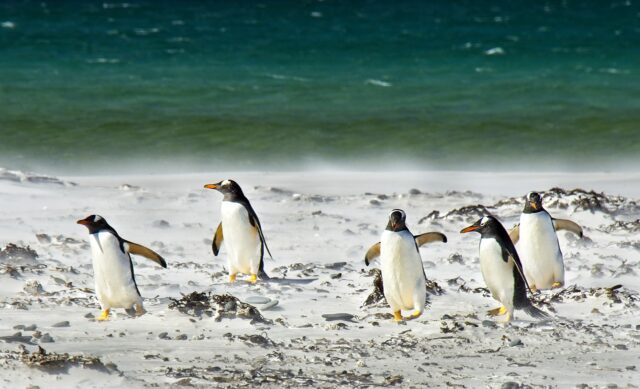
Few animals are as charming and whimsical as the penguin. Entire films have been made about them, showing them waddling about, raising their little ones, and trying not to get eaten by seals. And we're lucky to be able to enjoy them here and now, because the penguin was once a fearsome beast.
Back in 2006, several schoolchildren in New Zealand stumbled upon the fossilized remains of a bird that was significantly larger than most other birds in the area. The fossils, dating back approximately 30 million years, belonged to a prehistoric species of penguin called Kairuku waewaeroa , which reached 4.5 feet in height.
These ancient birds had much longer legs , compared to modern penguins, as well as long, spear-like beaks, and as a result, they likely moved much faster. So try imagining a modern penguin the size of a short human, capable of chasing you at human speed, and you might get an idea of what it was like.
7. Pine trees team up with fungus to eat beetles

Pine trees are known for several things. They make excellent Christmas trees; they produce both cones and nuts, and the pine scent can, in a pinch, work as a car air freshener. This is more of a claim to fame than most trees. But it doesn't stop there. These stationary, mindless organisms also disgrace other trees by occasionally forming a symbiotic relationship with fungus, allowing them to create a web of death to kill and devour insects that venture too close.
The eastern white pine, which can grow to more than 200 feet tall, forms a relationship with a fungus called bicolor. a deceiver. Fungi cover the pine tree roots with a mycorrhizal membrane, which allows the fungus to steal some of the sugar produced by the tree during photosynthesis. In return, the fungus kills tiny insects, found in the soil, and then absorbs nutrients from their bodies, sharing some with the pine trees. The tree gets some nitrogen from the insect carcasses, and the entire area remains relatively bug-free, in case you're ever looking for a less creepy hiking spot than some others.
6. Kea parrots eat sheep alive

Parrots are mostly known for their longevity and penchant for picking up swear words, making them some of the most fun pets you can own. But it's not all 100-year-old curse holidays. Some of these birds are more dangerous than they seem. Take, for example, the New Zealand kea. These dark green birds grow up to a foot and a half long and weigh just a kilogram, and historically they were hated by farmers for eating sheep.
The birds were captured on camera in 1992, when they sat on the back of a sheep, bit into its flesh, tore off chunks, and ate the animal alive. Farmers told stories of this happening for years, but most people didn't believe them, because why would they?
For many years it was assumed that birds eat things like fruits and berries, until someone took the time to point out that where the birds live in the mountains, there are simply no fruits or berries in winter, so they have to eat something else. In this case, sheep.
5. Giant newt snails hunt poisonous starfish.
You could make a strong case that snails are the least frightening creatures in the world. They're absurdly slow, have no bones, teeth, or limbs, and can be killed with salt. There aren't nearly enough of them to make them particularly scary. But they're just a common garden snail.
Giant newt snails live along the Great Barrier Reef and grow up to two feet long . They feed on crown-of-thorns starfish , which are known to overwhelm reefs, making them very useful monsters of the deep. However, they are rather opportunistic predators and will eat almost anything they can find, regardless of whether it's poisonous.
The snails themselves are poisonous, the saliva they produce paralyzing their prey so that it will sit motionless while the snail cuts it open with a mouth tube lined with teeth and then sucks out the soft insides.
4. Prehistoric guinea pigs were the size of a buffalo.
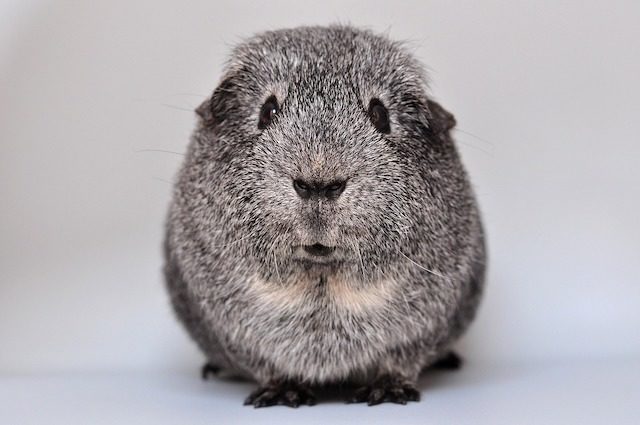
Have you ever wondered how many guinea pigs there are in the world? Well, someone has, and at least one group of guinea pig enthusiasts has estimated the number to be around 30 million . They make pet care easier, don't take up much space, and depending on where you live, they're also quite popular as food . But this is the common pig we all know, which weighs between 0.5 and 1.5 kilograms and rarely reaches more than 30 centimeters in length.
Go back in time to about three million years ago and you can find Josephoartigasia monesi, a prehistoric relative of modern guinea pigs that weighed 100 kilograms and grew to the size of buffalo . Just like his cousin. Phoberomys pattersoni , This giant rodent would have had a long tail for balance and large incisors capable of delivering a devastating bite. Based on a reconstruction of the animal's skull, researchers suggest its overall bite force was similar to that of a tiger, but the force generated by its prominent front teeth was three times greater.
3. Vampire moths eat blood.
Most of us have little interaction with moths. They might try to eat your clothes in the closet or bounce off the porch light on a summer evening, but that's about it. These are nature's less interesting butterflies.
During their larval stage, moths actually eat your clothes, which can be a serious nuisance. But, like butterflies, when they metamorphose into the winged creatures you recognize, they feed entirely on liquid food, meaning your wardrobe is safe. However, depending on the moth, you may be next on the menu.
Insects known as vampire moths, such as Calyptra thalictri, feed on blood and are willing to take it from humans. Most bloodsucking They live in Europe, Africa, and Asia, but they have relatives in North America that have not been observed eating living creatures. In fact, in this family 17 species , but only eight of them consume blood, and only two have crossed over into humans. Of course, two is probably two more than most people would like.
The tiny beetles are amazingly good at what they do, and can even pierce thick elephant skin simply by moving their straw-like proboscis back and forth until they reach the tasty blood, which they then suck until they are sated.
2. Loggerhead shrikes impale their prey with spikes.
The loggerhead shrike can be found throughout North America, singing delightful songs and flitting through trees and meadows. Weighing between 30 and 50 grams, they are typically smaller than a robin, with a plump body and hooked bill. They also hunt like Vlad the Impaler, spearing their prey into foreign objects in a grisly display of death and chaos.
Because the shrike no claws, Like a hawk or other bird of prey, they instead use natural spines or even barbed wire as weapons to impale their prey on spikes , then feeding on the impaled bodies at leisure. If you ever see a barbed wire fence strewn with the impaled carcasses of other insects, lizards, and even small mammals, there's a good chance you're in the shrike's hunting grounds.
1. White-tailed deer will eat meat and bones.

Few animals more embody the sweet and innocent side of nature than deer. Just look at Bambi, perhaps the epitome of gentle perfection. That's probably only because Walt Disney didn't realize that white-tailed deer sometimes eat things like birds and human bones.
Back in 2015, a camera trap installed at the Forensic Anthropology Research Center in Texas captured an unusual sight. The research center is often referred to as a body farm. Bodies are donated to the center and left on the grounds to decompose for forensic scientists to study, which has greatly aided our understanding of death and crime solving, providing valuable information about how bodies decompose over time.
In this particular case, the camera was activated by a deer that came onto the 26-acre property and started munching rib bone one of the corpses. It was assumed that he was trying to get some minerals from the bones, but perhaps that's why a cannibal would eat your bones, too.
Obviously, most deer have limited access to human carcasses, so this carnivorous moment should be rare, right? Not quite. Without human prey, deer simply choose something smaller and easier to eat, such as ground-nesting birds . As long as the food doesn't run away, the deer will eat it.